Microelectrode (Utay) array and the decoding of the corresponding actions. (Francis R. Willet et al., 2023)

Restoring A Person’s Voice Using A Brain-Computer Interface

Being able to vocalize is one of the most essential elements of the human experience, with infants expected to start babbling their first words before they’re one year old, and much of their further life revolving around interacting with others using vocalizations involving varying degrees of vocabulary and fluency. This makes the impairment or loss of this ability difficult to devastating, as is the case with locked-in syndrome (LIS), amyotrophic lateral sclerosis (ALS) and similar conditions, where talking and vocalizing has or will become impossible.

In a number of concurrent studies, the use of a brain-computer interface (BCI) is investigated to help patients suffering from LIS (Sean L. Metzger et al., 2023) and ALS (Francis R. Willett et al., 2023) to regain their speaking voice. Using the surgically implanted microelectrode arrays (Utah arrays) electrical impulses pertaining to the patient’s muscles involved in speaking are recorded and mapped to phonemes, which are the elements that make up speech. Each of these phonemes requires a specific configuration of the muscles of the vocal tract (e.g. lips, tongue, jaw and larynx), which can be measured with a fair degree of accuracy. Continue reading “Restoring A Person’s Voice Using A Brain-Computer Interface”

Input impedance plottet as a function of trace impedance for trace lengths of 1/10, 1/16 and 1/20 of a wavelength. (Credit: Baltic Labs)

When Does Impedance Matching A PCB Trace Become Unavoidable?

A common joke in electronics is that every piece of wire and PCB trace is an antenna, with the only difference being whether this was intentional or not. In practical terms, low-frequency wiring is generally considered to be ‘safe’, while higher frequency circuits require special considerations, including impedance (Z) matching.  Where the cut-off is between these two types of circuits is not entirely clear, however, with various rules-of-thumb in existence, as [Sebastian] over at Baltic Lab explains.

A popular rule is that no impedance matching between the trace and load is necessary if the critical length of a PCB trace (lcrit) is 1/10th of the wavelength (λ). Yet is this rule of thumb correct? Running through a number of calculations it’s obvious that the only case where the length of the PCB trace doesn’t matter is when trace and load impedance are matched.

According to these calculations, the 1/10 rule is not a great pick if your target is a mismatch loss of less than 0.1 dB, with 1/16 being a better rule. Making traces wider on the PCB can be advisable here, but ultimately you have to know what is best for your design, as each project has its own requirements. Even when the calculations look good, that’s no excuse to skip the measurement on the physical board, especially with how variable the dielectric constant of FR4 PCB material can be between different manufacturers and batches.

Heading image: Input impedance plotted as a function of trace impedance for trace lengths of 1/10, 1/16, and 1/20 of a wavelength. (Credit: Baltic Labs)

Continue reading “When Does Impedance Matching A PCB Trace Become Unavoidable?”

Kitchen Steganography With Turmeric

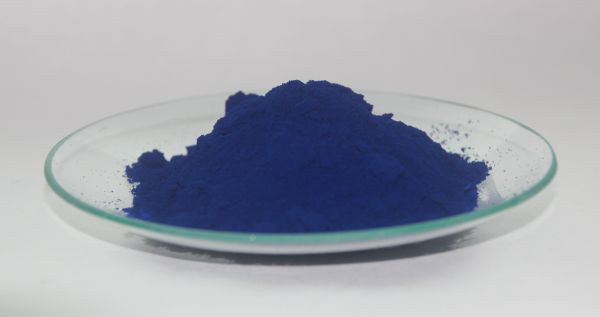
It is a classic rite of passage for nerdy kids to write secret messages using lemon juice. If you somehow missed that, you can’t see the writing until you heat the paper up with, say, an old-fashioned light bulb. If you were a true budding spy, you’d write a boring normal letter with wide spacing and then fill in the blanks between the lines with your important secrets written in juice. This is a form of steganography — encoding secret messages by hiding them in plain sight. [Randomona] shares a different technique that seems to be way cooler than lemon juice using, of all things, turmeric. This isn’t like the invisible ink of our childhood.

That’s probably a good thing. We doubt an LED bulb makes enough heat to develop our old secret messages. [Ranomona’s] ink doesn’t use heat, but it uses a developer. That means you must make two preparations: the ink and the developer. The results are amazing, though, as shown in the video below.

Continue reading “Kitchen Steganography With Turmeric”

Making Electricity At The South Pole

In case you’ve ever wondered how the South Pole research stations are powered, then a recent blog post, South Pole Electrical Infrastructure by anonymous IT engineer [brr] is for you. Among the many issues covered, let’s look at how the electricity is made and, spoiler alert, how the specially formulated AN8 fuel blend is transported to the generators.

The main source of power is a trio of Caterpillar 3512B diesel generator sets, de-rated to 750 kW each due to the high altitude and the special fuel mixture. Unsurprisingly, all the fuel must be imported to Antarctica, a horribly inefficient endeavor. Fuel arrives initially at McMurdo Station harbor by tanker ship. From there, it can be sent to the Amundsen-Scott South Pole Station in one of two ways. The Lockheed LC-130 is a modified C-130 Hercules cargo plane developed in the 1950s specifically to support polar operations. It is the least efficient method, consuming 1.33 kg to transport 1 kg of fuel. Alternatively, fuel can be dragged by tractors via the South Pole Overland Traverse (SPoT), a 1600 km highway over compacted snow and ice. The trek takes about 40 days and only consumes 0.56 kg of fuel for every 1 kg, which is much better than air.

Continue reading “Making Electricity At The South Pole”

Sharkskin Coating Reduces Airliner Fuel Use, Emissions

The aviation industry is always seeking advancements to improve efficiency and reduce carbon emissions. The former is due to the never-ending quest for profit, while the latter helps airlines maintain their social license to operate. Less cynically, more efficient technologies are better for the environment, too.

One of the latest innovations in this space is a new sharkskin-like film applied to airliners to help cut drag. Inspired by nature itself, it’s a surface treatment technology that mimics the unique characteristics of sharkskin to enhance aircraft efficiency. Even better, it’s already in commercial service! Continue reading “Sharkskin Coating Reduces Airliner Fuel Use, Emissions”

The Clathrate Gun Hypothesis: Unearthing Puzzles Of Warming Events Past

As the Earth continues to warm at a worrying rate, scientists continue to work to understand the processes and mechanisms at play. Amidst the myriad of climate-related theories and discussions, the clathrate gun hypothesis stands out not only for its intriguing name but for the profound implications it might have on our understanding of global warming events.

Delving into this hypothesis is akin to reading a detective novel written by Mother Earth, with clues hidden deep beneath the ocean and Arctic ice. It’s a great example of how scientists attempt to predict the future by unpicking the mysteries of the past.

Continue reading “The Clathrate Gun Hypothesis: Unearthing Puzzles Of Warming Events Past”

Several video clips of a robot arm manipulating objects in a kitchen environment, demonstrating some of the 12 generalized skills

RoboAgent Gets Its MT-ACT Together

Researchers at Carnegie Mellon University have shared a pre-print paper on generalized robot training within a small “practical data budget.” The team developed a system that breaks movement tasks into 12 “skills” (e.g., pick, place, slide, wipe) that can be combined to create new and complex trajectories within at least somewhat novel scenarios, called MT-ACT: Multi-Task Action Chunking Transformer. The authors write:

Trained merely on 7500 trajectories, we are demonstrating a universal RoboAgent that can exhibit a diverse set of 12 non-trivial manipulation skills (beyond picking/pushing, including articulated object manipulation and object re-orientation) across 38 tasks and can generalize them to 100s of diverse unseen scenarios (involving unseen objects, unseen tasks, and to completely unseen kitchens). RoboAgent can also evolve its capabilities with new experiences.

Continue reading “RoboAgent Gets Its MT-ACT Together”