Holograms: The Future Of Speedy Nanoscale 3D Printing?

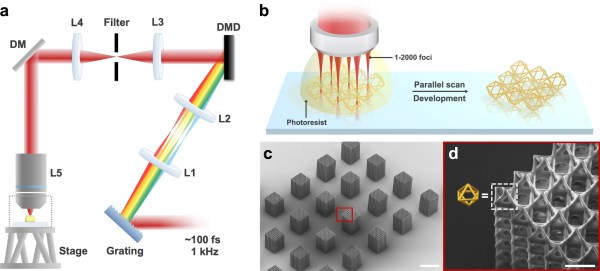
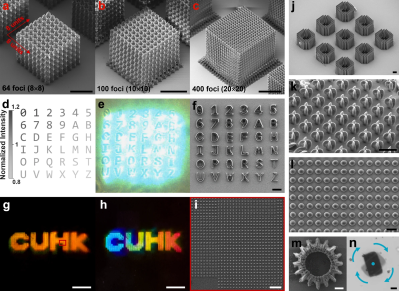
3D printing by painting with light beams on a vat of liquid plastic was once the stuff of science fiction, but now is very much science-fact. More than that, it’s consumer-level technology that we’re almost at the point of being blasé about. Scientists and engineers the world over have been quietly beavering away in their labs on the new hotness, nanoscale 3D printing with varying success. Recently IEESpectrum reports some promising work using holographic imaging to generate nanoscale structures at record speed.

Current stereolithography printers make use of UV laser scanned over the bottom of a vat of UV-sensitive liquid photopolymer resin, which is chemically tweaked to make it sensitive to the UV frequency photons. This is all fine, but as we know, this method is slow and can be of limited resolution, and has been largely superseded by LCD technology. Recent research has focussed on two-photon lithography, which uses a resin that is largely transparent to the wavelength of light concerned, but critically, can be polymerized with enough energy density (i.e. the method requires multiple photons to be simultaneously absorbed.) This is achieved by using pulsed-mode lasers to focus to a very tight point, giving the required huge energy density. This tight focus, plus the ability to pass the beam through the vat of liquid allows much tighter image resolution. But it is slow, painfully slow.
Continue reading “Holograms: The Future Of Speedy Nanoscale 3D Printing?”
The Sounds Emitted By Plants Are Real But They Are Still Not Talking

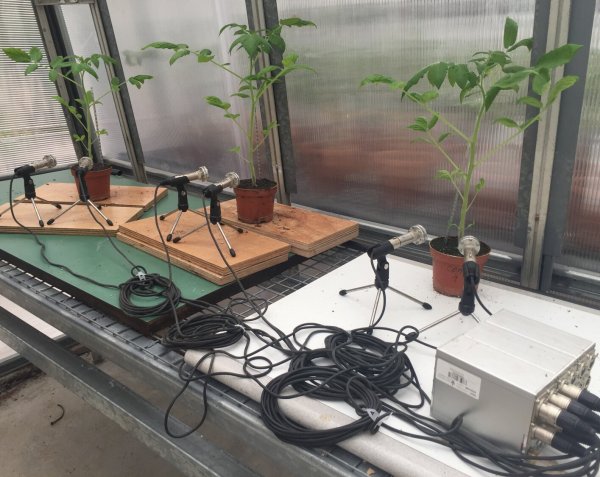
A recent paper published by researchers at the university of Tel Aviv in Cell on the sounds they captured from ‘stressed’ plants had parts of the internet abuzz with what this meant, with some suggesting that this was an early April Fools prank. The fun part here is the news item is not that plants make noise, but rather that this was the first time (apparently) that the noise made by plants was captured by microphones placed at some distance from a variety of plants.

This research is based on previous studies dating back decades, such as Tyree and Sperry who reported (PDF) in 1989 on the vulnerability of the plant xylem (water transporting tissue) to cavitation and embolism. Since the xylem’s function is to carry water and dissolved nutrients to the upper parts of the plant, having air bubbles form would be a negative thing for the plant’s survival. When and how cavitation occurs in the xylem is relevant as it directly impacts how well plants grow. Continue reading “The Sounds Emitted By Plants Are Real But They Are Still Not Talking”

Finding Paths With Water Is A-Mazing

We aren’t sure if it qualifies as fluidic logic, but [Steve Mould] was inspired by a simulation of water flowing through a maze and decided to build some actual mazes and watch water flowing through them. It turns out there are several physical effects in play, and you can see [Steve] discuss them in the video below.

The maze, of course, has to be oriented so that water flows into the top and flows out of the bottom. Without much thought, you’d think that the water just goes to the bottom and then fills up. Eventually, the part that is open at the bottom will have water coming out, right? Turns out it isn’t that simple.

A combination of air pressure and surface tension conspire to make the water do better than expected. Not that it perfectly solves it, but it doesn’t just fill up the entire maze, either. Even more interesting is that once the water has found the bottom, changing the water color will clearly show the path through the maze since nearly all of the new colored water will follow the flow path.

Practical? We can’t think of why. But it is a great think piece on how water flows and what sort of forces can affect it.

[Steve] is no stranger to making water work out algorithms, something called fluidic logic.

Continue reading “Finding Paths With Water Is A-Mazing”

How Tattoos Interact With The Immune System Could Have Impacts For Vaccines

Tattoos are an interesting technology. They’re a way of marking patterns and designs on the skin that can last for years or decades. All this, despite the fact that our skin sloughs off on a regular basis!

As it turns out, tattoos actually have a deep and complex interaction with our immune system, which hold some of the secrets regarding their longevity. New research has unveiled more insight into how the body responds when we get inked up.

Continue reading “How Tattoos Interact With The Immune System Could Have Impacts For Vaccines”

The Liquid Trees Of Belgrade: The Facts Behind The Furore

Historically, nature has used trees to turn carbon dioxide back into oxygen for use by living creatures. The trees play a vital role in the carbon cycle, and have done so for millennia. Recently, humans have thrown things off a bit by getting rid of lots of trees and digging up a lot more carbon.

While great efforts are underway to replenish the world’s tree stocks, Belgrade has gone in a different direction, creating artificial “liquid trees” to capture carbon dioxide instead. This has spawned wild cries of dystopia and that the devices are an affront to nature. Let’s sidestep the hysteria and look at what’s actually going on.

Continue reading “The Liquid Trees Of Belgrade: The Facts Behind The Furore”

Machine Learning Helps Electron Microscopy

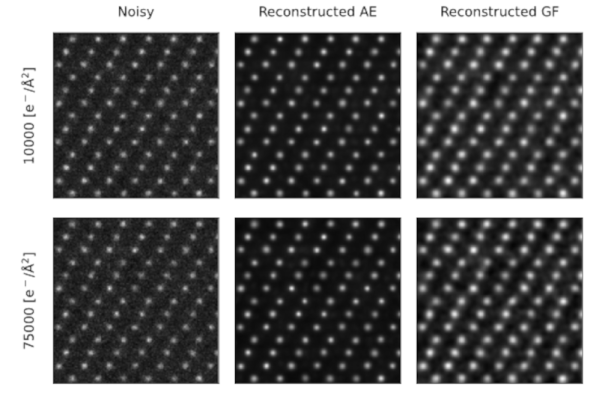
Machine learning is supposed to help us do everything these days, so why not electron microscopy? A team from Ireland has done just that and published their results using machine learning to enhance STEM — scanning transmission electron microscopy. The result is important because it targets a very particular use case — low dose STEM.

The problem is that to get high resolutions, you typically need to use high electron doses. However, bombarding a delicate, often biological, subject with high-energy electrons may change what you are looking at and damage the sample. But using reduced electron dosages results in a poor image due to Poisson noise. The new technique learns how to compensate for the noise and produce a better-quality image even at low dosages.

Continue reading “Machine Learning Helps Electron Microscopy”

Largest Ever Hydrogen Fuel Cell Plane Takes Flight

In the automotive world, batteries are quickly becoming the energy source of the future. For heavier-duty tasks, though, they simply don’t cut the mustard. Their energy density, being a small fraction of that of liquid fuels, just can’t get the job done. In areas like these, hydrogen holds some promise as a cleaner fuel of the future.

Universal Hydrogen hopes that hydrogen will do for aviation what batteries can’t. The company has been developing flight-ready fuel cells for this exact purpose, and has begun test flights towards that very goal.

Continue reading “Largest Ever Hydrogen Fuel Cell Plane Takes Flight”