People are well aware of the power of virtual machines. If you want to do something dangerous — say, hack on the kernel — you can create a virtual machine, snapshot it, screw it up a few times, restore it, and your main computer never misses a beat. But sometimes you need just a little shift in perspective, not an entire make belive computer. For example, you are building a new boot disk and you want to pretend it is the real boot disk and make some updates. For that there is chroot, a Linux command that lets you temporarily open processes that think the root of the filesystem is in a different place than the real root. The problem is, it is hard to manage a bunch of chroot environments which is why they created Atoms.
The system works with several common distributions and you install it via Flatpak. That means you can launch, for example, a shell that thinks it is running Gentoo or Centos Linux under Ubuntu.
Our world is full of mysteries, from the nature of time to how exactly magnets work. There are some things that we just have to accept that no matter how hard we look, we’ll never get a complete answer, especially in the natural world. The constructed world is another thing, though. It doesn’t seem fair that only a relatively few people have the inside scoop on the workings of everyday things, like network routers, game consoles, and even the vehicles we drive. Of course, the companies that make these things have a right to profit from their intellectual property, but we as consumers also have a right to be curious about how these things work and to understand what the software running on these devices is doing on our behalf.
Luckily, what can be engineered can be reverse engineered, if you have the right tools and the skills to use them. It can be a challenge, but it’s one Matthew Alt has taken on plenty of times. We’ve seen him deep-dive into JTAG, look at serial wire debugging, and recently even try some glitching attacks. In fact, he even taught a HackadayU course on reverse engineering with Ghidra. And now he’ll drop by the Hack Chat to talk all about reverse engineering. Join us with your questions, your exploits, and your ideas on how to go where no hacker has gone before.
We have many kinds of pills available these days to treat all kinds of different disorders. Of course, the problem with pills is that they don’t work if you don’t take them. Even Worse, for some medicines, missing a dose can cause all kinds of undesirable withdrawl effects and set back a patient’s treatment.
Smart pills aim to fix this problem with a simple monitoring solution that can tell when a patient has taken their medication. They’re now publicly available and authorized for use, so let’s look at how they work.
Looks like there’s trouble out at L2, where the James Webb Space Telescope suffered a mechanical anomaly back in August. The issue, which was just announced this week, involves only one of the six imaging instruments at the heart of the space observatory, known as MIRI, the Mid-Infrared Instrument. MIRI is the instrument on Webb that needs the coldest temperatures to work correctly, down to six Kelvins — we’ve talked about the cryocooler needed to do this in some detail. The problem has to do with unexpectedly high friction during the rotation of a wheel holding different diffraction gratings. These gratings are rotated into the optical path for different measurements, but apparently the motor started drawing excessive current during its move, and was shut down. NASA says that this only affects one of the four observation modes of MIRI, and the rest of the instruments are just fine at this time. So they’ve got some troubleshooting to do before Webb returns to a full program of scientific observations.
There’s an old saying that, “To err is human, but to really screw things up takes a computer.” But in Russia, to really screw things up it takes a computer and a human with a really poor grasp on just how delicately balanced most infrastructure systems are. The story comes from Moscow, where someone allegedly spoofed a massive number of fake orders for taxi rides (story in Russian, Google Translate works pretty well) through the aggregator Yandex.Taxi on the morning of September 1. The taxi drivers all dutifully converged on the designated spot, but instead of finding their fares, they just found a bunch of other taxis milling about and mucking up traffic. Yandex reports it has already added protection against such attacks to its algorithm, so there’s that at least. It’s all fun and games until someone causes a traffic jam.
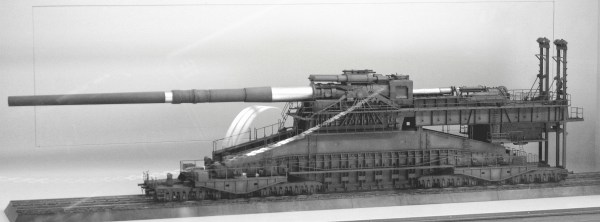
We know. The title sounds like a bad newsreel from 1942. Turns out, though, that the Nazis were really good at pouring money into military research and developing — or trying to develop — what they called “wunderwaffe” — wonder weapons. While we think of rockets and jets today as reasonably commonplace, they were state-of-the-art when Germany deployed them during WWII. While the rockets were reasonably successful, the jets were too few and too late to matter. However, those were just the tip of the iceberg. The German war industry had plenty of plans ranging from giant construction to secret weapons that seem to be out of the pages of a pulp science fiction magazine.
Size Matters
Part of the plans included huge ships including one aircraft carrier displacing 56,500 tons. Many of these were never completed and, in some cases, were never actually started. In contrast, the Essex-class USS Hornet displaces 31,300 tons and the Lexington was 37,000 tons. The H-class battleships would have had as much as 140,000 tons of displacement dwarfing the Yamato class (73,000 tons) and the Iowa class (53,000 tons).
The true measure of engineering success — or, at least, one of them — is how long something remains in use. A TV set someone designed in 1980 is probably, at best, relegated to a dusty guest room today if not the landfill. But the B-52 — America’s iconic bomber — has been around for more than 70 years and will likely keep flying for another 30 years or more. Think about that. A plane that first flew in 1952 is still in active use. What’s more, according to a love letter to the plane by [Alex Hollings], it was designed over a weekend in a hotel room by a small group of people.
A Successful Design
One of the keys to the plane’s longevity is its flexibility. Just as musicians have to reinvent themselves if they want to have a career spanning decades, what you wanted a bomber to do in the 1960s is different than what you want it to do today. Oddly enough, other newer bombers like the B-1B and B-2 have already been retired while the B-52 keeps on flying.
After decades of delays and false starts, NASA is finally returning to the Moon. The world is eagerly awaiting the launch of Artemis I, the first demonstration flight of both the Space Launch System and Orion Multi-Purpose Crew Vehicle, which combined will send humans out of low Earth orbit for the first time since 1972. But it’s delayed.
While the first official Artemis mission is naturally getting all the attention, the space agency plans to do more than put a new set of boots on the surface — their long-term goals include the “Lunar Gateway” space station that will be the rallying point for the sustained exploration of our nearest celestial neighbor.
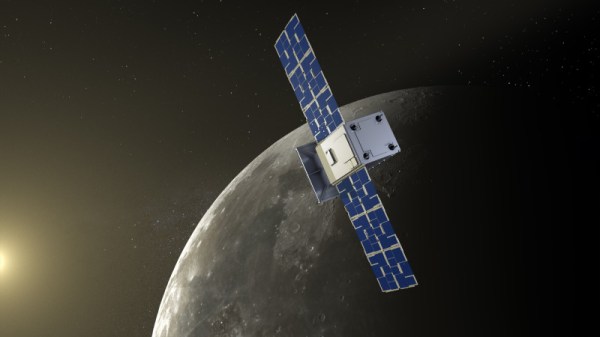
Launched aboard an Electron rocket in June, the large CubeSat will hopefully become the first spacecraft to ever enter into a NRHO. By positioning itself in such a way that the gravity from Earth and the Moon influence it equally, maintaining its orbit should require only periodic position corrections. This would not only lower the maintenance burden of adjusting the Lunar Gateway’s orbit, but reduce the station’s propellant requirement.
CAPSTONE is also set to test out an experimental navigation system that uses the Lunar Reconnaissance Orbiter (LRO) as a reference point instead of ground-based stations. In a future where spacecraft are regularly buzzing around the Moon, it will be important to establish a navigation system that doesn’t rely on Earthly input to operate.
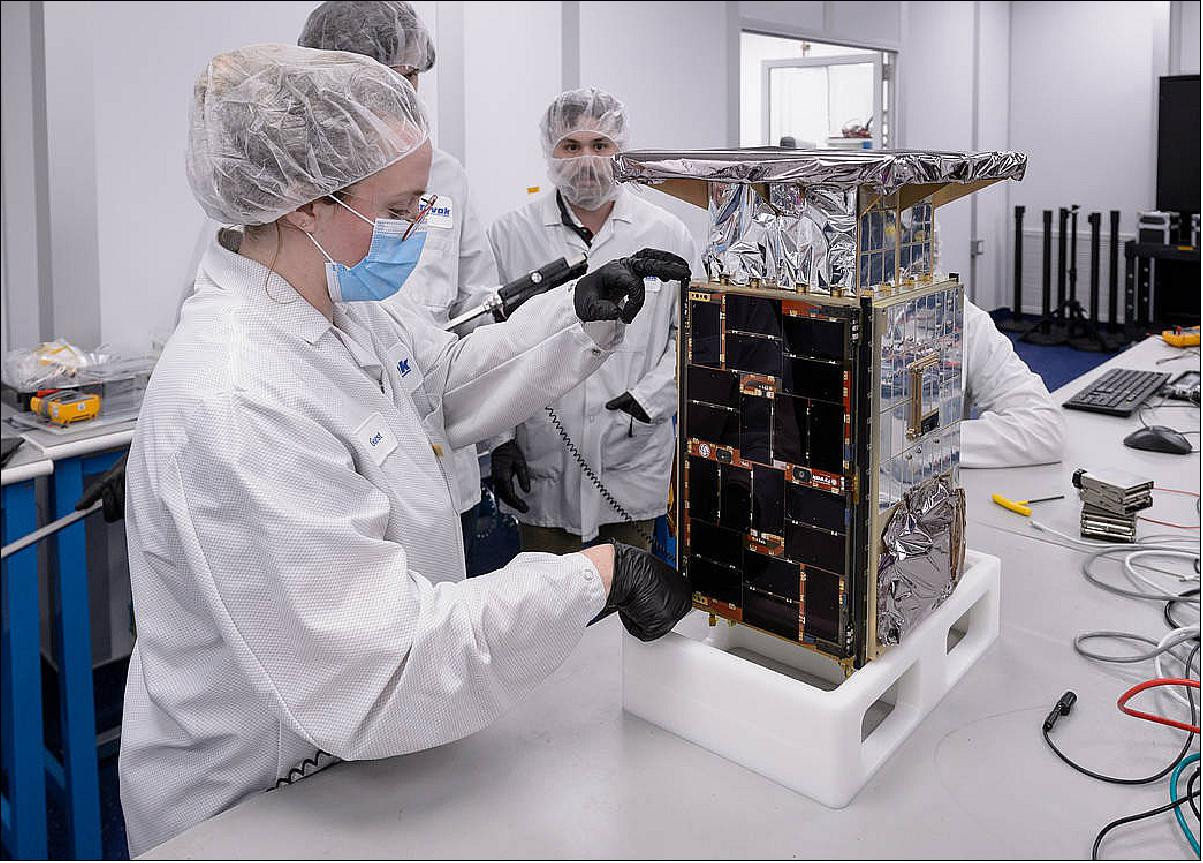
So despite costing a relatively meager $30 million and only being about as large as a microwave oven, CAPSTONE is a very important mission for NASA’s grand lunar aspirations. Unfortunately, things haven’t gone quite to plan so far. Trouble started just days after liftoff, and as of this writing, the outcome of the mission is still very much in jeopardy.