As Chinese Wheels Touch Martian Soil And Indian Astronauts Walk Towards The Launch Pad, Can We Hope For Another Space Race?

If you were born in the 1960s or early 1970s, the chances are that somewhere in your childhood ambitions lay a desire to be an astronaut or cosmonaut. Once Yuri Gagarin had circled the Earth and Neil Armstrong had walked upon the Moon, millions of kids imagined that they too would one day climb into a space capsule and join that elite band of intrepid explorers. Anything seems possible when you are a five-year-old, but of course the reality remains that only the very fewest of us ever made it to space.

Did You Once Dream Of The Stars?

The Soviet cosmonaut Yuri Gagarin in Finland in 1961. Arto Jousi, Public domain.

The picture may be a little different for the youth of a few decades later though, did kids in the ’90s dream of the stars? Probably not. So what changed as Shuttle and Mir crews were passing overhead?

The answer is that the Space Race between the USA and Soviet Union which had dominated extra-terrestrial exploration from the 1950s to the ’70s had by then cooled down, and impressive though the building of the International Space Station was, it lacked the ability to electrify the public in the way that Sputnik, Vostok, or Apollo had. It was immensely cool to people like us, but the general public were distracted by other things and their political leaders were no longer ready to approve money-no-object budgets. We’d done space, and aside from the occasional bright spot in the form of space telescopes or rovers trundling across Mars, that was it. The hit TV comedy series The Big Bang Theory even had a storyline that found comedy in one of its characters serving on a mission to the ISS and being completely ignored on his return.

A few years ago a Chinese friend at my then-hackerspace was genuinely surprised that I knew the name of Yang Liwei, the Shenzhou 5 astronaut and the first person launched by his country into space. He’s a national hero in China but not so much on the rainy edge of Europe, where the Chinese space programme for all its progress at the time about a decade after Yang’s mission had yet to make a splash beyond a few space watchers and enthusiasts in hackerspaces. But this might be beginning to change.


Continue reading “As Chinese Wheels Touch Martian Soil And Indian Astronauts Walk Towards The Launch Pad, Can We Hope For Another Space Race?”

Checking Up On Earth’s Sister Planet: NASA’s Upcoming Venus Missions

Even as we bask in the knowledge that our neighboring planet Mars is currently home to a multitude of still functional landers, a triplet of rovers and with an ever-growing satellite network as well as the first ever flying drone on another planet, our other neighboring planet Venus is truly playing the wallflower, with Japan’s Akatsuki orbiter as the lone active Venusian mission right now.

That is about to change, however, with NASA having selected two new missions that will explore Venus by the end of this decade. The DAVINCI+ and VERITAS missions aim to respectively characterize Venus’ atmosphere and map its surface in unprecedented detail. This should provide us information about possible tectonic activity, as well as details about the Venusian atmosphere which so far have been sorely missing.

Despite Venus being the closest match to our planet Earth, how is it possible that we have been neglecting it for so long, and what can we expect from future missions, including and beyond these two new NASA missions?

Continue reading “Checking Up On Earth’s Sister Planet: NASA’s Upcoming Venus Missions”

Linux Fu: PDF For Penguins

PostScript started out as a programming language for printers. While PostScript printers are still a thing, there are many other ways to send data to a printer. But PostScript also spawned the Portable Document Format or PDF and that has been crazy successful. Hardly a day goes by that you don’t see some kind of PDF document come across your computer screen. Sure, there are other competing formats but they hold a sliver of market share compared to PDF. Viewing PDFs under Linux is no problem. But what about editing them? Turns out, that’s easy, too, if you know how.

GUI Tools

You can use lots of tools to edit PDF files, but the trick is how good the results will look. Anything will work for this: LibreOffice Draw, Inkscape, or even GIMP. If all you want to do is remove something with a white box or make an annotation, these tools are usually great, but for more complicated changes, or pixel-perfect output, they may not be the right tool.

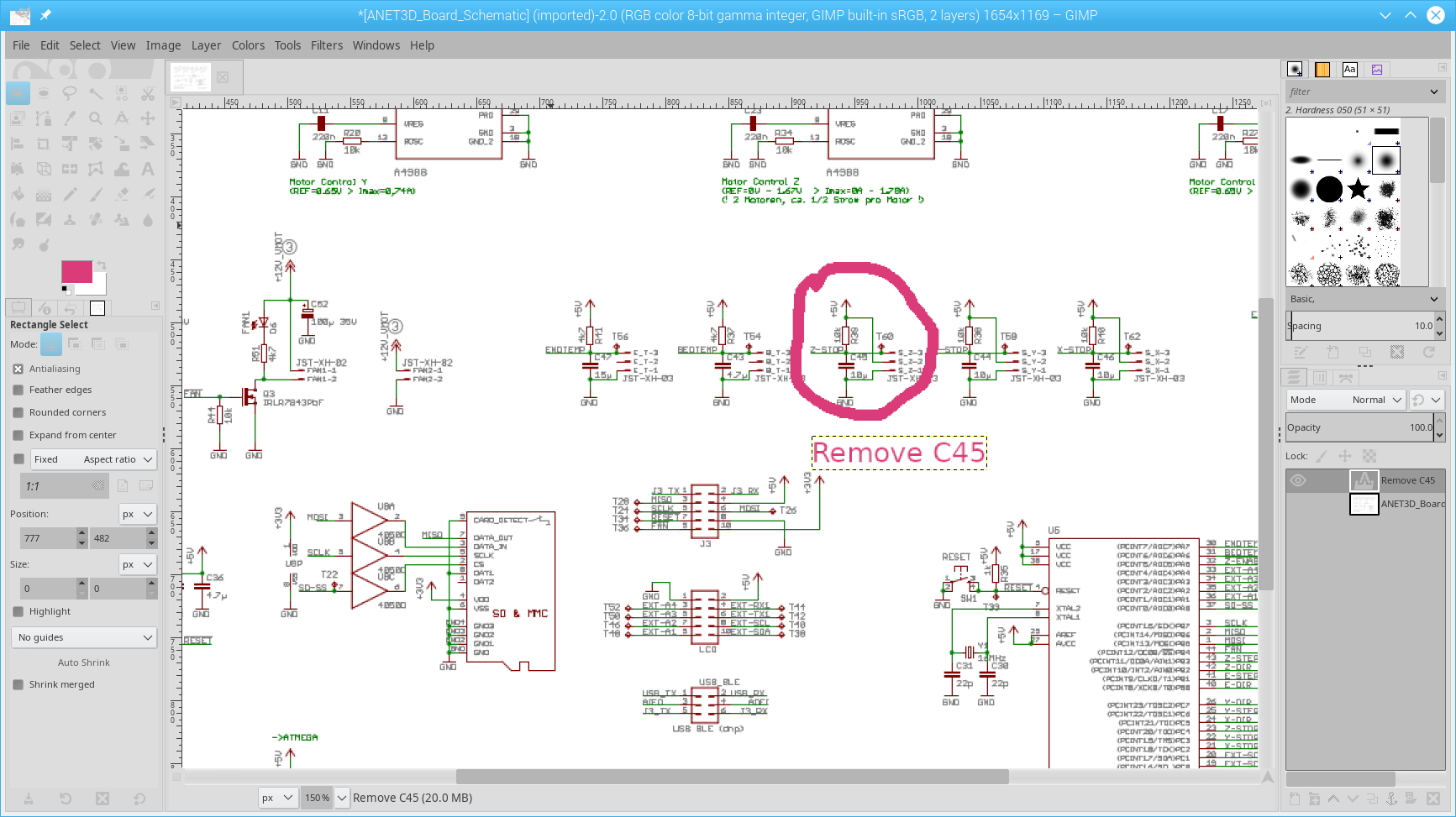
The biggest problem is that most of these tools deal with the PDF as an image or, at least, a collection of objects. For example, columns of text will probably turn into a collection of discrete lines. Changing something that causes a line to wrap will require you to change all the other lines to match. Sometimes text isn’t even text at all, but images. It largely depends on how the creator made the PDF to begin with. Continue reading “Linux Fu: PDF For Penguins”

TerraPower’s Natrium: Combining A Fast Neutron Reactor With Built-In Grid Level Storage

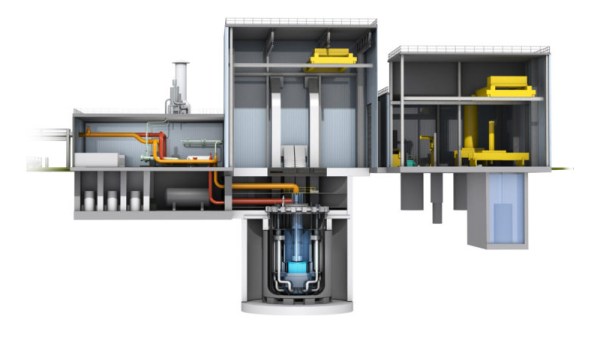
Most new nuclear fission reactors being built today are of the light water reactor (LWR) type, which use water for neutron moderation into thermal neutrons as well as neutron capture. While straightforward and in use since the 1950s in commercial settings, they are also essentially limited to uranium (U-235) fuel. This is where fast neutron reactors are highly attractive.

Fast neutron reactors can also fission other fissile elements, covering the full spectrum of neutron cross sections. TerraPower’s Natrium reactor is one such fast reactor, and it’s the world’s first fast reactor that not only targets commercial use, but also comes with its own grid-level storage in the form of a molten salt reservoir.

The upshot of this is that not only can these Natrium reactors use all of the spent LWR fuel in the US and elsewhere as their fuel, but they should also be highly efficient at load-following, traditionally a weak spot of thermal plants.

TerraPower and its partners are currently looking to build a demonstration plant in Wyoming, at the site of a retiring coal plant. This would be a 345 MWe (peak 500 MWe) reactor.

Continue reading “TerraPower’s Natrium: Combining A Fast Neutron Reactor With Built-In Grid Level Storage”

The Trouble With Hubble: Payload Computer Glitch Stops Science At The Space Observatory

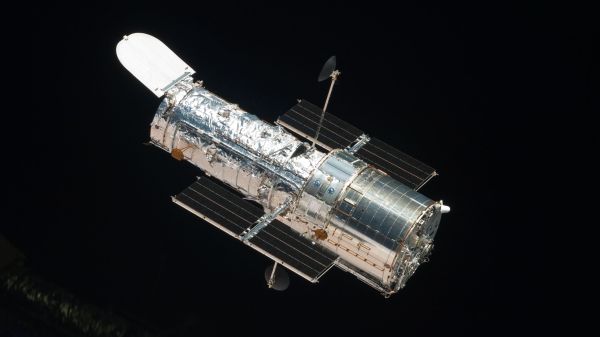
The Hubble Space Telescope’s remarkably long service life and its string of astonishing contributions to astronomy belie its troubled history. Long before its launch into low Earth orbit in 1990, Hubble suffered from design conflicts, funding and budgetary pressures, and even the death of seven astronauts. Long delayed, much modified, and mistakenly sent aloft with suboptimal optics, Hubble still managed to deliver results that have literally changed our view of the universe, and is perhaps responsible for more screensaver and desktop pictures than any other single source.

But all of that changed on June 13 of this year, when Hubble suffered a computer glitch that interrupted the flow of science data from the orbiting observatory. It’s not yet clear how the current issue with Hubble is going to pan out, and what it all means for the future of this nearly irreplaceable scientific asset. We all hope for the best, of course, but while we wait to see what happens, it’s worth taking the opportunity to dive inside Hubble for a look at its engineering and what exactly has gone wrong up there.

Continue reading “The Trouble With Hubble: Payload Computer Glitch Stops Science At The Space Observatory”

Hackaday Podcast 125: Linux Users Talking Windows 11, Pop Bottle Filament, Old Phones With Modern Guts, And Eavesdropping In RF

Hackaday editors Mike Szczys and Elliot Williams look through the most interesting hacks of the week. We spent ample time in adulation of the automatons built by François Junod; wizard-level watchmaking wrapped in endless levels of artistic detail. A couple projects stuffed into old cellphones turned Elliot’s head. We got to see what happens if you spin a gear’s teeth on two axes to make a universal spherical gear. And we conclude the episode with a look at how Windows 11 may send a lot of good hardware to recycle center, and at how toothpaste tubes sometimes miss the recycling center completely.

Take a look at the links below if you want to follow along, and as always, tell us what you think about this episode in the comments!

Direct download (55 MB or so.)

Places to follow Hackaday podcasts:

Continue reading “Hackaday Podcast 125: Linux Users Talking Windows 11, Pop Bottle Filament, Old Phones With Modern Guts, And Eavesdropping In RF”

Could Airships Make A Comeback With New Hybrid Designs?

Airships. Slow, difficult to land, and highly flammable when they’re full of hydrogen. These days, they’re considered more of a historical curiosity rather than a useful method of transport.

Hybrid Air Vehicles are a UK-based startup working to create a modern take on the airship concept. The goal is to create cleaner air transport for short-hop routes, while also solving many of the issues with the airship concept with a drastic redesign from the ground up. Their vehicle that will do all this goes by the name of Airlander 10. But is it enough to bring airships back to the skies?

A Hybrid Technology

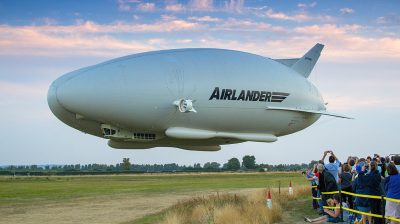
Airlander 10 seen taking off during its first flight.

The Airlander 10 is not a lighter-than-air craft like traditional airships. Instead, the vehicle uses the buoyancy from its helium envelope to create only 60-80% of its lift. The rest of the left is generated aerodynamically by air passing over the eliptical shape of the airship’s body. This lift can also be further augmented by two diesel-powered ducted fans on the sides of the airship, which can pivot to assist with takeoff and landing. Two further fixed ducted fans on the rear provide the primary propulsion for the craft.

The hybrid approach brings several benefits over the traditional airship model. Chief among them is that as the Airlander 10 is heavier than air, it need not vent helium throughout flight to avoid becoming positively buoyant as fuel burns off, nor does it need to vent helium to land. However, it still maintains the capability to loiter for incredibly long periods in the sky as it needs to burn very little fuel to stay aloft. Reportedly, it is capable of five days when manned, and even longer durations if operated in an unmanned configuration. Using helium for lift instead of solely relying on engine thrust and wings means that it is much more fuel efficient than traditional fixed-wing airliners. The company’s own estimates suggest the Airlander 10 could slash emissions on short-haul air routes by up to 90%. The gentle take-off and landing characteristics also mean the vehicle doesn’t require traditional airport facilities, making it possible to operate more easily in remote areas, on grass, sand, or even water. Continue reading “Could Airships Make A Comeback With New Hybrid Designs?”