Prime Numbers Are Stranger Than You Thought

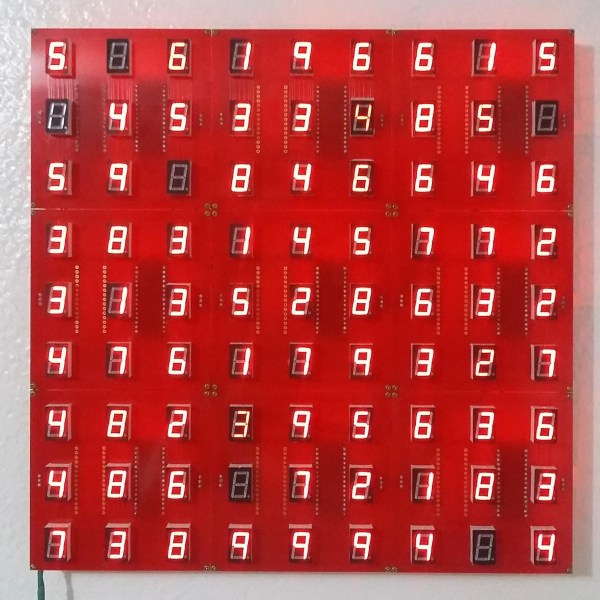
If you’ve spent any time around prime numbers, you know they’re a pretty odd bunch. (Get it?) But it turns out that they’re even stranger than we knew — until recently. According to this very readable writeup of brand-new research by [Kannan Soundararajan] and [Robert Lemkein], the final digits of prime numbers repel each other.

More straightforwardly stated, if you pick any given prime number, the last digit of the next-largest prime number is disproportionately unlikely to match the final digit of your prime. Even stranger, they seem to have preferences. For instance, if your prime ends in 3, it’s more likely that the next prime will end in 9 than in 1 or 7. Whoah!

Even spookier? The finding holds up in many different bases. It was actually first noticed in base-three. The original paper is up on Arxiv, so go check it out.

This is a brand-new finding that’s been hiding under people’s noses essentially forever. The going assumption was that primes were distributed essentially randomly, and now we have empirical evidence that it’s not true. What this means for cryptology or mathematics? Nobody knows, yet. Anyone up for wild speculation? That’s what the comments section is for.

(Headline photo of researchers Kannan Soundararajan and Robert Lemke: Waheeda Khalfan)

Engineer Humanity’s Future: The 2016 Hackaday Prize

Today we are proud to launch the 2016 Hackaday Prize. Build Something That Matters and you’ll contribute positively to humanity’s future by expand the frontiers of knowledge and engineering. You’ll also score recognition of your skills, and position yourself to land one of 105 cash prizes totaling over $300,000. Choose a technology issue facing humanity today and build a project that fixes, improves, or bypasses the problem.

You have the talent, the energy, and the capacity to change the world. Make the time and make a difference.

The Hackaday Prize is a competition synonymous with creating for social change. Using your hardware, coding, scientific, design and mechanical abilities, you will make big changes in people’s lives. Every idea has impact, and a massive force of ideas creates real change. This year we have more power than ever before to recognize the engineering projects that are solving problems: One hundred finalists will get $1,000 each for their efforts. This flat prize structure encourages collaboration rather than direct competition. Team up on each others’ projects and improve your overall chances of making it into the finals.

But it doesn’t stop there. From one hundred finalists, five will rise to be named top winners. Our expert judges will carefully review each of 100 world-changing final entries, choosing a grand prize winner to receive $150,000. Second place will be awarded $25,000, with $10k, $10k, and $5k going to third, fourth, and fifth.

Continue reading “Engineer Humanity’s Future: The 2016 Hackaday Prize”

Beyond Measure: Instrumentation Essentials

The physical world is analog and if we want to interface with it using a digital device there are conversions that need to be made. To do this we use an Analog to Digital Converter (ADC) for translating real world analog quantities into digital values. But we can’t just dump any analog signal into the input of an ADC, we need this analog signal to be a measurable voltage that’s clean and conditioned. Meaning we’ve removed all the noise and converted the measured value into a usable voltage.

Things That Just Work.

This is not new information, least of all to Hackaday readers. The important bit is that we rely on these systems daily and they need to work as advertised. A simple example are the headlights in my car that I turned on the first night I got in it 5 years ago and haven’t turned off since. This is not a daytime running lights system, the controller turns the lights on when it’s dark and leaves them off during the day. This application falls into the category of things that go largely unnoticed because simply put: They. Work. Every. Time. It’s not a jaw dropping example but it’s a well implemented use of an analog to digital conversion that’s practical and reliable.

flow
Figure 1

Continue reading “Beyond Measure: Instrumentation Essentials”

Endless Pancakes

Sometimes along comes a machine so simple yet so alluring in what it does and how it achieves its aim that you just want one. Doesn’t matter what it does or indeed whether ownership is a practical proposition, you wish you could have one in your possession.

What machine could trigger this reaction, you ask? [Robbie Van Der Walt] and [Christiaan Harmse] have the answer, their machine performs the simple but important task of cooking an endless pancake. A hopper dispenses a layer of pancake batter onto a slowly rotating heated roller that cooks the ribbon of pancake on one side, before it is transferred to another roller that cooks the other side. It seems simple enough yet the simplicity must hide a huge amount of product refinement and probably many miles of lost pancake. Pancakes it seems are a traditional South African delicacy, evidently they must have king-sized appetites to satisfy.

In the video below (Afrikaans, English subtitles) they make an attempt at a world record for the longest ever pancake, though sadly they don’t seem to appear in a Guinness  World Records search so perhaps they didn’t achieve it. Still, their machine is a work of art, and we applaud it. Continue reading “Endless Pancakes”

Finger Print Scanners Really Aren’t That Secure

Maybe you suspected this already, but researchers at MSU Computer Science just published a paper explaining just how easy it is to spoof a fingerprint scanner with a ink-jet printed scan of a finger.

We’re not talking about casting a new finger using superglue or anything, but rather using conductive ink you can literally print — on paper. A paper-printed-fingerprint that will unlock your smartphone. We’ve already told you fingerprints suck for security, but hopefully this drives the point home.

[Kai Cao] and [Anil K Jain] released this paper (Direct PDF link) outlining their technique. Using an existing scan of a fingerprint (which can be taken from your phone’s scanner), the image is mirrored, and then printed using a regular ink-jet printer, with all of its color cartridges replaced with AgIC4 silver conductive ink.
Continue reading “Finger Print Scanners Really Aren’t That Secure”

Coleco Chameleon Is A Kickstarter Scam

Retro gaming consoles exploded with the introduction of the Raspberry Pi and other similar single-board Linux computers. They all work the same way in that they emulate the original game console hardware with software. The game ROM is then dumped to a file and will play like the original. While this works just fine for the vast majority of us who want to get a dose of nostalgia as we chase the magic 1-up mushroom, gaming purists are not satisfied. They can tell the subtle differences between emulation and real hardware. And this is where our story begins.

Meet the Coleco Chameleon. What appears to be just another run-of-the-mill retro gaming console is not what you think. It has an FPGA core that replicates the actual hardware, to the delight of hardcore retro game scam_04enthusiasts around the world. To get it to the masses, they started an ambitious 2 million US dollar Indiegogo campaign, which has unfortunately come to a screeching halt.

Take a close look at the header image. That blue circuit board in there is nothing but an old PCI TV tuning card. To make matters worse, it also appears that their prototype system which was displayed at the Toy Fair in New York was just the guts of an SNES Jr stuffed into their shell.

This scam is clearly busted. However, the idea of reconstructing old gaming console hardware in an FPGA is a viable proposition, and there is demand for such a device from gaming enthusiasts. We can only hope that the owners of the Coleco Chameleon Kickstarter campaign meant well and slipped up trying to meet demand. If they can make a real piece of hardware, it would be welcomed.

Tools Of The Trade – Solder Paste Dispensing

The general process of circuit board assembly goes like this: You order your PCBs. You also order your components. For surface mount components, you apply solder paste to the pads, put the components on top, and then heat the board up so the solder paste flows and makes a bond. Then for through hole components you put the leads through the holes, and solder them with an iron or a solder wave or dip. Then you do an inspection for defects, program any microcontrollers, and finally test the completed board to make sure everything runs.

The tricky part is in volumes. If you’re only doing a few boards, it’s usually easiest to assemble them by hand. In the thousands you usually outsource. But new tools, and cheap hacked tools, have made it easier to automate small batches, and scale up into the thousands before outsourcing assembly.

In this new series which we’re calling Tools of the Trade we’ll be covering a variety of tools used for building products, and we’re starting with circuit board assembly. Let’s investigate our tools of the trade: solder paste dispensing. Continue reading “Tools Of The Trade – Solder Paste Dispensing”