Damage To Arecibo Leaves Gaping Hole In Astronomy

In the early morning hours of August 10th, a support cable at the Arecibo Observatory pulled lose from its mount and crashed through the face of the primary reflector below. Images taken from below the iconic 305 meter dish, made famous by films such as Contact and GoldenEye, show an incredible amount of damage. The section of thick cable, estimated to weigh in at around 6,000 kilograms (13,000 pounds), had little difficulty tearing through the reflector’s thin mesh construction.

Worse still, the cable also struck the so-called “Gregorian dome”, the structure suspended over the dish where the sensitive instruments are mounted. At the time of this writing it’s still unclear as to whether or not any of that instrumentation has been damaged, though NASA at least has said that the equipment they operate inside the dome appears to have survived unscathed. At the very least, the damage to the dome structure itself will need to be addressed before the Observatory can resume normal operations.
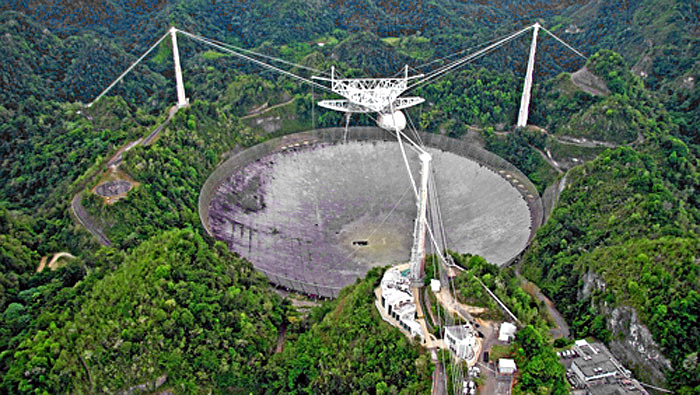
The Arecibo Observatory by JidoBG [CC-BY-SA 4.0]
But how long will the repairs take, and who’s going to pay for them? It’s no secret that funding for the 60 year old telescope has been difficult to come by since at least the early 2000s. The cost of repairing the relatively minor damage to the telescope sustained during Hurricane Maria in 2017 may have been enough to shutter the installation permanently if it hadn’t been for a consortium led by the University of Central Florida. They agreed to share the burden of operating the Observatory with the National Science Foundation and put up several million dollars of additional funding.

It’s far too early to know how much time and money it will take to get Arecibo Observatory back up to operational status, but with the current world situation, it seems likely the telescope will be out of commission for at least the rest of the year. Given the fact that repairs from the 2017 damage still haven’t been completed, perhaps even longer than that. In the meantime, astronomers around the globe are left without this wholly unique resource.

Continue reading “Damage To Arecibo Leaves Gaping Hole In Astronomy”
The CIA’s Corona Project Was About Satellites, Not A Virus

We take orbital imagery for granted these days, but there was a time that it was high technology and highly secretive. [Scott Manley] has a good overview of the CIA’s Corona spy satellites, along with declassified images from the early days of the program.

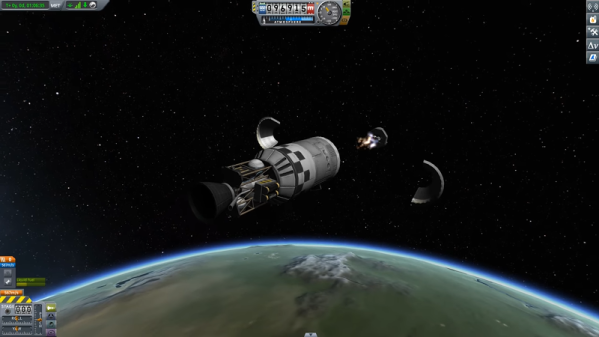
It seems strange today, but the spy images needed high resolution and the only practical technology at the time was film. The satellite held a whopping 3,000 feet of film and, once shot, a capsule or bucket would return to Earth for retrieval and development. They didn’t make it to land — or at least they weren’t supposed to. The CIA didn’t want opponents sweeping up the film so an airplane was supposed to snag the bucket as it descended on a parachute, a topic covered in [Tom Nardi’s] article about the history of catching stuff as it falls from space.

The early cameras could see detail down to about 40 feet. By the end of the program in the 1970s, improved cameras could see down to 3 feet or less. Later satellites had a 3D-capable camera and multiple return buckets. The satellites were — officially — a program to expose biological samples to the space environment and return them for analysis. The Discover program was pure cover and the whole thing was declassified in 1992.

Of course, film from airplanes also had a role. Some spy satellites tried to scan film and send the data back, but that saw more use on lunar missions where returning a capsule to Earth was a lot more difficult.

Continue reading “The CIA’s Corona Project Was About Satellites, Not A Virus”

The Smell Of Space

In space, so the Alien tagline goes, nobody can hear you scream. One of the most memorable pieces of movie promotion ever, it refers to the effect of the vacuum of space on the things human senses require an atmosphere to experience. It’s a lesson that Joss Whedon used to great effect with the Serenity‘s silent engine light-ups in Firefly, while Star Wars ignored it completely to give us improbable weapon noises in space battles.

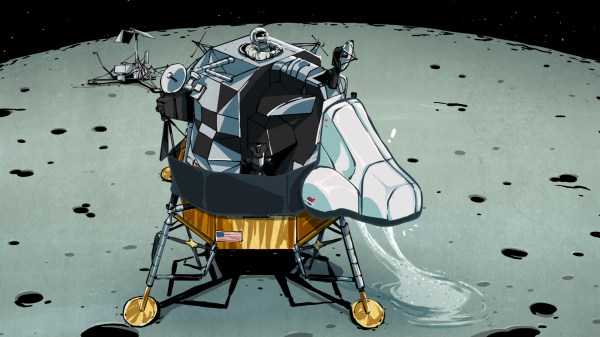
Sound may not pass through the vacuum of space, but that’s not to say there are not things other than light for the senses. The Apollo astronauts reported that moon dust released a smell they described as akin to burnt gunpowder once it was exposed to the atmosphere inside their lander, and by now you may have heard that there is a Kickstarter that aims to recreate the smell as a fragrance. Will it replace the cloying wall of Axe or Lynx Africa body spray that pervades high-school boys’ changing rooms, or is it a mere novelty?

Continue reading “The Smell Of Space”

Geocaching On Mars: How Perseverance Will Seal Martian Samples With A Return To Earth In Mind

With the roughly 20-day wide launch window for the Mars 2020 mission rapidly approaching, the hype train for the next big mission to the Red Planet is really building up steam. And with good reason — the Mars 2020 mission has been in the works for a better part of a decade, and as we reported earlier this year, the rover it’s delivering to the Martian surface, since dubbed Perseverance, will be among the most complex such devices ever fielded.

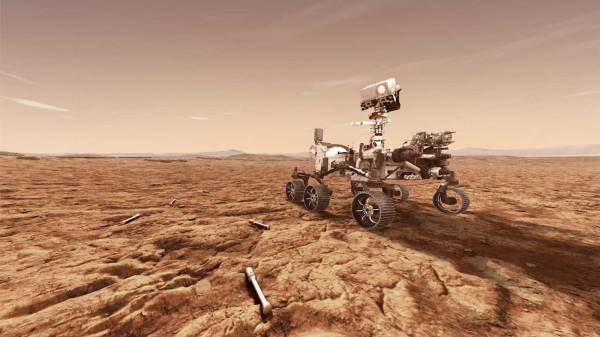
“Percy” — come on, that nickname’s a natural — is a mobile laboratory, capable of exploring the Martian surface in search of evidence that life ever found a way there, and to do the groundwork needed if we’re ever to go there ourselves. The nuclear-powered rover bristles with scientific instruments, and assuming it survives the “Seven Minutes of Terror” as well as its fraternal twin Curiosity did in 2012, we should start seeing some amazing results come back.

No prior mission to Mars has been better equipped to answer the essential question: “Are we alone?” But no matter how capable Perseverance is, there’s a limit to how much science can be packed into something that costs millions of dollars a kilogram to get to Mars. And so NASA decided to equip Perseverance with the ability to not only collect geological samples, but to package them up and deposit them on the surface of the planet to await a future mission that will pick them up for a return trip to Earth for further study. It’s bold and forward-thinking, and it’s unlike anything that’s ever been tried before. In a lot of ways, Perseverance’s sample handling system is the rover’s raison d’être, and it’s the subject of this deep dive.

Continue reading “Geocaching On Mars: How Perseverance Will Seal Martian Samples With A Return To Earth In Mind”

What Is The Tianwen-1 Probe Saying?

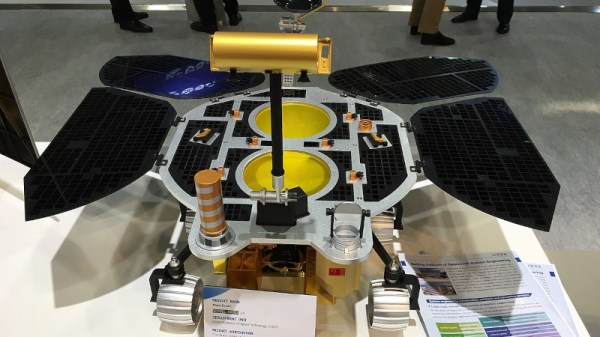
A few days ago, the Chinese National Space Administration launched their Tianwen-1 mission to Mars from their launch site in the province of Hainan. It should arrive at the Red Planet in April 2021, when it will face the daunting task of launching a surface probe from its orbiting component, which will release a rover once it has reached the surface. Like all such missions it’s in constant contact with its controllers on the ground, and as with any radio transmissions floating through the aether its telemetry has been received by the radio hacker community and analaysed by [r00t].

Straight away there’s something interesting in the modulation scheme, instead of a carrier with modulation applied to it there is a main unmodulated centre carrier, and the data appears instead on a series of subcarriers. Is this a feature of its being a space probe, the unmodulated carrier making it easier to find and track in deep space?

They quickly find the telemetry carrier, and decode its frames. It carries a series of data sets, including positional and instrumentation data. From the positional data they can tell when the craft has made any course changes, and from the sensor data such as the solar sensor its movement can be deduced and graphed. It makes for a fascinating insight into the mission, and we’re grateful for the analysis.

Mars is a notoriously difficult target for space probes, somewhere that multiple missions have for various reasons failed to reach. We hope the Tianwen-1 mission is ultimately successful and that in time the Chinese space people will in due course be showing us some of the fruits of their labours. They’re not alone in launching this month, so we’ve got a plethora of Mars-related stories to look forward to next year.

Header image: Tianwen-1 rover mockup. Pablo de León‎ / CC BY-SA 3.0

Falcon 9 Beats Shuttle’s Reflight Record, But Still Has A Long Way To Go

Put simply, the goal of any reusable booster is to reduce the cost of getting a payload into space. The comparison is often made to commercial aviation: if you had to throw away the airliner after every flight, nobody could afford the tickets. The fact that the plane can be refueled and flown again and again allows operators to amortize its high upfront cost.

In theory, the same should hold true for orbital rockets. With enough flight experience, you can figure out which parts of the vehicle will need replacement or repair, and how often. Assuming the fuel is cheap enough and the cost of refurbishment doesn’t exceed that of building a new one, eventually the booster will pay for itself. You just need a steady stream of paying customers, which is hardly a challenge given how much we rely on our space infrastructure.

But there’s a catch. For the airliner analogy to really work, whatever inspections and repairs the rocket requires between missions must be done as quickly as possible. The cost savings from reuse aren’t nearly as attractive if you can only fly a few times a year. The key to truly making space accessible isn’t just building a reusable rocket, but attaining rapid reusability.

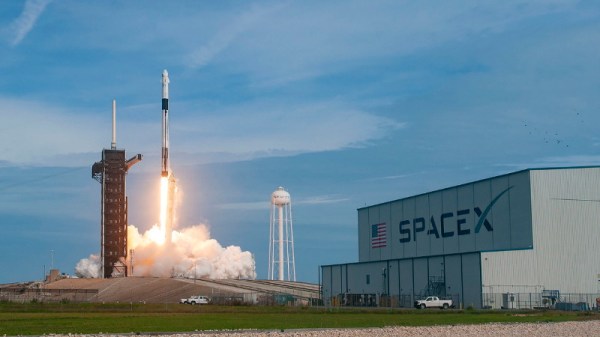
Which is precisely where SpaceX currently finds themselves. Over the years they’ve mastered landing the Falcon 9’s first stage, and they’ve even proven that the recovered boosters can be safely reused for additional flights. But the refurbishment process is still fairly lengthy. While their latest launch officially broke the record for fastest reflight of a space vehicle that had previously been set by Space Shuttle Atlantis, there’s still a lot of work to be done if SpaceX is ever going to fly their rockets like airplanes.

Continue reading “Falcon 9 Beats Shuttle’s Reflight Record, But Still Has A Long Way To Go”

The WISE In NEOWISE: How A Hibernating Satellite Awoke To Discover The Comet

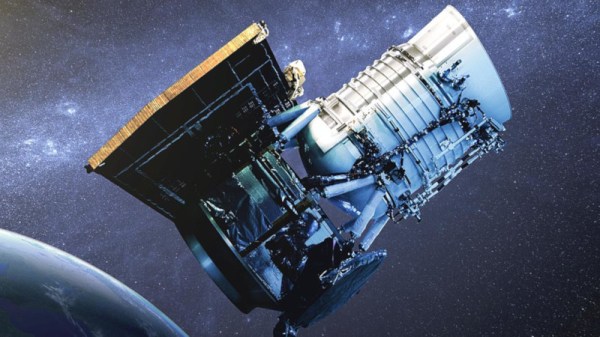
Over the last few weeks the media has been full of talk about NEOWISE, one of the brightest and most spectacular comets to ever pass through our solar system that you can still see if you hurry. While the excitement over this interstellar traveler is more than justified, it’s also an excellent opportunity to celebrate the Wide-field Infrared Survey Explorer (WISE) space telescope it was named after. The discovery of this particular comet is just the latest triumph in the orbiting observatory’s incredible mission of discovery that’s spanned over a decade, with no signs of slowing down anytime soon.

In fact, WISE has been operational for so long now that its mission has evolved beyond its original scope. When it was launched in December 2009 from California’s Vandenberg Air Force Base, its primary mission was scheduled to be completed in less than a year. But like many NASA spacecraft that came before it, WISE achieved its original design goals and found itself ready for a new challenge. Though not before it spent almost three years in hibernation mode as the agency decided what to do with it.

Continue reading “The WISE In NEOWISE: How A Hibernating Satellite Awoke To Discover The Comet”