ZeroPlus Logic Cube Modification

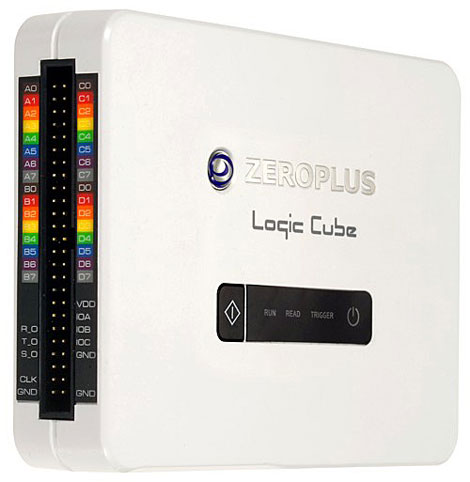
the folks over at OpenSchemes are at it again. This time they’ve cracked open a low end ZerPlus logic analyzer and modified it to function the same as the higher end model. The 16 channel version they purchased appeared to be fully capable of handling the 32 channels of the more expensive model. The installation of the additional components looks like it might be somewhat difficult, but it is certainly cheap.We love seeing things upgraded for cheap. You might recognize OpenSchemes from when they upgraded the DMM tweezers or hacked the USB serial adapters.

[via HackedGadgets]

Lawnbot 400: An Update To An Update

Driven by the relentless nagging encouragement of the Hackaday commenters, [Johndavid400] has improved the Lawnbot 400. No longer does it just sport a makeshift wooden shelf. he now has a wheel barrow attachment. It looks quite sturdy as long as that front hinge holds out. There is an actuator coming in the near future for dumping the contents as well. Also, we suspect that might be a shovel in this picture.

Laser Cutting Solder Stencils

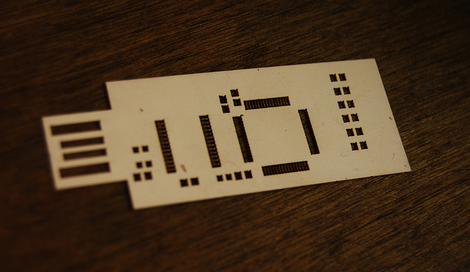
Do you have access to a laser cutter? If so, you can use [Riley Porter’s] method to cut your own solder stencils. He starts with the Eagle files and exports the Dimension and tCream layers to a PDF. That file is then processed using Ghostwriter, Gview, and finally, Corel draw. The result is a 1200dpi file to feed to your Epilog laser. Now you’re ready to stencil on the solder paste and populate the PCB.

[Thanks Travis Goodspeed]

PCB Drill Press On A Budget

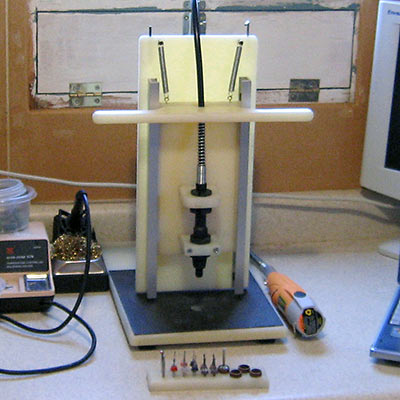
An accurate drill press is an essential tool for making your own through-hole printed circuit boards at home. Reader [Josh Ashby] offers up a solid design using scrap bin materials.

A major issue with PCB drilling is that even the slightest horizontal play will snap the delicate carbide drill bit. Hobbyist-grade tools such as Dremel’s drill press attachment are usually too sloppy for this task, while a more precise instrument might set you back a couple hundred bucks.

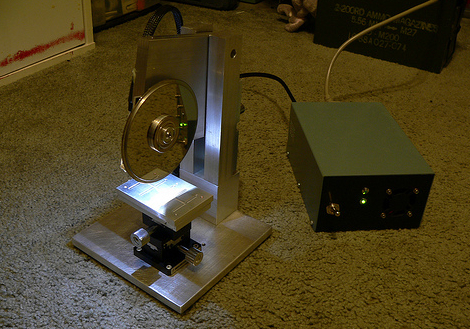
[Josh’s] design uses a nylon “sled” moving vertically in an aluminum u-channel track. Most of these materials were salvaged or were acquired inexpensively from a local hardware store, and assembled in less than a day. Surprisingly, this low-tech approach has proven sufficiently smooth that he’s yet to break a bit while drilling. And the entire setup, including the knockoff Harbor Freight rotary tool, cost less than the wobbly name-brand accessory alone.

JeeNode Development Platform

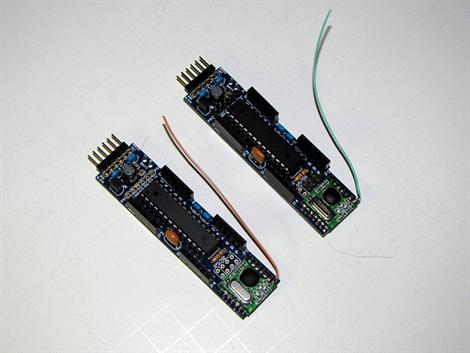
It is basically a nice compact layout for an Atmel Atmega 328 with a wireless module.  Fully compatible with the Arduino IDE.  The JeeNode is available in kit form, but also all schematics and CAD files are available to download. It looks like they are mainly using it for home monitoring and control.  So far we’ve seen them put a temp sensor, power metering, and IR LED modules on their flickr set.

50MHz To 100Mhz Scope Conversion

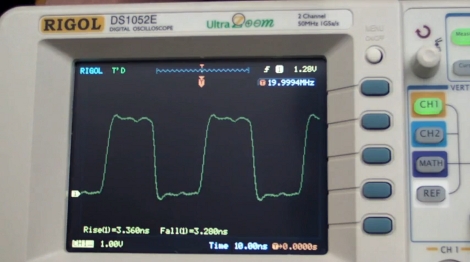
[Ross] is the proud owner of a 50 MHz Rigol DS1052E oscilloscope. He’d like to have the 100 MHz version but the $400 difference in price puts it out of his reach. After some extensive poking around on the PCB and pouring over datasheets, he managed to reverse engineer the design and upgrade to a 100 MHz version. This is as easy as desoldering one capacitor to deactivate a high-pass filter present in the lesser model of scope, unlocking the faster potential of its bigger brother.

Game Glove Learns Your Weakness

[Steve Hoefer] pulled together a great hack for the friendless. This glove will play a heated game of rock-paper-scissors against you. [Steve] realized that the middle and fourth fingers are all that need to be monitored to decide which of the three signs you are making. He used flex sensors on the back of these fingers as an input. There is also an accelerometer to judge the three shakes that lead up to the shoot.

The small screen you see displays what the glove chose and is a hack in itself. This idea adapts from an Evil Mad Scientist project, using three sheets of acrylic etched with the different icons and edge-lit with LEDs. All of this, along with a speaker and scoreboard, connect to an Arduino. The icing on the cake? [Steve] coded an adaptive learning algorithm that observes your playing style to gain an advantage.

See this in action after the break. Once you’ve mastered rock-paper-scissors you should consider building other glove-based peripherals.

Continue reading “Game Glove Learns Your Weakness”