Terminal Node Controller In A Router

[Andrew] used a DSL router to make his own Terminal Node Controller. This will become part of an APRS-IS network, an Internet-based network built by amateur radio operators. The router used here is a Dlink DSL-502T with an AVR based TNC module attached to the serial port header. The phone line connector and its accompanying hardware have been removed to make room for the TNC module, which is supplied with 12V via that red wire. When the router boots up it sends data to the serial port header so the firmware on the TNC needed some tweaking to accommodate this (yay for open source).

Want some more APRS goodness? Check out this AVR APRS tracker.

Wifi Hotspot Powered By Wind Turbine And Solar Panel

[youtube=http://www.youtube.com/watch?v=z-MZmQqxrYM]

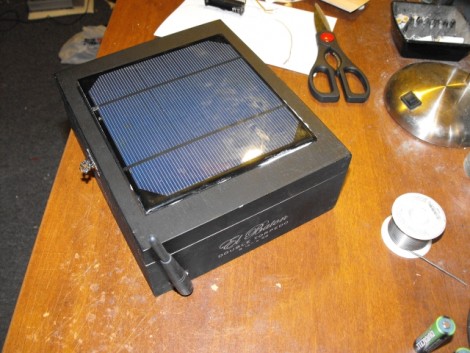
Students at the Rochester Institute of technology have put together this WiFi hotspot that is powered by a wind turbine and a solar panel. It gets its signal through a parabolic antenna pointed at a near by building and repeats it for use in the vicinity. They are using a 30W solar panel, along with a 1/4 horse power 90V DC motor to charge two 6V batteries in series. On a windy day, the turbine has yielded 120W. Something interesting to note is a comment they made about blades. Though the ultimately decided to mimic a commercial design for wind turbines, they found the most efficient to be a single wood prop. Unfortunately, that prop was destroyed.

[via HackedGadgets]

Building A Remote Control

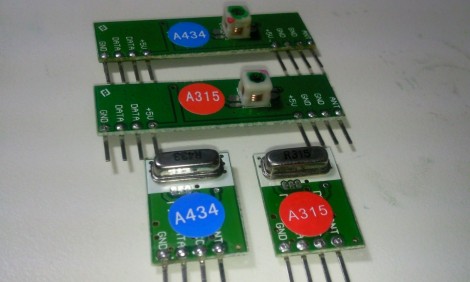
Here’s a homebrew remote control that [Jad Berro] is developing. He’s using a tank robot to test it out but eventually he plans to use it to control an RC plane thanks the 434 MHz wireless module inside. There’s no shortage of input, with two analog sticks from a PlayStation controller, several momentary push buttons, and some toggle switches. Although it’s not shown in the picture above there is also a 16×2 character display that serves as part of the interface. With a navigable menu the only limit to what you can do is the programming space available on the ATmega168 that inhabits the homemade Arduino board at the heart of the system. It certainly would give the robot remote from Friday a run for its money.

Reverse Engineering An RF Clicker

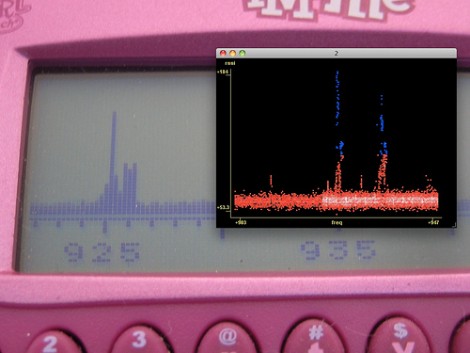
[Travis Goodspeed] has pulled apart a TurningPoint response card, which is an RF device for answering quizzes, attendance checks,  and casting votes in a classroom setting. After tearing it apart, he set out to reverse engineer it and managed to get quite a lot done. At this point he can spoof cards, so he could fake his or several people’s attendance. He can also sniff the packets as they are sent, opening up a plethora of opportunities to mischief. The one that was mentioned in the tip line was to simply repeat the answer that was most often sent for the quizzes. The writeup is very detailed and has great pictures. Good job [Travis].

[thanks Springuin]

Wireless Presenters Easily Cracked

While hacking a wireless presenter doesn’t sound like something worthwhile or interesting, [Niels Teusink] demonstrates that these little devices often are a lot more powerful than we give them credit.

With an Arduino, plenty of research, and some heavy sniffing of a wireless presenter’s SPI and then wireless interface [Niels] is able to emulate an entire keyboard. Sending commands as harmless as “next slide” to the devastating “[Win+R] Format C:”. Hopefully anyone planning such a project at the next Apple or Microsoft keynote just intends some gentle fun.

Related: Wireless keyboards easily cracked.

[Thanks Dan Ransom]

RFID Transplant

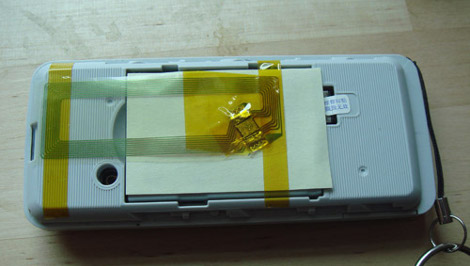
[Zach Charat] didn’t want to carry around yet another card with him so he transplanted the RFID guts from his card to his phone. Soaking the card in nail polish remover for twelve hours got him nowhere, but when he broke out the acetone the card was falling apart in 30 seconds. Above you can see the tiny chip and loop antenna that were left after ditching the plastic. The black bits are electrical tape which he then used to embed this in his Palm Pre’s touchstone charger plate ( which we just saw this in a hack last week).

This works, and while you’re waiting for the world to implement the Leeloo Dallas Multipass it’s a great solution.

[Thanks Coveredwagonkid via Pre Central]

Wireless Accelerometer Project

[Jerome Demers] sent us his extremely detailed semester project. The two part system consists of PICs connected to XBee modules and accelerometers. By using the device a coach can monitor an athlete and correct their minute mistakes.

Did we mention [Jerome] was very detailed? He also goes into the particulars of designing the circuit, using solder paste and baking, designing and laser cutting a case, and even some fun stories. Well worth the read if you have the time.