If you have a 12 VDC power system, like the battery of a PV solar system or car, would it be more efficient to boil water for that cup of tea with that 12V straight from the battery, or use a 240 VAC mains kettle via a ~90% efficient inverter instead? That’s the question that [Cahn] decided to answer experimentally, using a bulky 3 kW inverter and a collection of electric kettles.
Although the used amount of 500 mL of water is boiled much faster in the 2,200 Watt mains kettle than in the 150 and 350 Watt low-voltage kettles, this obvious difference is somewhat irrelevant if you’re only concerned with efficiency. To measure the power used a Victron smart shunt was used with each run, keeping in mind that a perfect efficiency for heating 500 mL from room temperature to boiling is around 43-44 Wh.
With two runs per kettle, the 240 VAC kettle used 65-70 Wh. The first ‘150 Watt’ kettle pulled nearly 200 Watt to boil the water after about 20 minutes, using 62-64 Wh. The second ‘150 Watt’ kettle pulled around 180 Watt, took 23-25 minutes and used 68-74 Wh. Finally, the ‘350 Watt’ kettle drew over 420 Watt and used 50-56 Wh in just over 8 minutes.
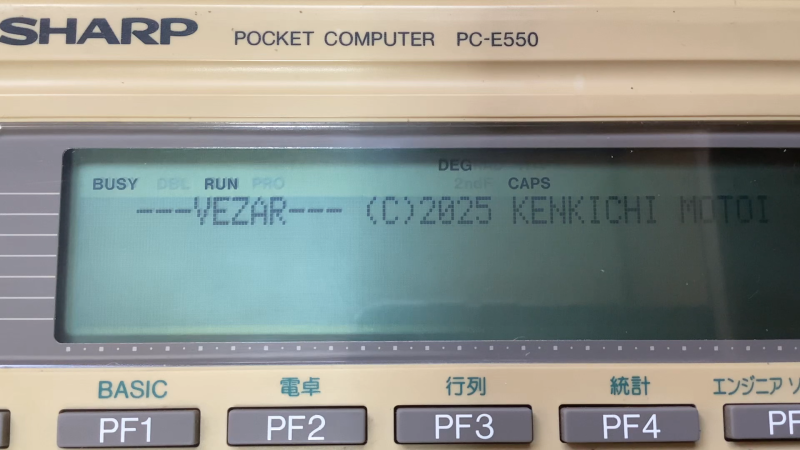
Pocket computers like Sharp’s 8-bit computing marvels were a big part of the 1980s, providing super-portable processing power to anyone who wanted a bit more than what something like a scientific calculator could provide at the time. These days they are mostly just a collector’s item for retrocomputing enthusiasts, which also means that a lot of the knowledge about how to program the CPUs in them is at risk of being lost.
This is why [gikonekos] decided to combine as much knowledge they can glean from official documentation into a reference project on GitHub for the SC62015 equipped Sharp pocket computers like the PC-E550.
Generally you’d program in Sharp’s dialect of BASIC on these computers, such as the ‘PLAY3’ program that [gikonekos] recently unearthed from a November 1993 copy of ‘Pocket Computer Journal’ using which you can create polyphonic tunes. This only unlocks a small part of what the hardware can do, of course, so having a full opcode reference like this is important.
While still a work in progress, it’ll eventually contain the full opcode and register tables, addressing modes, instruction summaries and of course a full accounting of how all of this was reconstructed. As the original Sharp documentation wasn’t released to the public, providing these scans is also not a goal, especially not under any kind of free license.
A cursory search reveals an instruction table for the PC-E500 from 1995 by [Andrew Woods], so documenting this is not a new thing, although at the time these Sharp pocket PCs didn’t count as ‘retro systems’ yet.
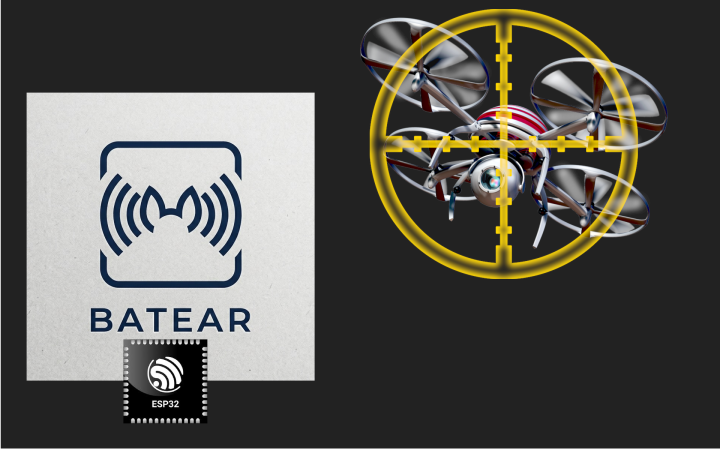
We don’t usually speculate on the true identity of the hackers behind these projects, but when [TN666]’s accoustic drone-detector crossed our desk with the name “Batear”, we couldn’t help but wonder– is that you, Bruce? On the other hand, with a BOM consisting entirely of one ESP32-S3 and an ICS-43434 I2S microphone, this isn’t exactly going to require the Wayne fortune to pull off. Indeed, [TN666] estimates a project cost of only 15 USD, which really democratizes drone detection.
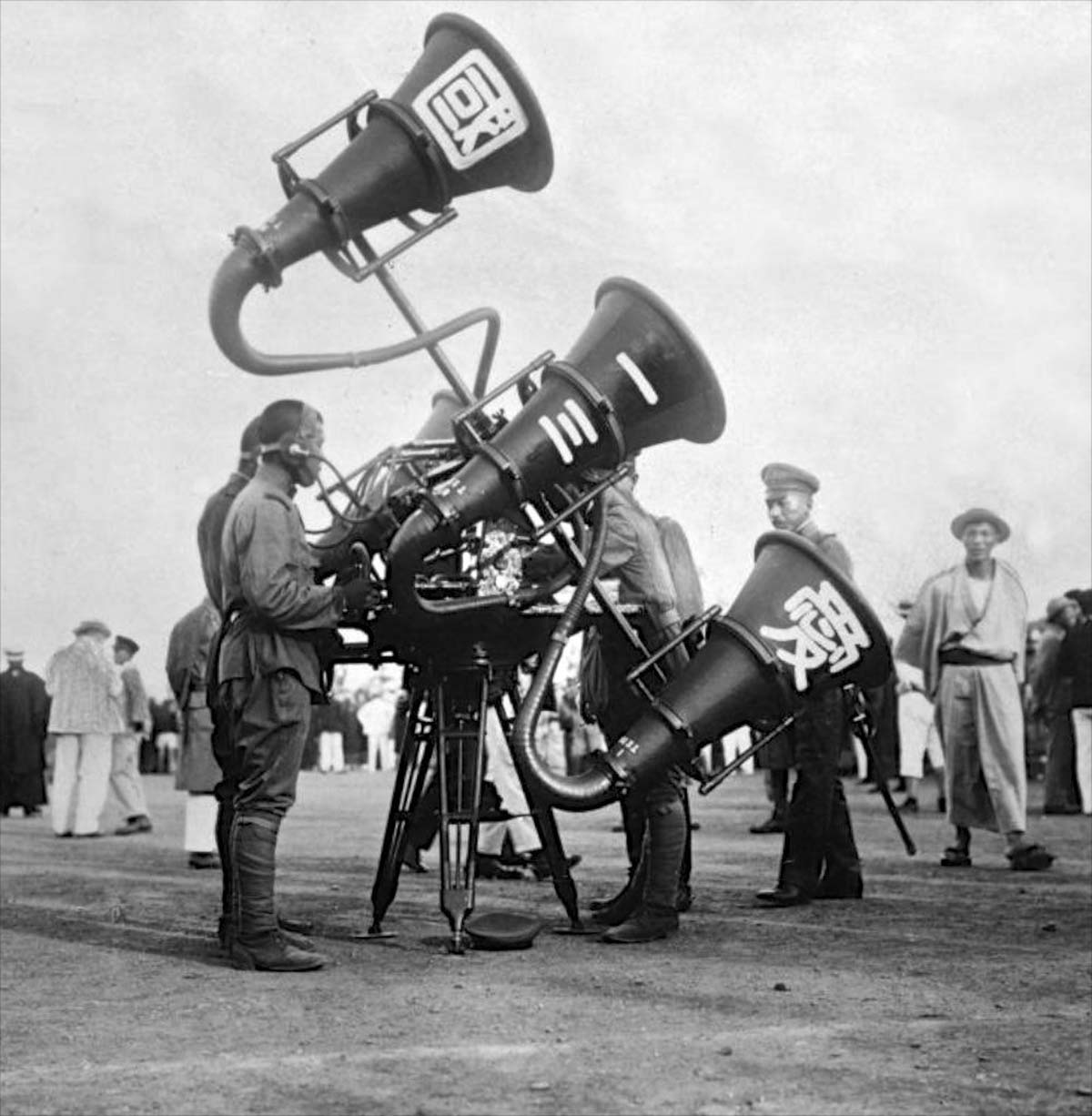
It’s not a tuba– Imperial Japanese aircraft detector being demonstrated in 1932. Image Public Domain via rarehistoricalphotos.com
The key is what you might call ‘retrovation’– innovation by looking backwards. Most drone detection schema are looking to the ways we search for larger aircraft, and use RADAR. Before RADAR there were acoustic detectors, like the famous Japanese “war tubas” that went viral many years ago. RADAR modules aren’t cheap, but MEMS microphones are– and drones, especially quad-copters, aren’t exactly quiet. [TN666] thus made the choice to use acoustic detection in order to democratize drone detection.
Of course that’s not much good if the ESP32 is phoning home to some Azure or AWS server to get the acoustic data processed by some giant machine learning model. That would be the easy thing to do with an ESP32, but if you’re under drone attack or surveillance it’s not likely you want to rely on the cloud. There are always privacy concerns with using other people’s hardware, too. [TN666] again reached backwards to a more traditional algorithmic approach– specifically Goertzel filters to detect the acoustic frequencies used by drones. For analyzing specific frequency buckets, the Goertzel algorithm is as light as they come– which means everything can run local on the ESP32. They call that “edge computing” these days, but we just call it common sense.
The downside is that, since we’re just listening at specific frequencies, environmental noise can be an issue. Calibration for a given environment is suggested, as is a foam sock on the microphone to avoid false positives due to wind noise. It occurs to us the sort physical amplifier used in those ‘war tubas’ would both shelter the microphone from wind, as well as increase range and directionality.
[TN] does intend to explore machine learning models for this hardware as well; he seems to think that an ESP32-NN or small TensorFlow Lite model might outdo the Goertzel algorithm. He might be onto something, but we’re cheering for Goertzel on that one, simply on the basis that it’s a more elegant solution, one we’ve dived into before. It even works on the ATtiny85, which isn’t something you can say about even the lightest TensorFlow model.
Thanks to [TN] for the tip. Playboy billionaire or not, you can send your projects into the tips line to see them some bat-time on this bat-channel.
On Friday, Reuters reported that Amazon is going to try to get into the smartphone game…again. The Fire Phone was perhaps Amazon’s biggest commercial misstep, and was only on the market for about a year before it was discontinued in the summer of 2015. But now industry sources are saying that a new phone code-named “Transformer” is in the works from the e-commerce giant.
At this point, there’s no word on how much the phone would cost or when it would hit the market. The only information Reuters was able to squeeze out of their contacts was that the device would feature AI heavily. Real shocker there — anyone with an Echo device in their kitchen could tell you that Amazon is desperate to get you talking to their gadgets, presumably so they can convince you to buy something. While a smartphone with even more AI features we didn’t ask for certainly won’t be on our Wish List, if history is any indicator, we might be able to pick these things up cheap on the second-hand market.
On the subject of AI screwing everything up, earlier this week, the Electronic Frontier Foundation reported that The New York Times had started blocking the Internet Archive’s crawlers, citing concerns over their content being scraped up by bots for training data. The EFF likens this to a newspaper asking libraries to stop storing copies of their old editions, and warns that in an era where most people get their news via the Internet, not having an archived copy of sites like The Times will put holes in the digital record. They also point out that mirroring web pages for the purposes of making them more easily searchable is a widely accepted practice (ask Google) and has been legally recognized as fair use in court.
Assuming we take the NYT’s side of the story at face value, there’s a tiny part of our cold robotic heart that feels some sympathy for them. Over the last year or so, we’ve noticed some suspicious activity that we believe to be bots siphoning up content from the blog and Hackaday.io, and it’s resulted in a few technical headaches for us. On the other hand, what’s Hackaday here for if not to share information? Surely the same could be said for any newspaper, be it the local rag or The New York Times. If a chatbot learning some new phrases from us is the cost of doing business in 2026, so be it. Can’t stop the signal.
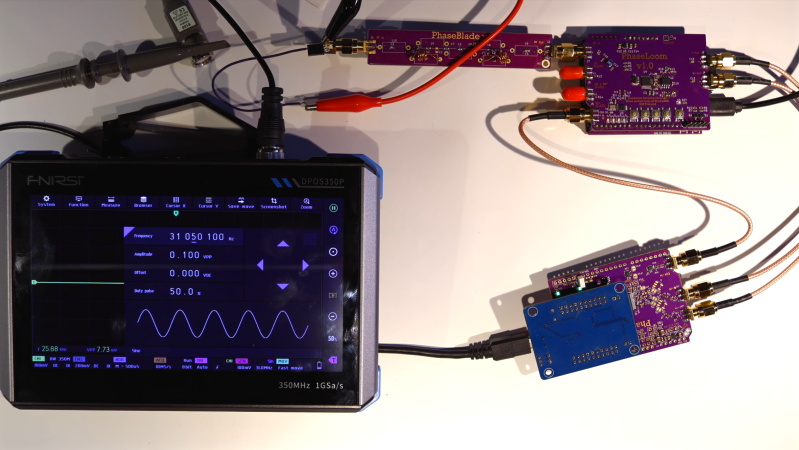
Although the RTL-SDR is cheap, accessible, and capable enough for many projects, it does have some important limitations. In particular, its bandwidth is limited to about 3.2 MHz, and the price of SDRs tends to scale rapidly with bandwidth. [Anders Nielsen], however, is building a modular SDR with a target price of $50 USD, and has already reached a bandwidth of almost 20 MHz.
If this project looks familiar, it’s because we’ve covered an earlier iteration. At the time, [Anders] had built the PhaseLoom, which filters an incoming signal, mixes it down to baseband, and converts it to I/Q signals. The next stage is the PhaseLatch, a board housing a 20-MHz, 10-bit ADC, which samples the in-phase and quadrature signals and passes them on to a Cypress FX2LP microcontroller development board. [Anders] had previously connected the ADC to a 6502 microprocessor instead of the FX2LP, but this makes it a practical SDR. The FX2LP was a particularly good choice for this project because of its USB 2.0 interface, large buffers for streaming data, and parallel interface. It simply reads the data from the SDR and dumps it to the computer.
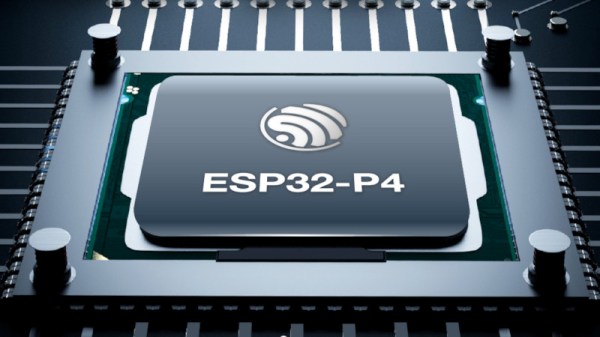
We’re used to electronic parts of the same type staying predictably the same, sometimes over many years. An early Z80 from the mid 1970s can be exchanged with one from the end of production a few years ago, for example. This week, we’ve had DMs from several readers who’ve found that this is not always the case, and the culprit is surprising. Espressif has released a new revision of their P4 application processor, and though it’s ostensibly the same, there are a couple of changes that have been catching people out.
The changes lie in both hardware and software, in that there’s a pin that’s changed from NC to a power rail, a few extra passives are needed, and firmware must be compiled separately for either revision. The problem is that they are being sold as the same device and appear in some places under the same SKU! This is leading to uncertainty as to which P4 revision is in stock at wholesalers. We’ve been told about boards designed for the old revision being assembled with the new one, a situation difficult to rework your way out of. Designers are also left uncertain as to which firmware build is needed for boards assembled in remote factories.
The ESP32-P4 is an impressive part for its price, and we’re sure that we’ll be seeing plenty of projects using this new revision over the coming years. We’re surprised that it doesn’t have a different enough part number and that the wholesalers have seemingly been caught napping by the change. We’re told that some of the well-known Chinese assembly houses are now carrying the two chips as separate SKUs, but that’s scant consolation for a designer with a pile of boards carrying the wrong part. If you’re working with the P4, watch out, make sure your board is designed for the latest revision, and ask your supplier to check which chips you’ll get.
As the sun goes down on a glorious spring evening on the western edge of Europe, Elliot Williams is joined by Jenny List for a look at the week in all things Hackaday.
First up: Hackaday Europe tickets are on sale! Bad luck folks, the early bird tickets disappeared in an instant, but regular ones are still available for now. We’re really looking forward to making our way to Lecco for a weekend of hacks, and it would be great to see you there too.
Then we have a new feature for the podcast, the Hackaday Mailbag. This week’s contribution comes from [Kenny], a longtime friend of Hackaday and probably our most regular conference attendee.
To the hacks, and we have some good ones. An air hockey robot might not seem like a challenge, but the engineering which went into [BasementBuilds’] one proves it’s not a job for the faint hearted. Then we look at compression molding of recycled plastic using 3D-printed molds, something that seems surprisingly accessible and we’d like to try, too. We’ve got a new DOS, a 3D-printed zipper repair, the IPv4 replacement we didn’t get, and the mind-bending logic of ternary computing. It’s one of those weeks where the quick hacks could all deserve their own in-depth look, but perhaps the stand-outs are and Arduino style compiler that includes the source code compressed within the binary, and a beautifully-done revival of a 1980s brick cellphone as a modern 5G unit.
Finally in the longer reads we’ve got an examination of wired versus Bluetooth headphones — we’re both in the wired camp — and a look back at the age of free dialup. As is so often the case, the experience there differed between Brits and Americans. Anyway, enjoy the episode, and we have another week to look forward to.