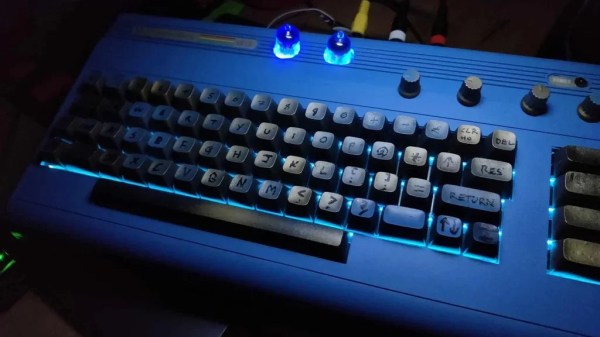
The Commodore 64 is celebrated to this day for its capable SID sound chip, which provided the soundtrack for some of the best video games of its era. Even today, it’s still in demand as a chiptune synth. [gavinlyons] decided to take a breadbox-style C64 and mod it to be a more dedicated synth platform, creating what he calls the Cyanodore 6.
The build starts by equipping the C64 with MIDI via a C-LAB interface cartridge. Software is loaded on to the C64 via a readily-available SD2ISEC converter, which lets the retro computer run off SD cards. The original SID was removed and replaced with an ARMSID emulator instead, giving the rig stereo output with some custom wiring. Four potentiometers were also added to control various synth parameters by wiring them into the C64’s two joystick ports. There are a variety of synth programs that can run on the C64, with [gavinlyons] noting CynthCart, STATION64, and MicroRhythm as popular choices. Other nifty mods include the keyboard illumination, tube preamp, and integrated 7″ LCD screen.
If you’re looking to start using your C64 as a performance instrument, this build is an excellent starting point. We’ve seen other neat builds in this area before, too. It’s got just about everything you’ll need on stage. Video after the break.
Continue reading “Cyanodore 6 Is A Rad Commodore 64 Synthesizer”
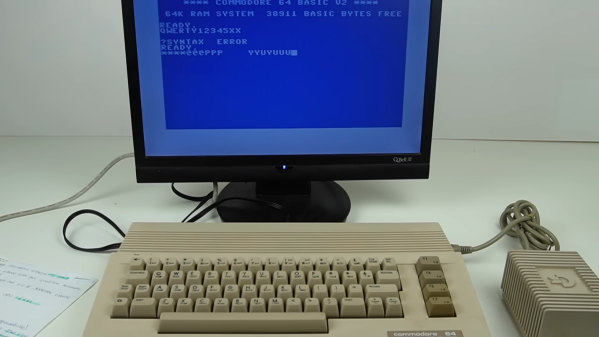
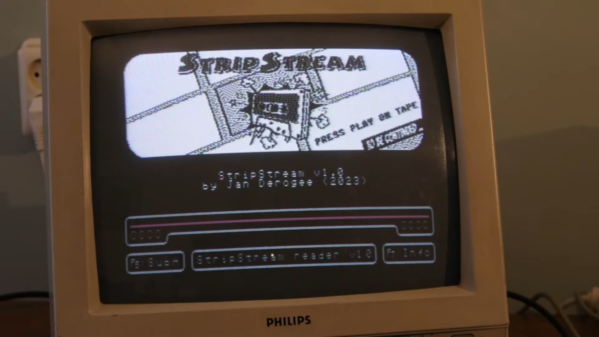
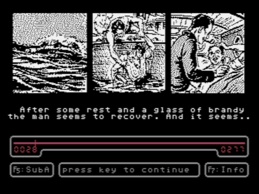 StripStream runs on a stock PAL C64 system, using the Datasette interface. A PC program is used to compose a comic into a suitable format for the C64. It then generates a .TAP file which can either be played in a C64 emulator, or recorded onto an audio tape for loading on real hardware.