The Price Of Domestic Just In Time Manufacturing

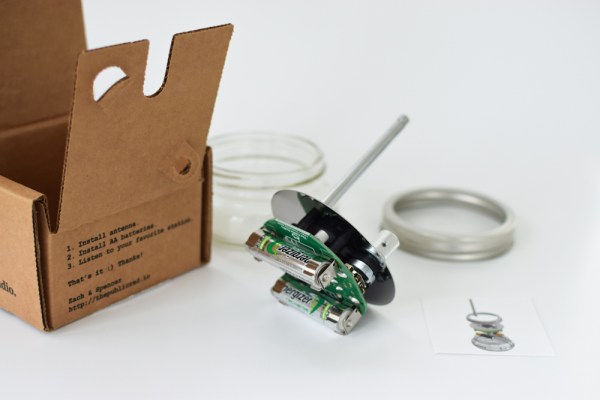
Hardware is hard, manufacturing only happens in China, accurate pricing is a dark art. Facts which are Known To Be True. And all things which can be hard to conquer as an independent hardware company, especially if you want to subvert the tropes. You may have heard of [Spencer Wright] via his superb mailing list The Prepared, but he has also been selling an unusual FM radio as Centerline Labs for a few years. Two years ago they relaunched their product, and last year the price was bumped up by a third. Why? Well, the answer involves more than just a hand wave about tariffs.

The Public Radio is a single-station FM radio in a mason jar. It’s a seemingly simple single purpose hardware product. No big mechanical assemblies, no complex packaging, not even any tangential accessories to include. In some sense it’s an archetypically atomic hardware product. So what changed? A normal product is manufactured in bulk, tested and packaged, then stored in a warehouse ready to ship. But TPR is factory programmed to a specific radio station, so unless Centerline wanted one SKU for each possible radio station (there are 300) this doesn’t work. The solution was domestic (US) just in time manufacturing. When a customer hits the buy button, a unit is programmed, tested, packed, and shipped.

As with any business, there is a lot more to things than that! The post gives the reader a fascinating look at all the math related to Centerline Labs’ pricing and expenses; in other words, what makes the business tick (or not) including discussion of the pricing tradeoffs between manufacturing different components in Asia. I won’t spoil the logical path that led to the pricing change, go check out the post for more detail on every part. 

We love hearing about the cottage hardware world. Got any stories? Drop them in the comments!

Chinese Radio Telescope Hopes To Find Exoplanets FAST

People who enjoy radio are constantly struggling to find a place to erect a bigger and better antenna. Of course it’s a different story and the most hardcore end of the spectrum: radio astronomers. The Chinese are ready to open up a new radio telescope called FAST (Five-hundred-meter Aperture Spherical Radio Telescope). As the name implies, it is 500 meters in diameter which is about 1,600 feet — that five and a half American football fields or about four and half of the other kind of football field.

The new telescope will be the largest single-dish observatory in the world and will offer about twice the area of the next-largest single-dish instrument at Arecibo. The project is in a very remote location, presumably to reduce the level of local radio interference — it’s hard to find radio quiet zones in heavily populated areas.

Scientists hope the huge antenna will help solve the mystery of fast radio bursts and may even study exoplanets. In fact, earlier this year, the instrument detected hundreds of fast radio bursts from a source, many of which were too faint to be heard by lesser antennas. There are also plans to examine pulsars in an attempt to discover ripples in space-time. The location in the Dawodang depression of the Guizhou province uses about 4,400 panels and 2,000 mechanical winches to focus radio energy.

Other telescopes that use multiple dishes have more resolution and, in fact, FAST adds 3 dozen 5 meter commercial dishes to get an increase in resolution of 100 times. Of course, you could build your own, although to get up to 500 meters might be a stretch. If your backyard isn’t that big, you can build a tiny radio telescope too.

Manufacturing In China Hack Chat

Join us on Wednesday 10 July 2019 at noon Pacific for the Manufacturing in China Hack Chat with Jesse Vincent!

It started out where many great stories start: as a procrastination project. Open source developer Jesse Vincent decided that messing around with a new keyboard design was a better thing to spend time on than whatever he was supposed to be doing, and thus Keyboardio was born.

Their heirloom-grade keyboards of solid maple and with sculpted keycaps are unique to the eye and to the touch, but that’s only part of the Keyboardio story. Jesse has moved further down the road of turning a project into a product and a product into a company than most of us have, and he’s got some insights about what it takes. Particularly in climbing the learning curve of off-shore manufacturing, which will be the focus of this Hack Chat. Join us to learn all about the perils, pitfalls, and potential rewards of getting your Next Big Idea manufactured in China.

join-hack-chatOur Hack Chats are live community events in the Hackaday.io Hack Chat group messaging. This week we’ll be sitting down on Wednesday July 10 at 12:00 PM Pacific time. If time zones have got you down, we have a handy time zone converter.

Click that speech bubble to the right, and you’ll be taken directly to the Hack Chat group on Hackaday.io. You don’t have to wait until Wednesday; join whenever you want and you can see what the community is talking about.

Rare Earth Metals Caught In Trade War

It seems these days that the news is never good. Speaking from experience, that’s really nothing new; there’s always been something to worry about, and world leaders have always been adept at playing the games that inevitably lead to disturbing news. Wars always result in the very worst news, of course, and putting any kind of modifier in front of the word, like “Cold” or “proxy”, does little to ameliorate the impact.

And so the headlines have been filled these last months with stories of trade wars, with the primary belligerents being the United States and China. We’ve covered a bit about how tariffs, which serve as the primary weapons in any trade war, have impacted the supply of electronic components and other materials of importance to hackers.

But now, as the trade war continues, a more serious front is opening up, one that could have serious consequences not just to the parties involved but also to the world at large. The trade war has escalated to include rare earth metals, and if the threats and rumors currently circulating come to fruition, the technologies and industries that make up the very core of modern society will be in danger of grinding to a halt, at least temporarily.

Continue reading “Rare Earth Metals Caught In Trade War”

Solar Power Is Set To Get More Expensive

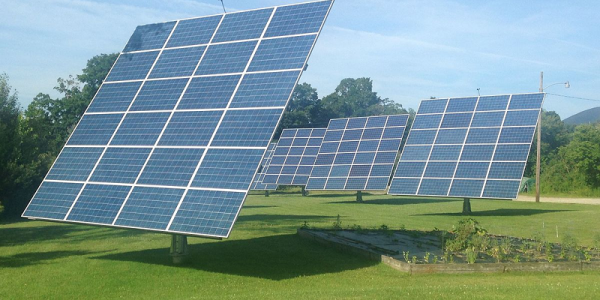
The sun constantly bathes half the planet with energy. The energy may be free, but the methods for converting it to electricity cost money. Last year, the Chinese government cut subsidies to their solar panel manufacturers to shrink the industry which was perceived as bloated. This forced Chinese solar panel makers to cut prices to clear inventory. This drove down prices about 30%, making solar power cheaper than ever.

Reuters is reporting that Eric Luo, president of one of the largest solar panel makers in China, predicts that “the party is definitely over.” Speaking at the World Economic Forum, Luo said that prices have quit dropping and he expected industry consolidation to cause prices to rise by as much as 15% over the next two years.

Continue reading “Solar Power Is Set To Get More Expensive”

The Short And Tragic Story Of Life On The Moon

The Moon is a desolate rock, completely incapable of harboring life as we know it. Despite being our closest celestial neighbor, conditions on the surface couldn’t be more different from the warm and wet world we call home. Variations in surface temperature are so extreme, from a blistering 106 C (223 F) during the lunar day to a frigid -183 C (-297 F) at night, that even robotic probes struggle to survive. The Moon’s atmosphere, if one is willing to call the wispy collection of oddball gasses including argon, helium, and neon at nearly negligible concentrations an atmosphere, does nothing to protect the lunar surface from being bombarded with cosmic radiation.

Von Kármán Crater

Yet for a brief time, very recently, life flourished on the Moon. Of course, it did have a little help. China’s Chang’e 4 lander, which made a historic touchdown in the Von Kármán crater on January 3rd, brought with it an experiment designed to test if plants could actually grow on the lunar surface. The device, known as the Lunar Micro Ecosystem (LME), contained air, soil, water, and a collection of seeds. When it received the appropriate signal, LME watered the seeds and carefully monitored their response. Not long after, Chinese media proudly announced that the cotton seeds within the LME had sprouted and were doing well.

Unfortunately, the success was exceptionally short-lived. Just a few days after announcing the success of the LME experiment, it was revealed that all the plants which sprouted had died. The timeline here is a bit hazy. It was not even immediately clear if the abrupt end of the LME experiment was intentional, or due to some hardware failure.

So what exactly do we know about Chang’e 4’s Lunar Micro Ecosystem, and the lifeforms it held? Why did the plants die? But perhaps most importantly, what does all this have to do with potential future human missions to that inhospitable rock floating just a few hundred thousand kilometers away from us?

Continue reading “The Short And Tragic Story Of Life On The Moon”

GoPro Factory Goes Nomad To Dodge Tariff Threat

Despite the fact that the United States and China are currently in the middle of a 90-day “cease fire” in their ongoing trade war, with new tariffs on hold until March 2019 while the two countries try to reach agreement, not everyone is waiting around to see who comes out on top. In a recent press release, action camera manufacturer GoPro has announced their intention to move some production out of China in the face of potential tariff expansions; which many analysts fear will be the result of the current stalemate. That’s right, only some of their production is moving.

“We’re proactively addressing tariff concerns by moving most of our US-bound camera production out of China,” says GoPro CFO Brian McGee. “We believe this diversified approach to production can benefit our business regardless of tariff implications.” Reading his words carefully, the key phrase here is “diversified approach”. GoPro doesn’t intend to move their entire production capability out of China, but only the production of the cameras which are designated for importation into the United States. GoPro models which are to be sold to other parts of the world will still be made in China.

This might seem an extravagant move just to avoid US tariffs, but with better than 40% of GoPro’s revenue for the third quarter of 2018 coming from the Americas, the company stands to be hit hard by the proposed 25% tax. Combined with the fact they shuttered their drone division last year citing “an extremely competitive aerial market”, and the proliferation of “GoPro clones” available for pennies on the dollar, it seems pretty clear that belt-tightening is the name of the game for the company that was once synonymous with action cameras.

Continue reading “GoPro Factory Goes Nomad To Dodge Tariff Threat”