Cooking With Plasma (Not Fire)

Cooking food with fire is arguably the technology that propelled humans to become the dominant species on Earth. It’s pretty straightforward to achieve, just requiring a fuel source, a supply of oxygen from the air, and a way to initiate the reaction; then it self-sustains. You wouldn’t think there’s much to improve, but what about cooking with plasma? [Jay] from the plasma channel is no stranger here, and he thinks that there may be something in this idea, certainly enough to actually build something.

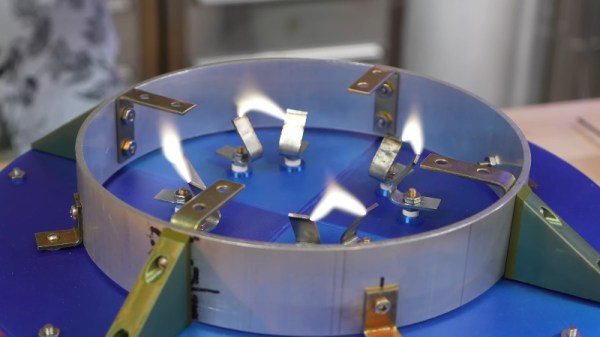
Now, let’s be straight with you, this isn’t a new concept, and you can buy a plasma-based cooking appliance right now. But they are all AC-powered devices. What if you want to go camping? [Jay] attempts (and succeeds) in building a portable, rechargeable 600W plasma cooking device that can actually cook food, but it was not all plain sailing.

The existing off-the-shelf ZVS driver modules available were a bit weak and unreliable, and the required flyback coils were hard to find with the right specs, so he needed to get down to work building custom parts. First off, the coils. Custom formers were resin-printed and machine-wound with 4000 turns of fine wire, and then resin-sealed into the former. [Jay] takes care to explain that it is crucial to get all the air out of the windings, or else local flashover breakdown will occur and wreck the coil in a short time. We reckon the resulting coils look amazing in their own right!
Continue reading “Cooking With Plasma (Not Fire)”

On The Nature Of Electricity: Recreating The Early Experiments

Bits of material levitating against gravity, a stream of water deflected by invisible means, sparks of light appearing out of thin air; with observations like those, it’s a wonder that the early experiments into the nature of electricity progressed beyond the catch-all explanation of magic. And yet they did, but not without a lot of lamb’s bladders and sulfur globes, and not a little hand waving in the process. And urine — lots and lots of urine.

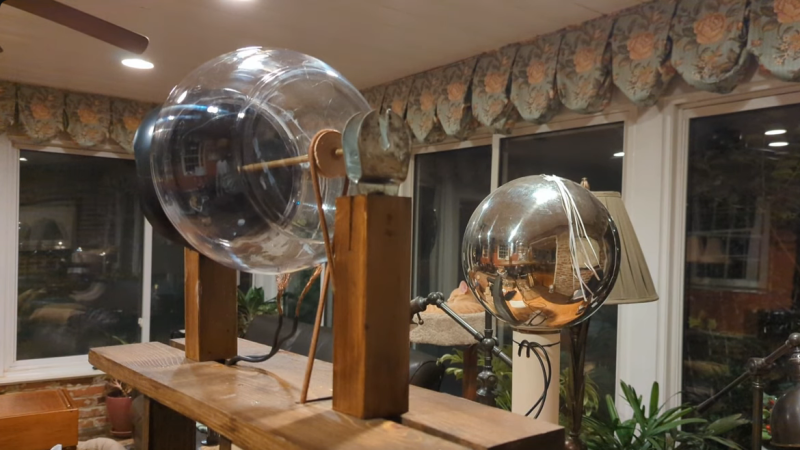
Looking into these early electrical experiments and recreating them is the unlikely space [Sam Gallagher] has staked out with the “Experimental History of Electricity,” a growing playlist on his criminally undersubscribed YouTube channel. The video linked below is his latest, describing the apparatus one Francis Hauksbee used to generate static electric charges for his early 18th-century experiments. Hauksbee’s name is nowhere near as well-known as that of Otto von Guericke or William Gilbert, who in the two centuries before Hauksbee conducted their own experiments and who both make appearances in the series. But Hauksbee’s machine, a rotating glass globe charged by the lightest touch of a leather pad, which [Sam] does a fantastic job recreating as closely as possible using period-correct materials and methods, allowed him to explore the nature of electricity in much greater depth than his predecessors.

But what about the urine? As with many of the experiments at the time, alchemists used what they had to create the reagents they needed, and it turned out that urine was a dandy source of phosphorous, which gave off a brilliant light when sufficiently heated. The faint light given off by mercury when shaken in the vacuum within a barometer seemed similar enough that it became known as the “mercurial phosphor” that likely inspired Hauksbee’s electrical experiments, which when coupled with a vacuum apparatus nearly led to the invention of the mercury discharge lamp, nearly 200 years early. The more you know. Continue reading “On The Nature Of Electricity: Recreating The Early Experiments”

Enjoy The Beauty Of Corona Discharge With This Kirlian Photography Setup

In our age of pervasive digital media, “pics or it didn’t happen” is a common enough cry that most of us will gladly snap a picture of pretty near anything to post online. So if you’re going to take a picture, it may as well be as stunning as these corona discharge photographs made with a homebrew Kirlian photography rig.

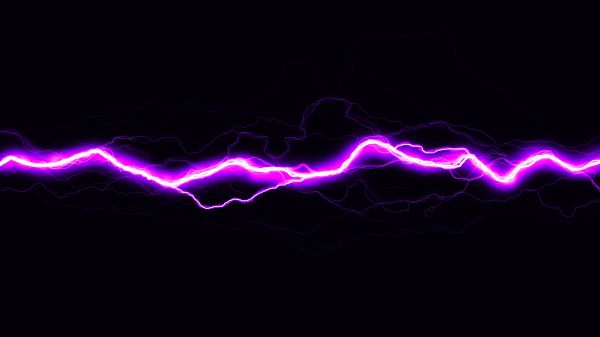
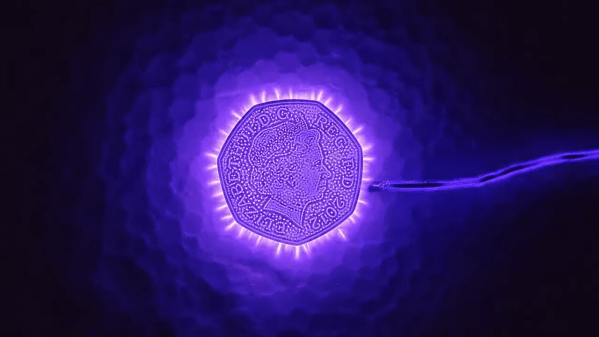
We know, Kirlian photography has a whole “woo-woo” vibe to it, associated as it has been with paranormal investigations and the like. But [Hyperspace Pirate] isn’t flogging any of that; in fact, he seems way more interested in the electronics of the setup than anything else. The idea with Kirlian photography is basically to capacitively couple a high-voltage charge across a dielectric, which induces an electrostatic discharge to a grounded object. The result is a beautiful purple discharge, thanks to atmospheric nitrogen, that outlines the object being photographed.

[Pirate]’s first attempt at a Kirlian rig used acrylic as a dielectric, which proved to be susceptible to melting. We found this surprising since we’ve seen [Jay Bowles] successfully use acrylic for his Kirlian setup. Version 2 used glass as a dielectric — right up until he tried to drill a fill port into the glass. (Important safety tip: don’t try to drill holes in tempered glass.) Version 3 used regular glass and a 3D-printed frame to make the Kirlian chamber; filled with saltwater and charged up with a homebrew Tesla coil, the corona discharge proved enough to char fingertips and ignite paper. It also gave some beautiful results, which can be seen starting at around the 7:40 mark in the video below.

We loved the photos, of course, but also appreciated the insights into the effects of inductance on the performance of this setup. And that first homebrew flyback transformer [Hyperspace Pirate] built was pretty cool, too.

Continue reading “Enjoy The Beauty Of Corona Discharge With This Kirlian Photography Setup”

Neon Lamps — Not Just For Pilot Lights

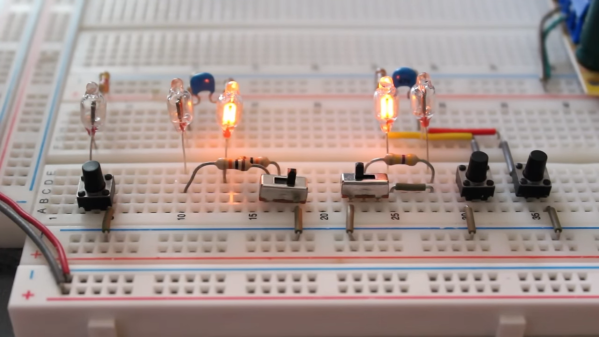
It’s easy to see why LEDs largely won out over neon bulbs for pilot light applications. But for all the practical utility of LEDs, they’re found largely lacking in at least one regard over their older indicator cousins: charm. Where LEDs are cold and flat, the gentle orange glow of a neon lamp brings a lot to the aesthetics party, especially in retro builds.

But looks aren’t the only thing these tiny glow lamps have going for them, and [David Lovett] shows off some of the surprising alternate uses for neon lamps in his new video. He starts with an exploration of the venerable NE-2 bulb, which has been around forever, detailing some of its interesting electrical properties, like the difference between the voltage needed to start the neon discharge and the voltage needed to maintain it. He also shows off some cool neon lamp tricks, like using them for all sorts of multi-vibrator circuits without anything but a few resistors and capacitors added in. The real fun begins when he breaks out the MTX90 tube, which is essentially a cold cathode thyratron. The addition of a simple control grid makes for some interesting circuits, like single-tube multi-vibrators.

The upshot of all these experiments is pretty clear to anyone who’s been following [David]’s channel, which is chock full of non-conventional uses for vacuum tubes. His efforts to build a “hollow state” computer would be greatly aided by neon lamp circuits such as these — not to mention how cool they’d make everything look.

Continue reading “Neon Lamps — Not Just For Pilot Lights”

Recreating Ben Franklins kite experiment with a drone

Drone Replaces Kite In Recreation Of Famous Atmospheric Electricity Experiment

Finally, someone decided to answer the question that nobody was asking: what if [Benjamin Franklin] had had a drone rather than a kite?

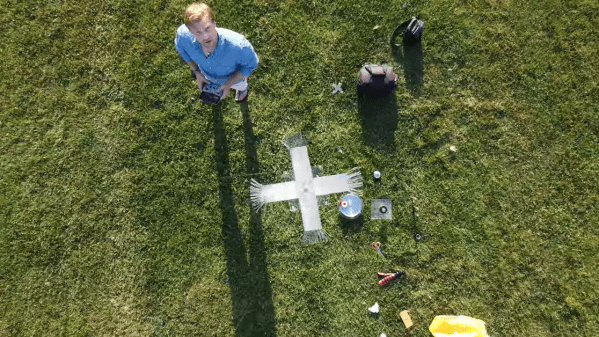
Granted, [Jay Bowles] didn’t fly his electricity-harvesting drone during a thunderstorm, but he did manage to reach some of the same conclusions that [Dr. Franklin] did about the nature of atmospheric electricity. His experimental setup was pretty simple: a DJI Mini2 drone with enough payload capacity to haul a length of fine-gauge magnet wire up to around 100 meters above ground level. A collecting electrode made of metal mesh was connected to the wire and suspended below the drone. Some big nails were driven into the soil to complete the circuit between the drone and the ground.

[Jay] went old-school for a detector, using a homemade electroscope to show what kind of static charge was accumulating on the electrode. Version 1 didn’t have enough oomph to do much but deliver a small static shock, but a larger electrode was able to deflect the leaves of an electroscope, power a beer can version of a Franklin bell, and also run a homemade corona motor. [ElectroBOOM] makes a guest appearance in the video below to explain the physics of the setup; curiously, he actually managed to get away without any injuries this time. Continue reading “Drone Replaces Kite In Recreation Of Famous Atmospheric Electricity Experiment”

Into The Plasmaverse Hack Chat

Join us on Wednesday, September 23 at noon Pacific for the Into the Plasmaverse Hack Chat with Jay Bowles!

Most kids catch on to the fact that matter can exist in three states — solid, liquid, and gas — pretty early in life, usually after playing in the snow a few times. The ice and snowflakes, the wet socks, and the fog of water vapor in breath condensing back into water droplets all provide a quick and lasting lesson in not only the states of matter but the transitions between them. So it usually comes as some surprise later when they learn of another and perhaps more interesting state: plasma.

For the young scientist, plasma is not quite so easy to come by as the other phases of matter, coming about as it does from things they’re usually not allowed to muck with. High voltage discharges, strong electromagnetic fields, or simply a lot of heat can strip away electrons from a gas and make the ionized soup that we call plasma. But once they catch the bug, few things can compare to the dancing, frenetic energy of a good plasma discharge.

Jay Bowles picked up the plasma habit quite a while back and built his YouTube channel around it. Tesla coils, Van de Graaff generators, coils and capacitors of all types — whatever it takes to make a spark, Jay has probably made and used it to make the fourth state of matter. He’ll join us on the Hack Chat to talk about all the fun things to do with plasma, high-voltage discharge, and whatever else sparks his interest.

join-hack-chatOur Hack Chats are live community events in the Hackaday.io Hack Chat group messaging. This week we’ll be sitting down on Wednesday, September 23 at 12:00 PM Pacific time. If time zones baffle you as much as us, we have a handy time zone converter.

Click that speech bubble to the right, and you’ll be taken directly to the Hack Chat group on Hackaday.io. You don’t have to wait until Wednesday; join whenever you want and you can see what the community is talking about.

Continue reading “Into The Plasmaverse Hack Chat”

A Dangerous Demonstration Of The Power Of Radio

Terrestrial radio may be a dying medium, but there are still plenty of listeners out there. What would a commute to or from work be without a check of “Traffic on the Eights” to see if you need to alter your route, or an update of the scores from yesterday’s games? Getting that signal out to as many listeners as possible takes a lot of power, and this dangerous yet fascinating demo shows just how much power there is on some radio towers.

Coming to us by way of a reddit post, the short video clips show a crew working on a 15,000-Watt AM radio tower. They appear to be preparing to do tower maintenance, which means de-energizing the antenna. As the engineer explains, antennas for AM radio stations in the medium-wave band are generally the entire tower structure, as opposed to the towers for FM and TV stations, which generally just loft the antenna as high as possible above the landscape. The fun starts when the crew disconnects a jumper and an arc forms across the clamp and the antenna feed. The resulting ball of plasma acts like a speaker, letting us clearly hear the programming on the station. It’s like one of the plasma speakers we’ve seen before, albeit exceptionally more dangerous.

It’s an impressive display of the power coursing through broadcast towers, and a vivid reminder to not mess with them. Such warnings often go unheeded, sadly, with the young and foolish paying the price. There’s a reason they put fences up around radio towers, after all.

Continue reading “A Dangerous Demonstration Of The Power Of Radio”