Building A Bigger, Better Laser Engraver

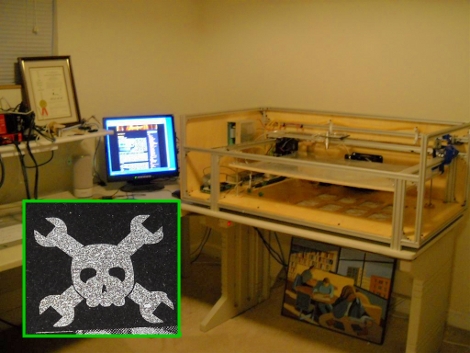
[Bart] built a giant laser etcher from scratch. One of his first test engravings included the Hackaday skull-and-wrenches on a polished granite floor tile (we love it when people do that). He used an XMOS controller and Mach3 CNC software to handle the device. With just two axes to worry about this seem like an easy project. The difficult bit is controlling, cooling, and focusing the laser.  Oh, and if you screw up, you could be blinded, burned or horribly maimed. But if you start from the beginning you’ll see that [Bart] knows what he’s doing.

Laser Etching Fruit

laserlable-ed02 (Custom)

Ever annoyed by those pesky stickers on your fruit?  They never seem to pull off in one piece and they always leave a little glue behind. Well, the industry might be moving away from them in favor of laser etching each piece of fruit. They are using a low energy carbon dioxide laser to etch the skin. The FDA is in the final stages of approval for using this in the states. It is already in use in New Zealand. We might find this a bit weird, but we’ve seen weirder.


[via slashdot]

Etch Aluminum Control Panels

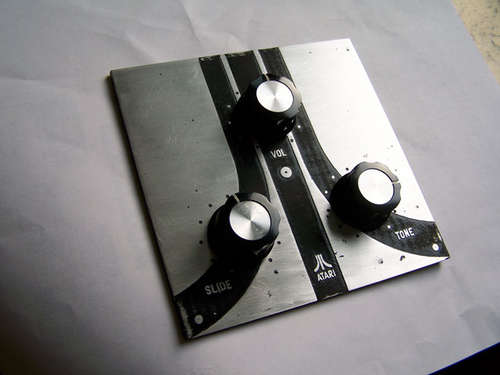
This clever Instructable demonstrates how to etch beautiful aluminum control panels for electronics projects. We like how similar this process is to DIY circuit board etching. Both abide by the same technique and use blue transfer paper. The primary difference is in the use of muriatic acid and hydrogen peroxide for etching aluminum.

Etching Agitator

[youtube=http://www.youtube.com/watch?v=yDA16dfqgeg]

It might be a little bit of overkill, but this etching container agitator sure looks convenient. There’s not much to it technically, a small circuit with an ATtiny45. For those beginning with this stuff, he has written a pretty good tutorial on working with basic microcontrollers. If you are more interested in a tutorial on etching, we did a  guide on how to etch a single sided PCB.

Motöri The Plotter

[youtube=http://www.youtube.com/watch?v=8ES61MbSmpc]

The Motori plotter is fast and high precision. One image shows that it is drawing lines at .5mm. Like others in the flickr set, we keep thinking of how we could apply this to PCB creation. Great job [svofski]. If you want one that’s not as precise, but might have a much cooler drawing mechanism, you might want to check out the lego arm plotter we posted back in May.

Flexible Circuit Valentine

valentine

[xander] built this LED valentine for his loved one. It’s interesting because he used Pyralux, a flexible circuit board material from DuPont. He describes the consistency as “tough plastic tissue-paper”, but had no trouble using standard toner transfer etching. It has an ATtiny45 microcontroller that pulses the 16 LEDs at an approximation of his heart beat. To avoid soldering a bunch of surface mount resistors, he used two constant current shift registers.

Laser Etching Printed Circuit Boards


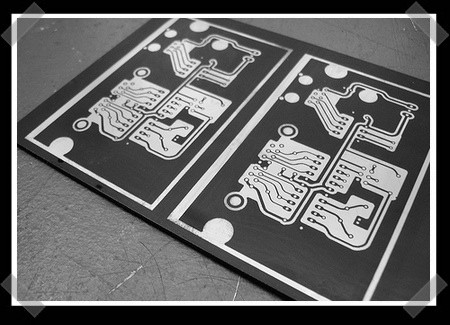
While we hope you enjoyed our How-To: Etch a printed circuit board, toner transfer certainly isn’t the only way to get the job done. [Garrett] from macetech has recently been playing around with using an Epilog laser to etch PCBs. He started by applying a thin even coat of flat black spray paint to the copper board. The laser is used to remove paint in areas that you want the copper removed. Once that’s done, you proceed with etching as usual. He eventually removed the paint mask using acetone. The result has very fine, sharp traces, but most people that have tried this agree that using spray paint is less than ideal.