
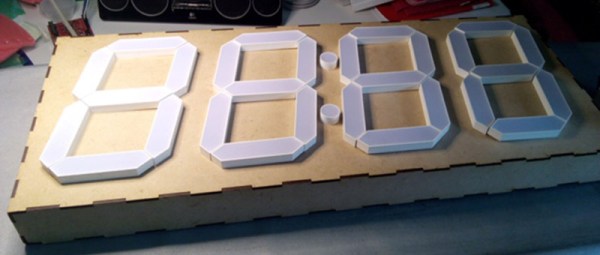
[Mike] is a laser cutting newbie and has never had the opportunity to create a file and send it off to a laser for cutting. He knew he didn’t want to squint at a CAD package, nudging lines by tenths of a millimeter, only to screw something up and have to do it all over again. His solution, like so many other automation tasks, was to create a program that would generate a box of any size in .SVG format.
[Mike]’s program runs in C, and only requires a few variables set in the program to create a box of any size. There’s no argc or argv for the program – the one thing that would turn this into a command line utility that simply creates SVG boxes. Perhaps another time.
The rest of [Mike]’s hackerspace, Fab Lab xChc, was impressed the program worked the first time. With this small bit of C code, [Mike] has an easy, simple tool to generate laser cut boxes. The only remotely complicated bit of C this program uses is printf(), so even an Arduino can spit out the SVG for a laser cut box.


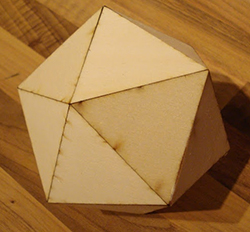 Every project deserves its own laser cut enclosure, of course, but the most common method of joinery – an overabundance of mortises and tenons, and if you’re lucky, a bit of kerf bending – is a little unsightly. Until tastes in industrial design change to accommodate this simple but primitive method of joining two laser cut panels together at an angle takes hold, the search will continue for a better way to cut acrylic and plywood on a laser cutter. The folks at Just Add Sharks might have a solution to this problem, though:








