Leapfrog Didj: Handheld Linux On The Cheap

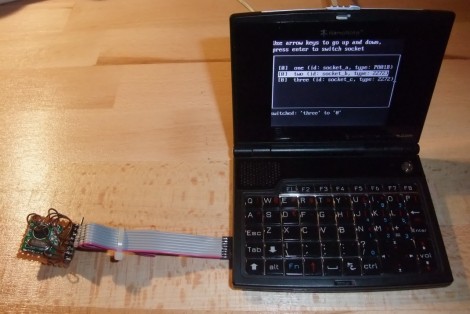
Today our good friends over at Woot! are selling the Leapfrog Didj, a low cost educational toy aimed at little kids. Lucky for hackers out there, the Didj is actually a linux device, and gaining serial console access is as easy as soldering two wires. The documentation out there is a little outdated, with a number of broken links and stale wikis, but $25 for a portable linux device is a hard deal to beat. A list of sites which might be helpful are listed after the break, as well as the hardware specs of the Didj.

Let us know if you have played around with hacking the Didj before, and if you have any tips for other readers. Don’t forget to tell us what you do with the Didj as well!

Thanks to [Mark] for the tips and the hardware details.

Continue reading “Leapfrog Didj: Handheld Linux On The Cheap”

Hey Man, SSH To My Guitar And Setup The Multitouch

The Misa Digital Guitar is a digital music controller like we haven’t seen before. The body, machined out of ABS, looks like a guitar. The player puts theirs hands in the same places you would on a guitar but the lack of strings make it something different.

The left had manipulates inputs in the form of 144 sensors, six in each of the twenty-four fret positions. The right hand doesn’t strum, but uses a multitouch screen to control the inputs. The UI looks solid, something you’ll have to see for yourself after the break. Tieing this all together is an AMD Geode processor running Gentoo Linux. That means this is open source and begging you to make it do your bidding.

Continue reading “Hey Man, SSH To My Guitar And Setup The Multitouch”

SheevaPlug PBX

[youtube=http://www.youtube.com/watch?v=RIcTWya7TQA&feature=player_embedded]

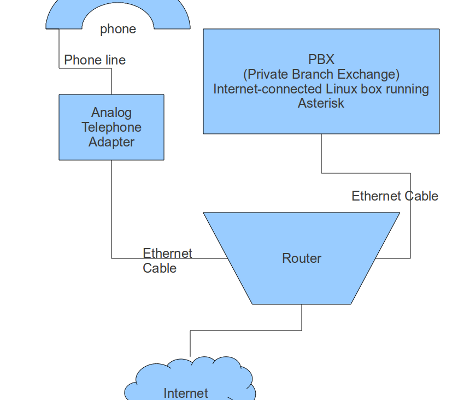
[Greg] has been working on a version of Debian/ FreePBX/ Asterisk for people to be able to drop onto a SheevaPlug. If you haven’t seen it, the SheevaPlug is a tiny computer housed in a wall plug. They made some waves when they were announced last year, and we’ve spoken of them several times. [Greg] is offering up the operating system in a pre configured format for SD cards so you can just download it and drop it in your SheevaPlug. Yeah, there’s a little bit of work to do before it will boot, which you can see in the video above.  Thanks for sending this in [Greg], keep up the good work.

Punching Out Parts

If you’re more of a code monkey than artist, it may be tough to transform your ideas into the 3D models necessary for fabbing. The folks working on openSCAD apparently feel our pain.

openSCAD uses a language somewhat reminiscent of C for creating models. A preview of the model is rendered alongside your code. Fully cross-platform, it runs on Linux, OS X, and Windows. Much like SketchUp, openSCAD can also extrude 2D outlines into models. This feature comes in very useful if one already has a set of technical drawings for a part. With no price tag, it’s pretty affordable during this costly season.

New AVR Simulator For Linux

simavr is a software simulator for the AVR line of microcontrollers. You might be asking why anyone would write this sort of thing considering the simulator provided with AVR Studio is a wonderful tool? Well, a lot of folks don’t run Windows and don’t wish to use that development environment even if Wine or Virtualbox could make it happen.

We haven’t tried it out ourselves yet. There is a discussion thread going that reports some positive results of using simavr with GDB and AVR Eclipse. It’s a new package, but so far it seems to have put its best foot forward. Currently there is support for ATtiny25/45/85, ATtiny13, ATmega48/88/168, andATmega164/324/644 chips. Several of the common on-chip peripherals are already supported with the others on the way.

Have you tried it out? Let us know what you think in the comments.

[IC Photo]

How To Use Wiimotes W/ Linux

[Sprite_tm] has whipped up yet another interesting tutorial – software-based this time. He basically describes how he connected his Wiimotes to an HTPC. A USB Bluetooth receiver, and a little bit of Linux scripting,  was all that was necessary to get the system up and running. To add to the fun, [Sprite_tm] configured a the controllers to work with MAME (an arcade machine emulator), allowing one to play Duck Hunt on a computer in its full glory!

Linux IPhone Sync Draws Near

linux-iphone-sync-support

[Emuboy] lets us know about some software advances that will make iPhone and iPod Touch syncing possible under Linux. Apple made big changes to how the iPhone syncs compared to legacy iPods. Locking out all communications other than through iTunes was surely part of their motivation. This has left Linux users out in the cold with shoddy sync capabilities which should be coming to an end. If successful, syncing will be be possible with phones that have not been jailbroken.

One of the biggest hurdles in reverse-engineering the new protocol is the non-standard way in which the devices communicate over USB. The usbmuxd developers have been working to implement communications and now have a Release Candidate for the 1.0.0 version. Along with testing of this package, libgpod is now being updated to play nicely with the new database format and hash of the iPhone.

This isn’t quite at the plug-and-play level of convenience yet but if you’re comfortable working with Linux packages you should be able to get this working and help report any bugs you might find. But if you’re tired of open source playing cat and mouse with Apple you can always switch over to a device based on Android.