Wii Menu 3.3 Already Circumvented


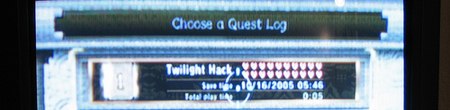
Well, that didn’t take long. Three days after the release of the Wii Menu 3.3 update (which prevents homebrew loading on the Wii by killing a special hack), the update has been circumvented. The update targeted the ubiquitous Twilight Hack, which allows homebrew software to be loaded from the Wii’s SD card slot by using a special game save. The team at HackMii were quick to disassemble, analyze, and scoff at the update, with member [bushing] quipping “we are not impressed.” The team found bug exploits for new code in the the update that cause it to ignore the Twilight Hack. They have yet to release the fix to the public, but its likely that they’ll do so at least as fast as they developed it.

[via Wii Fanboy]
[photo: cibomahto]
Wii Upgrade Breaks Twilight Hack


Nintendo’s latest menu upgrade for the Wii, version 3.3, has broken the long standing Twilight Hack. In the past, you could load a hacked Twilight Princess save game to execute arbitrary code. After the upgrade, the Wii now deletes the hacked save game. The Homebrew Channel seems to have remained intact. So, if you’ve already added it and you upgrade, you should be fine. There’s no telling how long before homebrew code will be completely locked out though.

[photo: cibomahto]

Game Boy Foot Controller Demo

[youtube=http://www.youtube.com/watch?v=lQdqudTzyBs&hl=en&rel=0&color1=0x3a3a3a&color2=0x999999]
This is a video of [Joey Mariano] from animal style demoing his Game Boy pedal board. He added a D15 port to the back of the Game Boy, which is wired to each of the 8 buttons. The port is connected to a breakout box for 8 piano sustain pedals. The box also provides power to the Game Boy. The Game Boy is running the Nanoloop step sequencer. If you’re wondering about the guitar sound, he’s probably using an 8-Bit Fuzz pedal.

[via GetLoFi]

X2Wii, NES/SNES/N64 To Wii Adapter


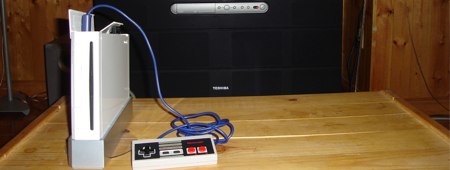
If you poke around [Raphaël]’s site, the creator of today’s featured hack, you’ll find a lot of interesting projects. X2Wii is an ongoing project to adapt controllers from earlier console generations so they work with the Wii’s GameCube ports. He adapted his Multiuse tiny1 which uses an ATmega8. The code is all assembly so the microcontroller can keep up with the protocol. Definitely check out [Raphaël]’s other project pages.

Wii Fit World Of Warcraft

[youtube=http://www.youtube.com/watch?v=ucEV7N0N9Pw&hl=en]
By now you’ve probably seen the video of two researchers from the German Research Center for Artificial Intelligence (DFKI) navigating through maps on Google Earth by using the Wii Fit Balance Board. They’ve gone even further now by using the board to navigate World of Warcraft. It’s obvious that the board is usable with any 3D environment. The hack is entirely software based, as the board is completely unmodified. It relays data to a laptop via Bluetooth, where the pressure data in converted to directional instructions by their custom app written in C#. No notes on the project are available on DFKI’s site, but we’re betting they’ll release the software to the public once all the kinks are worked out.

[via Balance Board Blog]

Wii Dual NAND Flash Hack


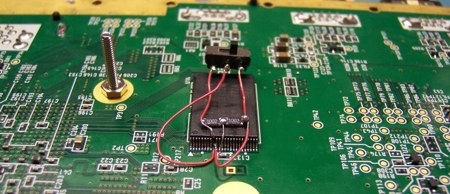
[ChipD] successfully installed two NAND flash chips into his Wii. He can keep the stock firmware on one and then flip a switch if he wants to boot using the other chip with a modified firmware. This hack is fairly straight forward. All it took was someone with steady hands to try it out. The new NAND chip is identical to the original and was salvaged from a flash drive. The chips were soldered as a stack except for the chip enable pin. The chip enable from each chip is attached to a small switch to toggle between which is active. You could use a TSOP socket to swap the different chips, but it wouldn’t fit inside the Wii case. This little switch could be hidden easily next to the GameCube ports.

Nintendo DS Music Creation

[youtube=http://www.youtube.com/watch?v=MQCZnwNr0ms&hl=en]
Homebrew developer [yaarglafr] recently released this video of his Protein DScratch in action. You can download a demo version here. The program simulates DJ scratching on the DS with an intuitive interface much like the ones on the touchscreen turntables we discussed the other day. It works well with any of the major DS slot devices; just run a DLDI patch on it and you’re good to go.

Continue reading “Nintendo DS Music Creation”