Open-Source Parametric CAD In Your Browser

Until recently, computer-aided design (CAD) software was really only used by engineering companies who could afford to pay thousands of dollars a year per license. The available software, while very powerful, had a very high learning curve and took a lot of training and experience to master. But, with the rise of hobbyist 3D printing, a number of much more simple CAD programs became available.

While these programs certainly helped makers get into 3D modeling, most had serious limitations. Only a few have been truly open-source, and even fewer have been both open-source and parametric. Parametric CAD allows you to create 3D models based on a series of parameters, such as defining a cube by its origin and dimensions. This is in contrast to sculpting style 3D modeling software, which is controlled much more visually. The benefit of parametric modeling is that parameters can be changed later, and the model can be updated on the fly. Features can also be defined mathematically, so that they change in relation to each other.

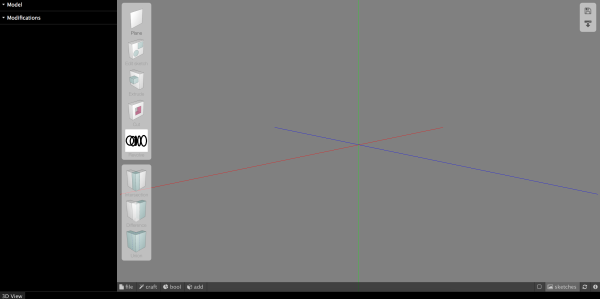
While still in its infancy, JS.Sketcher is seeking to fill that niche. It is 100% open-source, runs in your browser using only JavaScript, and is fully parametric (with both constraints and editable dimensions). At this time, available features are still pretty limited and simple. You can: extrude/cut, revolve, shell, and do boolean operations with solids. More advanced features aren’t available yet, but hopefully will be added in the future.

Continue reading “Open-Source Parametric CAD In Your Browser” →

Geohot’s Comma.ai Self-Driving Code On GitHub

First there was [Geohot]’s lofty goal to build a hacker’s version of the self-driving car. Then came comma.ai and a whole bunch of venture capital. After that, a letter from the Feds and a hasty retreat from the business end of things. The latest development? comma.ai’s openpilot project shows up on GitHub!

If you’ve got either an Acura ILX or Honda Civic 2016 Touring addition, you can start to play around with this technology on your own. Is this a good idea? Are you willing to buy some time on a closed track?

A quick browse through the code gives some clues as to what’s going on here. The board files show just how easy it is to interface with these cars’ driving controls: there’s a bunch of CAN commands and that’s it. There’s some unintentional black comedy, like a (software) crash-handler routine named crash.py.

What’s shocking is that there’s nothing shocking going on. It’s all pretty much straightforward Python with sprinklings of C. Honestly, it looks like something you could get into and start hacking away at pretty quickly. Anyone want to send us an Acura ILX for testing purposes? No promises you’ll get it back in one piece.

If you missed it, read up on our coverage of the rapid rise and faster retreat of comma.ai. But we don’t think the game is over yet: comma.ai is still hiring. Are open source self-driving cars in our future? That would be fantastic!

Via Endagadget. Thanks for the tip, [FaultyWarrior]!

Contribute To Open Source On #OpenCyberMonday

Today is Cyber Monday, the day when everyone in the US goes back to work after Thanksgiving. Cyber Monday is a celebration of consumerism, and the largest online shopping day of the year. Right now, hundreds of thousands of office workers are browsing Amazon for Christmas presents, while the black sheep of the office are on LiveLeak checking out this year’s Black Friday compartment syndrome compilations.

This is the season of consumption, but there’s still time to give back. We would suggest #OpenCyberMonday, an effort to donate to your favorite Open Source foundations and projects.

It’s not necessary to explain how much we all rely on Open Source software, but it goes even further than the software powering the entire Internet. Hackaday is built on WordPress, and the WordPress Foundation is responsible for very important, very widely used Open Source software. The Wikimedia Foundation is a nonprofit dedicated to the compilation of all knowledge. The Internet Archive is a temporal panopticon, preserving our digital heritage for future generations. The Open Source Hardware Association is doing their best to drag physical objects into the realm of Open Source – a much more difficult task than simply having the idea of Copyleft.

While everyone else is busy buying Internet-connected toasters and wearable electronics, take a few minutes and give a gift everyone can enjoy. Make a donation to the Open Source initiative of your choice A list of these foundations can be found on opensource.org. This isn’t a comprehensive list of worthy Open Source initiatives, so if you have any other suggestions, put it out on the Twitters.

DIY Optical Sensor Breakout Board Makes DIY Optical Mouse

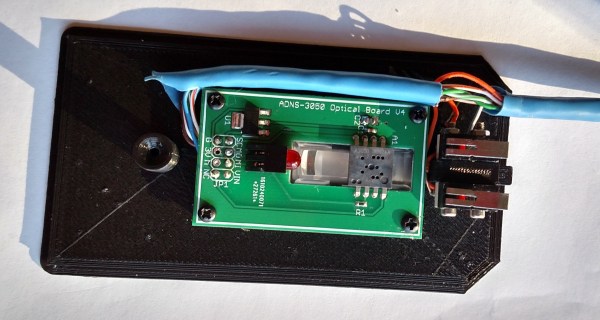
Wanting to experiment with using optical mouse sensors but a bit frustrated with the lack of options, [Tom Wiggins] rolled his own breakout board for the ADNS 3050 optical mouse sensor and in the process of developing it used it to make his own 3D-printed optical mouse. Optical mouse sensors are essentially self-contained cameras that track movement and make it available to a host. To work properly, the sensor needs a lens assembly and appropriate illumination, both of which mate to a specialized bracket along with the sensor. [Tom] found a replacement for the original ADNS LED but still couldn’t find the sensor bracket anywhere, so he designed his own.

Continue reading “DIY Optical Sensor Breakout Board Makes DIY Optical Mouse” →

NASA Puts Its 3D Models Up On GitHub

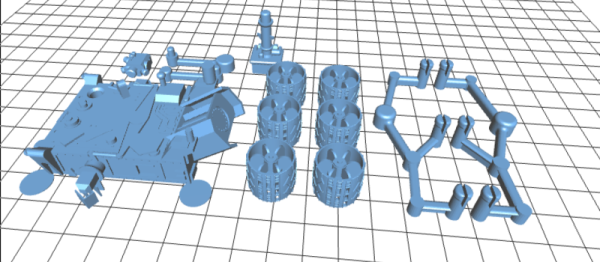
NASA has a bunch of its 3D models up on GitHub, and if you didn’t know about it before, you do now. It’s a ridiculously large download, at over one and a half jiggabytes, but it’s full of textures and high-resolution models of spacecraft, landing sites, and other random NASA ephemera.

Continue reading “NASA Puts Its 3D Models Up On GitHub” →

A Spreadsheet For Guesswork

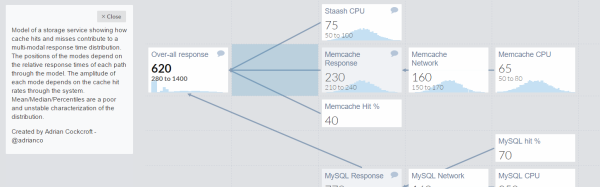
Ever wish you could guess more precisely? Or maybe just make your guesses look confusingly legitimate? Guesstimate could help.

It uses Monte Carlo simulations to add some legitimacy to the ranges given to it. For example, if you say the cost of lumber for your next project could be between 2 and 8 dollars a piece, you don’t typically mean that it’s equally likely to be any of those numbers. Most people mean that the boards are most likely to be around 3-5 dollars and everything lower or higher is less probable. Using different shaped distributions, Guesstimate can help include this discrepancy of thought into your pseudo-calculations.

It’s a neat bit of code with a nice interface. There is a commercial side to the project for those who want to collaborate openly or pay someone to host it privately. It has a few neat example models for those interested.

Does anyone use anything like this in their daily lives? Is there another similar project out there? This kind of thing is pretty cool!

Orka Controls The (Pi) World

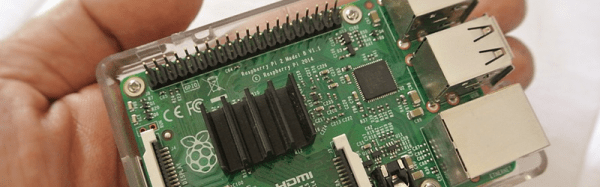
If you deploy a lot of Raspberry Pi computers, you might find it inconvenient to log into each one to perform different tasks. Orka, an open source project by [Karthik K], is a server that runs on a desktop PC (Windows, Linux, or Mac) and can control multiple Orka clients (that can run on a Pi, or a desktop PC). We understand that [Karthik K] is looking for Mac testers, by the way.

From the server, you can execute commands and create tasks. You can also receive notification when a client PC reaches a threshold (for example, over temperature or too much CPU or RAM usage). You can open a shell on a client and do other operations.

Continue reading “Orka Controls The (Pi) World” →