Next HOPE Badge Hacking Primer

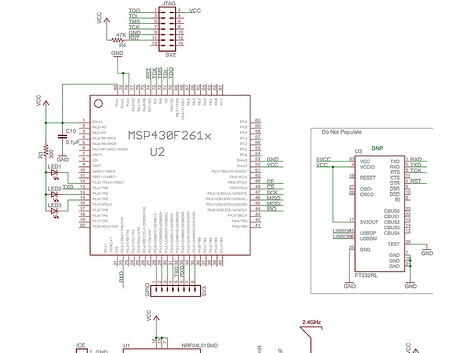
[Travis Goodspeed] is taking a look at the attendee badges for this year’s Next HOPE conference. He’s given us a pretty good look at what is on the board, what it means to you, and how you can get at it. Of course the final hardware specs are a secret until conference time, but this will help you get some ideas and ensure that you bring the right add-on hardware. We normally try not to do too much quoting, but one of [Travis’] statements literally makes us laugh out loud (as opposed to what most people describe as lol):

“These badges are active RFID tags which beacon the position of each attendee a few times a second, so that the god damned devil army of lies–by which I mean the Next HOPE badge committee–can track each attendee around the Hotel Pennsylvania.”

No matter how you feel about the badge committee, the tradition of hacking conference badges is a fun, rewarding, and often frustration past-time. The badges are actually using the concept of OpenAMD. The last three letters stand for Attendee Meta Data which is an evolving concept. How can meta data about attendees be useful to all involved in a non-invasive way? How about associating yourself with a concept, like microcontroller programming. What if you could search to find out where other people interested in that are right now? Could be great… could end up in an impromptu meeting around the restrooms for no good reason. Either way, take a look at the teaser video covering the topic after the break.

Oh, one more note about the hardware. This year they’re moving away from PIC based badges to the more energy-efficient MSP430 line. It’s not one of the value-line processors that the Launchpad is meant for, but this bigger-brother ‘F’ chip will be no problem to work with if you’ve already spent some time with the ‘G’ series.
Continue reading “Next HOPE Badge Hacking Primer”

Tetris Code Theory Explained


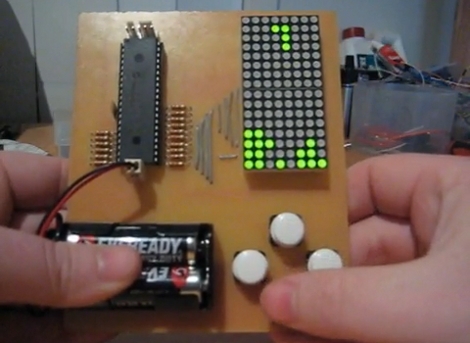
[Graham] designed this PIC based Tetris game on a single board. The hardware is quite nice but we enjoyed his explanation of the graphics algorithm that he used. Having coded Tetris from the ground up ourselves we understand how difficult it is to explain how the program works. Tracking pieces already on the board as well as moving pieces, making sure that rotation won’t cause a collision with another piece or go out-of-bounds, and looking for completed lines all add up to one bid headache.

[Graham’s] method for handling rotation involves choosing a point around which to rotate, measuring how this affects each pixel in the piece, and then checking those pixels for overlaps. It may take a couple of readings, but he’s done a brilliant job of making it understandable. There’s a demo after the break and the link at the top takes you to his treatise on Tetris. Continue reading “Tetris Code Theory Explained”

Reverse GeoCache Puzzle Gets Downsized

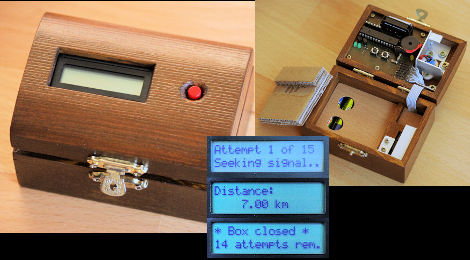
[Markus] built his own reverse geocache puzzle box but on a smaller scale than the original. His is based around a PIC 18F2520 and powered by two AAA batteries. The user interface includes one button, a 16×2 character LCD, and a piezo speaker. The box unlocks itself when the GPS module inside detects the proper location on the globe. There is also a secret code that can be tapped on the button to unlock the box prematurely, and another to show the locations in which the user attempted to open the box. This build doesn’t leave much room for a payload, but [Markus] did a great job designing the board and making the components fit as efficiently as possible.

Wireless Accelerometer Project

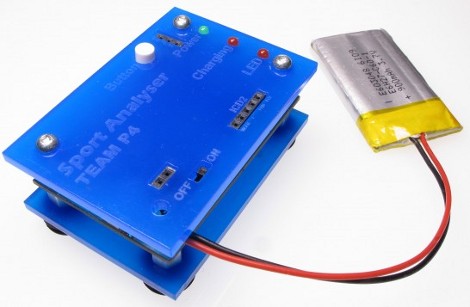
[Jerome Demers] sent us his extremely detailed semester project. The two part system consists of PICs connected to XBee modules and accelerometers. By using the device a coach can monitor an athlete and correct their minute mistakes.

Did we mention [Jerome] was very detailed? He also goes into the particulars of designing the circuit, using solder paste and baking, designing and laser cutting a case, and even some fun stories. Well worth the read if you have the time.

Resurrecting ISA Hardware

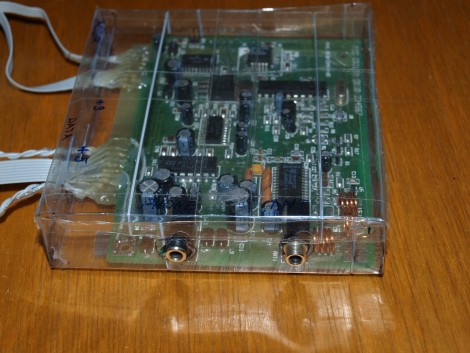
[Alex] had an old FM radio tuner card come his way. It used an ISA connector, a standard that went the way of the dodo in the mid-nineties. With the challenge of implementing an ISA-bus to configure the card he set out on his mission. What he came up with is a working radio using the ISA card and driven by a PIC 16F877. Join us after the break for schematic, code, and a few details. Continue reading “Resurrecting ISA Hardware”

Superprobe

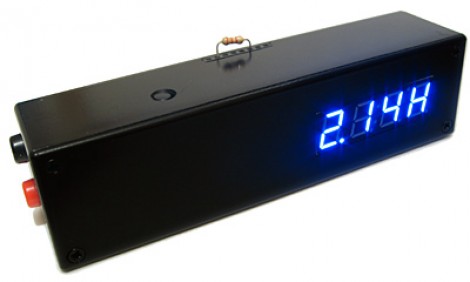
The Superprobe is a logic analyzer, multimeter, and much more rolled into a fun to build project. [Ben Ryves] didn’t come up with the original idea, but he definitely took a good thing and made it better. You can use it to test logic, inject logic into a circuit, read capacitors and resistors, test frequency, read the device address from 1-wire devices, and more. Interchangeable probes, choice of internal or external power, simple two-button operation, and a powerful PIC microcontroller at the heart of it all make this a fantastic tool for your electronics workbench. Check out the quality video after the break that  [Ben] put together to show off the results of his tinkering.

Continue reading “Superprobe”

HID Crafting With A PIC And A Joystick

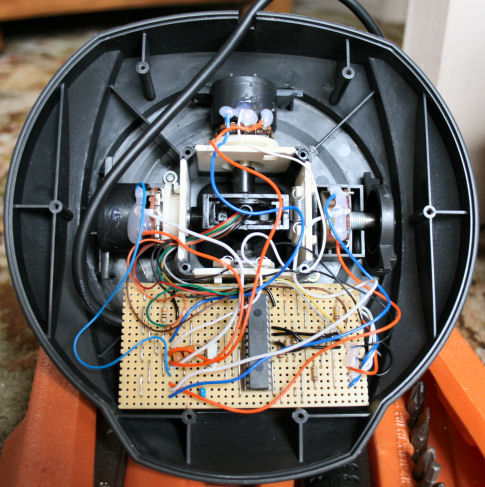
[Amr Bekhit] converted his gameport joystick to use as a USB joystick. Much like a universal USB joystick interface, this uses an additional microcontroller to talk to the serial bus while monitoring the controls on the stick. [Amr’s] discussion about creating HID descriptors is clear and easy to understand. What he’s laid out can be translated to any custom HID your heart desires. Give it a try with that old peripheral that’s been gathering dust in the corner.