Playing A Game Of Linux On Your Sony Playstation 2

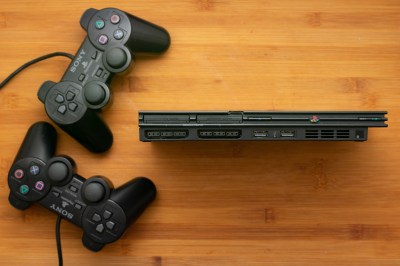
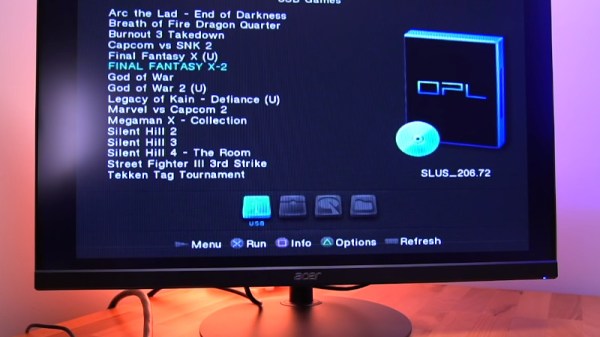
Until the 2000s, game consoles existed primarily to bring a bit of the gaming arcade experience to homes, providing graphical feats that the average home computer would struggle to emulate. By the 2000s this changed, along with the idea of running desktop applications on gaming console for some reason. Hence we got Linux for the PlayStation 2, targeting its MIPS R5900 CPU and custom GPU. Unlike these days where game consoles are reskinned gaming PCs, this required some real effort, as well as a veritable stack of accessories, as demonstrated by [Action Retro] in a recent video.

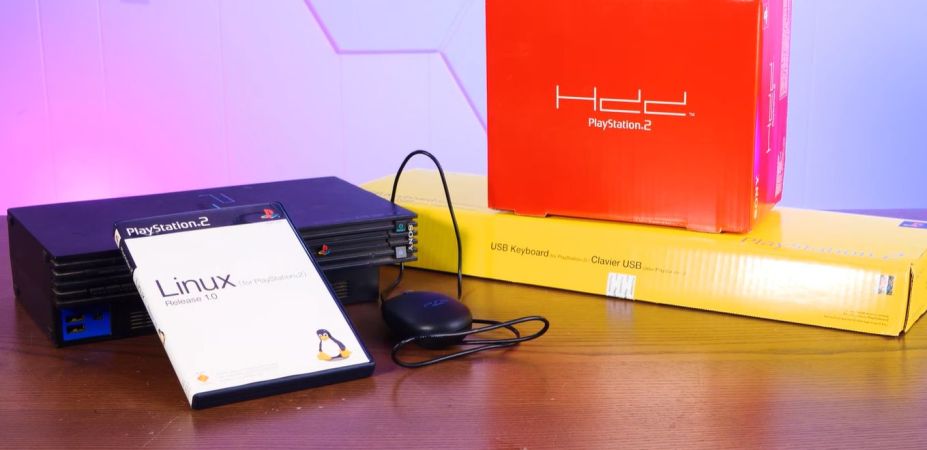
Linux on the PlayStation 2 was a bit of a rare beast, as it required not only the optional HDD and a compatible ‘fat’ PS2, but also an Ethernet adapter, VGA adapter and a dedicated 8 MB memory card along with a keyboard and mouse. PS2 Linux users were also not free to do what they wanted, with e.g. ripping PS2 game discs disallowed, but you could make your own games. All of which had to fit within the PS2’s meagre 32 MB of RAM.

Continue reading “Playing A Game Of Linux On Your Sony Playstation 2”
Windows 95 On PlayStation 2 Works As Well As You Expected

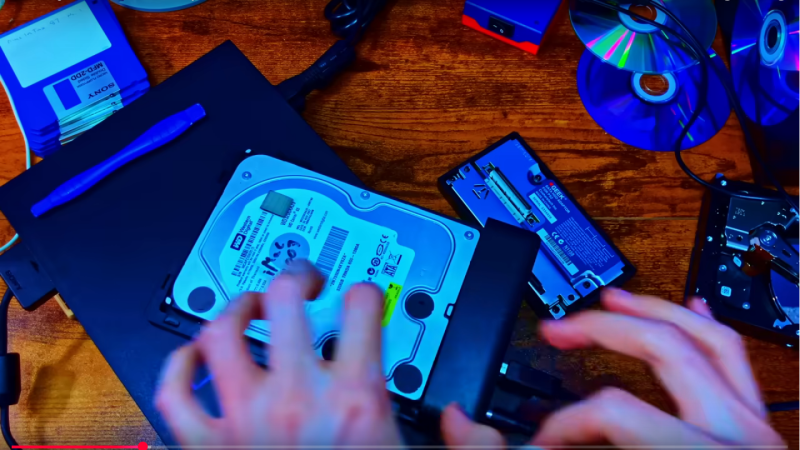
When you hear “PS2” and “Windows 95,” you probably think someone forgot a slash and are talking about peripherals, but no — this hack is very much about the Sony PlayStation 2, the best-selling game console of all time. [MeraByte] walks us through the possibly ridiculous task of installing Windows 95 on the last hardware anyone at Microsoft would ever endorse in a video you can watch below.

Obviously, the MIPS-based Emotion Engine at the heart of the PS2 is not going to be able to handle x86 instructions Win95 is expecting, but that’s all solved by the magic of emulation. [MeraByte] is running a version of Bochs, an x86 emulator that has been built for PS/2 after trying and failing to install Windows (both 3.1 and 95) to an experimental DOSBox build.

As expected, it is not a smooth journey for [MeraByte], but the flailing about and troubleshooting make for entertaining viewing. Once loaded, it works surprisingly well, in that anything works at all. Unfortunately, neither the mouse nor Ultimate Doom 95 worked. We suppose that ultimately means that this hack fails since even Doom can run Doom. The mouse thing is also important, probably.

If you have a PlayStation 2, maybe skip Windows 95 and try running GoLang.  If you do have DOOM running on the PlayStation 2, send us a tip. There was never an official release for PS2, but after 26 years, someone must have done it by now. Continue reading “Windows 95 On PlayStation 2 Works As Well As You Expected”

Golang On The PS2

A great many PlayStation 2 games were coded in C++, and there are homebrew SDKs that let you work in C. However, precious little software for the platform was ever created in Golang. [Ricardo] decided this wouldn’t do, and set about making the language work with Sony’s best-selling console of all time. 

Why program a PS2 in Go? Well, it can be easier to work with than some other languages, but also, there’s just value in experimenting in this regard. These days, Go is mostly just used on traditional computery platforms, but [Ricardo] is taking it into new lands with this project.

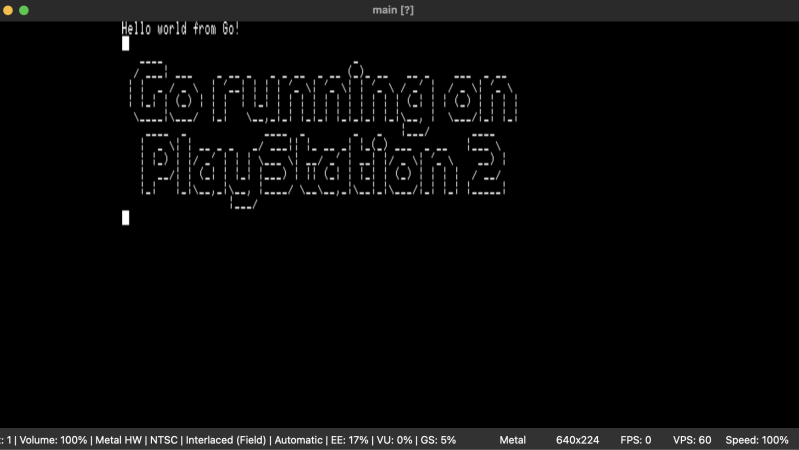
One of the challenges in getting Go to run on the PS2 is that the language was really built to live under a full operating system, which the PS2 doesn’t really have. However, [Ricardo] got around this by using TinyGo, which is designed for compiling Go on simpler embedded platforms. It basically takes Go code, turns it into an intermediate representation, then compiles binary code suitable for the PS2’s Emotion Engine (which is a MIPS-based CPU).

The specifics of getting it all to work are quite interesting if you fancy challenges like these. [Ricardo] was even able to get to an effective Hello World point and beyond. There’s still lots to do, and no real graphical fun yet, but the project has already passed several key milestones. It recalls us of when we saw Java running on the N64. Meanwhile, if you’re working to get LOLCODE running on the 3DO, don’t hesitate to let us know!

How Additional Aerodynamic Drag Helped Make GTA III Work On PS2

The PlayStation 2 was a revelation when it hit the market in 2000, and yet by modern standards, it’s almost hopelessly weak. In fact, it’s so under-powered, Rockstar developers had to pull every trick in the book to make Grand Theft Auto III even work on the platform.

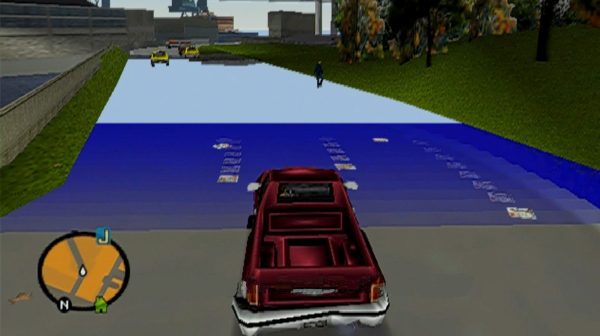
The story comes to us from developer [Obbe Vermeij]. He explains that the PlayStation 2 couldn’t keep the entire open-world game map in its tiny 32 MB of RAM. Instead, models had to be streamed from the DVD drive as the player moved around the world. However, even the DVD drive wasn’t fast enough. If the player moved too quickly, they would outpace the system’s ability to load new assets, and the world would fall apart. Roads would vanish, buildings simply wouldn’t appear before the player passed by them.

According to [Obbe], getting around this challenge was the job of one [Adam Fowler]. He notes that even optimizing the layout of data on the DVD wasn’t enough to help. Nifty hacks had to be employed to slow the player down. Road networks were changed to stop the player speeding towards areas that needed lots of new models. In other areas, vehicles in the game would experience a nearly-imperceptible 5% increase in air drag to dull their speed. This was chosen as a more invisible solution; cutting engine power directly was audible to players as the audio changed.

It shows you just how hard developers had to work back when resources were far more constrained than they are today!

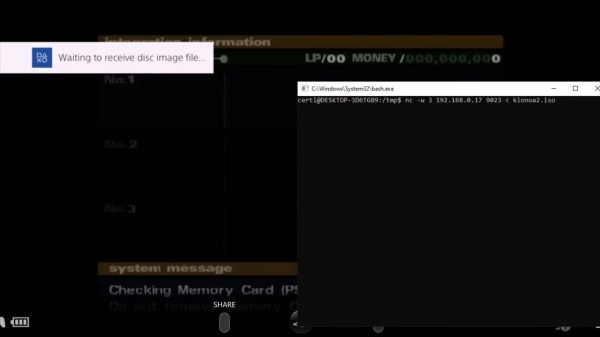
Screenshot of the PS4 screen, showing a "Waiting to receive disc image file..." notification on the left, and a Windows commandline window with nc running on the right, sending an .iso file to some IP address - presumably the PS4

Subverting PS4 And PS5 Through The PS2 Emulator

Game console hacking remains a fascinating area, and we’re glad when someone brings the spoils of exploration for us to marvel at. This time, we’re looking at the [mast1c0re] hack story by [cturt] – an effort to find bugs in PS2 emulation toolkit present on Sony PlayStation 4 and 5 consoles, proving fruitful in the end. What’s more, this exploit seems unpatchable – not technically, but under the Sony’s security practices, this emulator falls under the category of things they refuse to patch when identified.

In this story, we’re taken on a journey through the PS2 emulator internals, going through known-exploitable PS2 games and learning about a prospective entry point. Circling around it, collecting primitives and gadgets, bypassing ASLR on the way there, the emulator is eventually escaped, with a trove of insights shared along the way. As a demonstration, [cturt] successfully loaded a different PS2 game from outside the PS2 emulator, transferring it to the PS4 over WiFi! Continue reading “Subverting PS4 And PS5 Through The PS2 Emulator”

PlayStation 2 Gets A Seamless Media Center Makeover

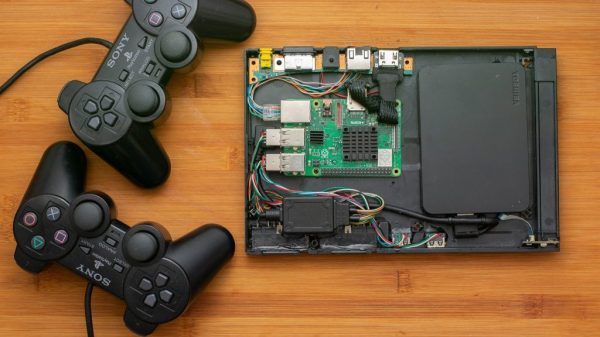
We often see Raspberry Pi boards of various flavors stuck inside vintage computers and the like. [El Gato Guiri] has instead installed one inside a PlayStation 2 Slim, and rather artfully at that. The result is a tidy little media center device.

Pretty tidy, right? All those ports work! Okay, not the memory card slots. But everything else!

The PlayStation 2 was gutted, with a Raspberry Pi 3B installed inside. The original ports on the back, including the USB and Ethernet port, were then wired up to the Pi to make them fully functional. A slot was then cut into the back to allow the HDMI port to be hooked up. The front USB ports work, too, and the optical drive was removed to make way for a 2 TB Toshiba external drive. Adapters are used to make the controller ports work, as well. Finally, a Noctua fan was installed atop the Pi to make sure it never gets too hot.

Whether it’s for watching movies or playing emulated games with the PS2 controllers, the little media center build is sure to do well.

We’ve seen Raspberry Pis stuck in everything from laptops to monitors, as well as plenty of retro hardware too. When a piece of hardware is dead and gone, a Raspberry Pi can be a great way to breathe new life into an attractive old case!

PS2 Memory Card ISO Loader Offers Classic Gaming Bliss

It used to be that to play a console game, you just had to plug in a cartridge or put a CD/DVD in the optical drive. But these days, with modern titles ballooning up to as much as 100 GB, you’ve got no choice but to store them on the system’s internal hard disk drive. While that can lead to some uncomfortable data management decisions, at least it means you don’t have to get up off the couch to switch games anymore.

Which is precisely why the MC2SIO project for the PlayStation 2 is so exciting. As [Tito] explains in his latest
Macho Nacho Productions video, this simple adapter lets you connect an SD card up to the console’s Memory Card slots and use that to hold ISOs of your favorite games. With the appropriate homebrew software loaded up, your PS2 becomes a veritable jukebox of classic games.

Continue reading “PS2 Memory Card ISO Loader Offers Classic Gaming Bliss”