[Rob928] has done a fantastic job converting his Dell mini9 into a tablet. He has done several updates, such as an SSD hard drive and touchscreen. The final product looks quite nice. From a few feet away, we wouldn’t have noticed that it was a home made one. We’ve seen several tablet conversions before from macbooks to EeePCs.
A One Laptop Per Child group out of Afghanistan have come up with a way to power the XO using pedals. The system interfaces a set of pedals with the Freeplay hand-crank charger, freeing up both hands for typing. Although not as compact, using both legs makes power generation much easier. Apparently a child as young as 3rd grade is able to pedal this well enough to power the computer in real time.
We just hope this contraption is used for learning and betterment, and not in a pedal-for-porn scenario.
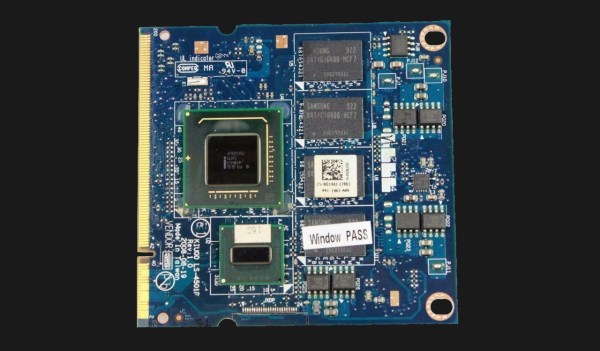
[banzai] wasn’t happy with the performance he was getting out of his Samsung netbook. He decided it was time to do something about it. He noticed that Dell and HP both sell an optional HD decoder card for their netbooks. After a short search, he found one on ebay for only $24. He had to give up his internal wireless, but he doesn’t mind using a USB wireless dongle. Sure this isn’t horribly complicated, but he has information here that might help smooth out the process.
Hack a Day reader [The_Glu] shared with us a project of his. He used an Eee PC 701 he had lying around with a broken LCD, along with three 1TB SATA drives to create a custom NAS server for his house. The server features a number of other interesting components, including USB2SATA converters to connect the hard drives, as well as a 2 line LCD to display RAID information and server status. The entire project is wrapped up in a custom made Plexiglas enclosure with case fans to keep the whole thing cool. While this may not be the first Eee PC NAS, or the fastest, this is a wonderful way to repurpose a broken netbook. We also love the idea of netbooks being used more and more in projects like these as the first generation reaches its end of usefulness age. More pictures after the break.
Jolicloud is a new Linux based operating system aimed at netbooks. The developers were nice enough to let us get our hands on their closed development version of the new OS. This distribution is built off of Ubuntu Netbook Remix(9.04 Jaunty Jackalope). At first glance it looks like nothing more than Ubuntu with a new skin, but the difference is deeper. Jolicloud added an App Store type program that offers installation of web applications along with traditional desktop apps. Using Mozilla Prism, web based applications like Facebook, Gmail, and Wikipedia are installed, get their own icon in the launcher, and run without the aid of a browser. Read the rest of this entry »
The alpha version of Lubuntu 9.10 Karmic Koala is now publicly availabile. The project brings together Ubuntu and LXDE, the Lightweight X11 Desktop Environment. This combination makes for a lighter version of the most popular Linux distribution. Both Xubuntu (which utilizes the Xfce desktop) and Lubuntu are meant to run well on lower resource computers such as netbooks. With the ISO smaller than 400mb and using quite a bit less system resources Lubuntu looks promising.
If you’ve ever tried compile a linux kernel yourself you know the headache of configuring and taking care of dependencies. KernelCheck makes this a point and click process for debian based linux distributions such as Ubuntu. You can use it to compile and install any 2.6.* stable kernel as well as the bleeding edge. KernelCheck even offers custom compilation options such as including kernel patches or rolling in proprietary video drivers. A tutorial (PDF) is also provided so you can see what you’re getting yourself into.
With netbooks being slim and mostly utilitarian, it seems a bit contradictory to use a standard and somewhat bulky web browser with them. After all, we’re trimmingdown the operating system to perform faster on these little devices, so why not thin out the focal point of the netbook: the browser. Firefox, Chrome, or Safari may be well and great for a full powered desktop or laptop, so how about something a bit more trimmed? Enter the lightweight Webkit based browsers: Arora and Midori.
Nokia is currently one of the leading phone providers and intends to jump higher on the scale with the Nokia N900 powered by Maemo. But what wasn’t expected was for Nokia to step into the netbook pool. Called the Booklet 3G, it sports 10.1 inch high(er) resolution display with HDMI output. For connectivity you can take your pick of 3G, WiFi, and Bluetooth. All wrapped up in Windows 7 with a whopping 12 hour battery! However, the problem with all these features is the price tag might eat a hefty hole into your pocket book. That’s not going to stop us from trying to get our hands on one, of course. Anyone have any hacks planned yet?
External antennas on netbooks are notorious, from EEE PCs to the Panasonic CF-R1, but this is the first on an Acer Aspire One we’ve seen. [xRazorwirex] sent in his external antenna hack for the 802.11n capable D150, with the intention of increasing performance, but he says he can’t attest to any change. Unfortunately the lock slot had to be removed, but a small price to pay for a big increase in connectivity. The process seems simple enough, and could probably be done within a half an hour. Now that there is an external link why not build a Cantenna, hop in the car, and HeatMap the neighborhood!