Playing hacker with a toy vault

posted Nov 15th 2010 3:00pm by
filed under: toy hacks

[Thomas Cannon] created his own hacking game by adding some circuitry to this toy vault. The original toy uses the keypad to control a solenoid keeping the door shut. He kept the mechanical setup, but replaced the original circuit board with his own ATmega328 based internals. He also added a USB port to the front. The gist of the game is that you plug-in through USB to gain access to the vault’s terminal software. If you can make your way through the various levels of admin access the loot inside will be yours.

Dungeon crawler game for IM-ME (and Linux)

posted Nov 11th 2010 11:00am by
filed under: linux hacks, Microcontrollers

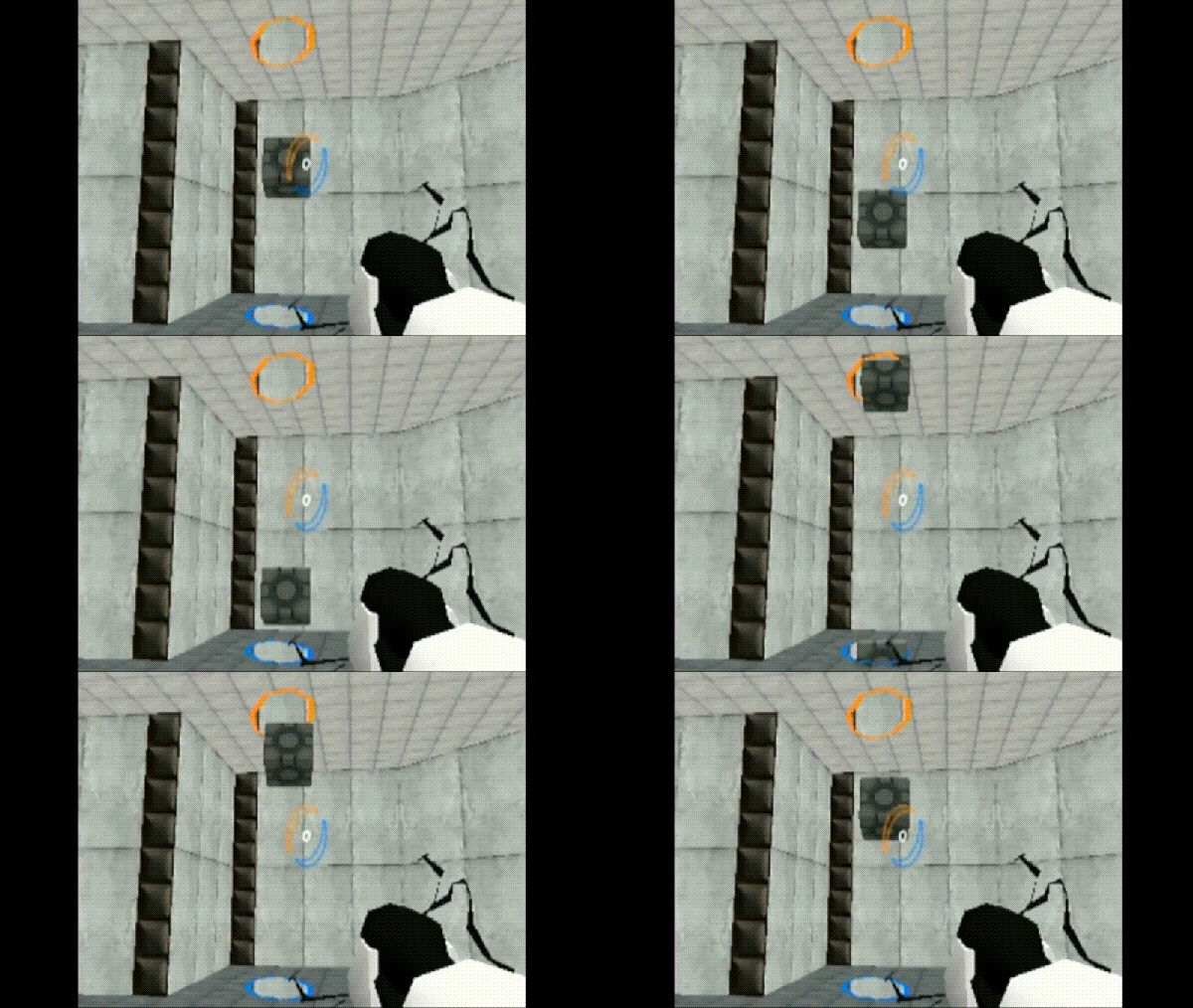
[Joby Taffey] takes the prize for the first completed homebrew game for the IM-ME. Over the last few weeks we’ve seen [Travis Goodspeed] working with sprite graphics, and [Emmanuel Roussel] developing game music for the pink pager. But [Joby] didn’t really use either of those.

[Travis'] sprites were using a framebuffer that fills up a lot of valuable RAM. [Joby] decided to draw the room screens (all of them have been stitched together for the image above) as a one-time background image to keep the memory free. From there, the screen is updated in 8×8 blocks based on cursor movement. He also decided not to add music as he feels the high-pitched piezo is not capable making sound without driving everyone crazy.

Source code is available and for those of you who don’t own this pretty handheld, the game can also be compiled in Linux.


IM-ME plays music in preparation for gaming

posted Nov 7th 2010 1:00pm by
filed under: Microcontrollers

[Emmanuel Roussel] is coding a version of Tetris for the IM-ME. Before you get too excited, he hasn’t actually written the game yet, but instead started with the familiar theme music. The IM-ME has a piezo speak on board so it’s just a question of frequency and duration. [Emmanuel] developed an Open Office spread sheet that calculates each note’s frequency and the timer value needed to produce it. He then created a data type that stores a note and its duration and used an array of those structures to store the song. If you’ve ever wondered how to cleanly code music this is a wonderful example to learn from because right now the code doesn’t have anything other than that code to get in the way.

The ground work for this was established in the other hacks we’ve seen. Now we’re left wondering who will finish coding their game first. Will it be [Emmanuel's] Tetris or [Travis'] Zombie Gotcha?

PC game controller with a touch of class

posted Oct 26th 2010 6:33am by
filed under: home entertainment hacks, peripherals hacks

The above is a specially designed game controller made by [Giorgos] solely for the RTS game Men Of War (now that’s dedication to a game). [Giorgos] started off with a rough breadboard and 11 buttons. Slowly overtime he included a joystick, countdown timers, and the wonderfully lit case. Under the hood is a couple of PIC microcontrollers multiplexing the switches, LEDs, timers, and also interfacing with the computer via how is it not dead yet PS/2 port. The build log is a very detailed read and well worth it, even if you’re not planning on making a custom controller. [Ben Heck] better watch out, there is a new controller making enthusiast on the loose.

Lazarus-64, not actually 64 bit but still blows our minds

posted Sep 29th 2010 10:00am by
filed under: home entertainment hacks

Lazarus-64, breadboard game system; certainly sounds like something from the 1980s. We were surprised to find out not only the name, but also all the ICs used are only those available from the retro age of 30 years back (Save for the AVR controlling everything, of course). Even more amazing is how it has 256 flicker free color support, while not using NTSC chips. Which Goes to show that even if there are common solutions out there for cheap, building or compiling your own is not necessarily a bad thing or a waste of time.

There is a whole lot more to Lazarus, including double buffering and VMS, but sadly it appears progress has stopped on the Lazarus-64 breadboard game system, with the last update being last year. But we can still bask in the amazing glow that currently is.


Home claw game delights the little ones

posted Aug 16th 2010 12:00pm by
filed under: toy hacks

After seeing Toy Story [Will Gorman's] son wanted to play the Crane Game. Rather than hanging out in the lobby of the pizza parlor, [Will] built one at home using Lego. The skill crane as he calls it has a large gantry to travel over the top of the treasure box. The claw can move side to side on the gantry, dropping for a chance at some loot once it’s in the right place. See a successful run in the video after the break and if you can’t help yourself, there’s build instructions that will have you up and running in no time. But you don’t have to build it out of Lego, sometimes you just need some junk to pull one of these together. Read the rest of this entry »

All that’s needed is a retro paintjob, miniMAME

posted Jul 22nd 2010 5:24pm by
filed under: home entertainment hacks

[Tim's] miniMAME‘s construction follows the “light and cheap” approach, using foam core board and hot glue. Sure it won’t last a nuclear attack, but at least it’s light enough to carry to a friend’s house.

With a removable netbook at the core, CCFLs, speakers, trackball, and mini arcade fighting stick, the project completely surpassed our expectations. For those looking to build a miniMAME, [Tim] includes lots of pictures, details, and plans allowing anyone to make their own in about an afternoon.

Shred air with Theremin Hero

posted Jul 13th 2010 11:30am by
filed under: digital audio hacks, home entertainment hacks

Remember those Ebay auctions of air guitars going for several thousands of dollars? We don’t either, but Theremin Hero (more info in the YouTube description) is about as legit as you can get to actually rocking on nothing but air.

Much like using a theremin to control Mario, the vertical antenna acts as the fret board while the horizontal one detects strumming. Combine the output of the theremin with some custom software (yet to be released) and Guitar Hero and you have Theremin Hero Air Guitar.

[via Bob's House of Video Games]


Hack a Day serves up fresh hacks each day, every day from around the web as well as hacking related news.

Send us your hacks


Hacks

Resources