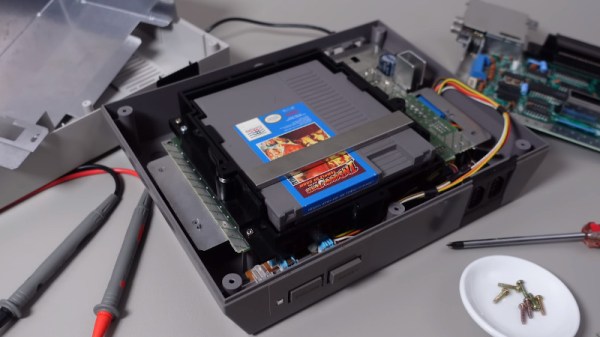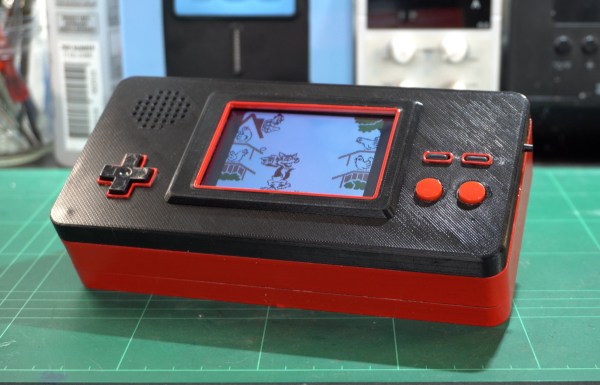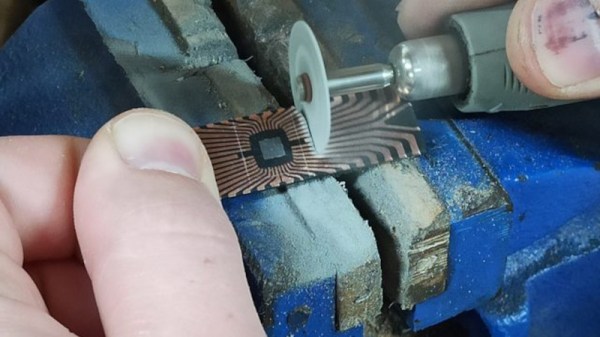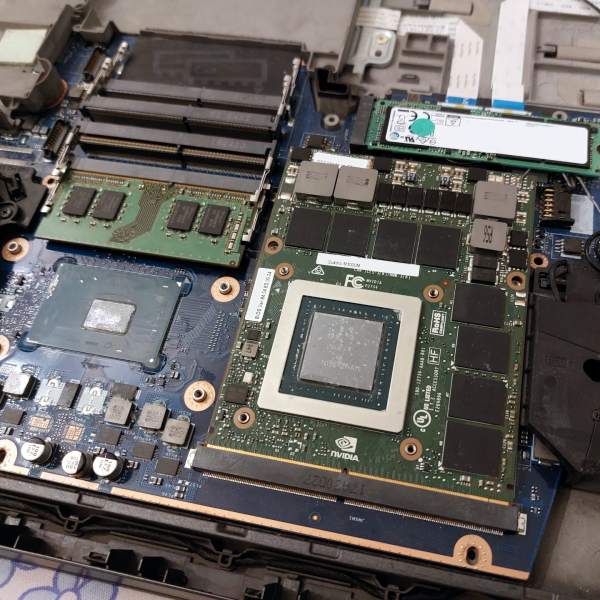
[David Cranor] has managed to fit a fully working Uzebox system into an old NES controller. Uzebox, an open source gaming platform based on the ATmega 644 and an AD725 NTSC encoder, is one of a couple systems that are becoming more and more widespread and accessible. There are a number of ready-to-go Uzebox kits available, but for the more hands-on types, [David] has been very generous with his schematics and step by step instructions. These schematics can all be readily reshaped, and would easily fit into controllers with less fun applications and sentimental value.
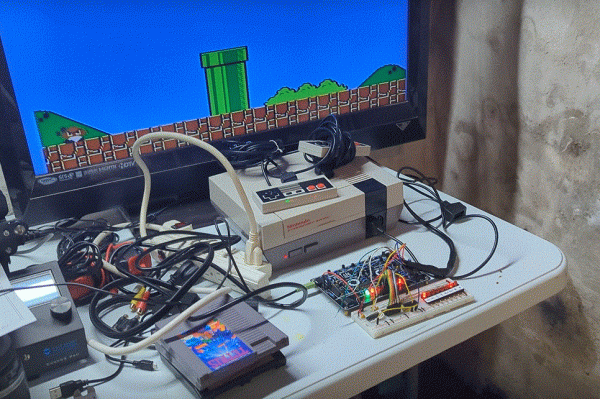
[Bradley] decided to tackle the challenge to recreate the original Nintendo Entertainment System’s processor in a Field Programmable Gate Array. Say what? The original NES is a Legacy System, still used but no longer manufactured. If a system breaks, it becomes more and more difficult to repair or find replacements parts as time passes. By using a programmable integrated circuit such as a CPLD or a FPGA to clone the functionality of the original hardware, legacy systems can live on long after the original hardware has given up the ghost.
It took [Bradley] about a year to fully implement the NES processor as part of his Master’s project at Bradley University. He used what was known about the processor combined with some detective work with logic probes along the way. The programming was done in VHDL and those files are available for download (click on Documentation).
With the ubiquity of NES emulators on every device known to man you probably won’t be replicating this unless you want a reason to play with a FPGA. What interests us is the hardware solution this type of work provides for obsolete hardware that still serves a useful purpose. If you’ve used a FPGA or similar device to keep an old system running, let us know about it in the comments.
[Dave] set out to build the ultimate NES guitar. He’s apparently done a pretty good job, this thing is pretty remarkable. Every detail is covered in NES goodness. The body is a console, the head is a cartridge, his knobs are even replaced by goofy little heads of Mario and friends. We think he should do some custom pixel art inlays in the fretboard next. Skip to about 2:00 to hear him play a Nintendo medley on it.
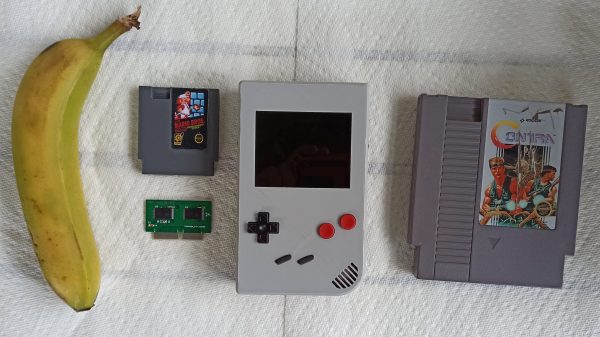
He is using a cheap but full featured emulator board. It comes with 4 gigs of memory but also has an SD card slot. NES, Game Boy, and Game Boy color ROMs can all be played on the 2.8″ color LCD but the system also features a TV out connector for use with a larger screen as well.
The cuts that [airz] made in the case are amazing, easily eclipsing the last cartridge emulator mod we saw. The holes for the controls look as if the plastic was molded that way. For realism he also cut off the PCB interface on the business end of the cartridge and glued it in place. Apparently it took three cartridges, two controllers, and two of the emulators to make it this nice, but if you want to make an omelet…
[Joven] wrote in to show us his unique NES controller mod. He initially thought of just putting some flash storage in his controller like so many others. Then he got the idea to a security feature. You must first enter a code to access the memory. What code? Yes, that one. He chose the Konami code. As he notes, this may not be the wisest choice for security purposes, but it sure is cool. At least it isn’t controlling something that really would require security, like his door. You can see a video describing the project after the break.
Going even further back in time than 4th gen, [Kevin] tipped us off to this project by [Hunter Davis]. It is a collection of software mods for Zipit’s Z2 instant messenging device. Some of them include allowing it to run (ports of) the Fluxbox window manager, FCE Ultra NES emulator, and (most impresively) the Java framework. The next leap in development, a SNES emulator optimized for the Zipit, is in the works. The Z2 runs Linux out of the box. This means you no longer have to reflash the device to add software, such as DOSbox (also introduced to the Zipit by [Hunter Davis]). Be sure to check out the video demo of FCE Ultra on the Z2 above.
[Miltron] dropped us a tip about his NES workbench. Knowing that when you get frustrated with whatever project you are beating your head against, you need an outlet, [Miltron] decided to build some relaxing NES fun into his workbench. He’s using a NES on a chip though any multi game-in-a-controller setup should work. He has gutted a PSone LCD and mounted it all together nicely so he can game at any moment. You might recall one of [Miltron]’s earlier projects, Das Uber Airsoft Turret. How long will it be before we see integrated LCDs into our toolbox lids or workbenches from the factory?
[Sam] submitted this fun project, a Punchout interface that you actually punch. If you recall, we’ve done a Punchout interface that you punch, but this one takes it a step further. Instead of being a blob on a desk that you’re mashing around, the new one is a Slam Man boxing dummy. They’ve mounted the buttons on different areas of the dummy so you can punch him to completely control the game. As you can see in the video, it seems to work ok, though we doubt the buttons will hold up very long under those conditions. They do say that this is just to hold them over till the Wii version, so maybe those buttons will last just long enough.
From the same person who brought you the NES toaster comes the Super Nintoaster. It looks like the most difficult part of the construction was extending the cartridge connector. The slider button works as the power button. The toast control now changes the brightness of the glowing red LEDs. Video introduction embedded below.
You can get most of the old NES games for the DS, but they just don’t feel the same. Sure your hands still cramp up, but its just not the same cramp we remember. What is the solution? Put an old Nintendo Entertainment System controller on your DS. [Parker] did exactly that. The method he used is fairly strait forward. He opened the DS, wired extensions onto the buttons he wanted to use to a controller. Instead of making it permanent though, he chose to wire it through the GBA slot. This allows him to plug the controller in whenever he wants to use it. This reminds us of the PSP with a SNES controller we covered back in October.
You can see a video of it in action after the break. You’ll notice in the video, he has also modded his buttons to have LEDs behind them.
In the comments, [tri-edge] points out that you can follow his build in the acidmods forum. There seem to be some other variations as well, including an SNES controller.