Radish – eco friendly google calendar

posted Apr 17th 2009 8:10am by Caleb Kraft
filed under: google hacks, peripherals hacks, solar hacks

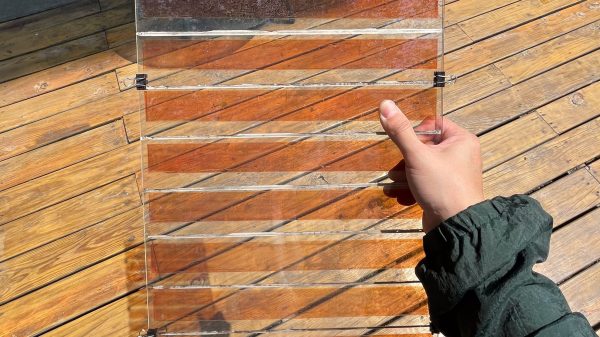
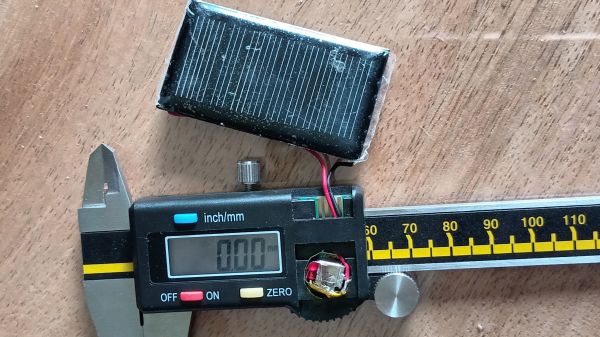
[Aaron] a google employee came up with an idea that would be good for the environment, as well as fun. The Radish is a solar powered display, updated from a google calendar, with extremely low power consumption. They are building this to be an indicator of the conference room schedule. When we first read this, we wondered just how much greener it could possibly be than printing a few sheets of paper. Then we read that they were going through six reams per day. wow. The Radish gets its power through a solar panel, and preserves it through some creative power saving modes and the fact that it has an LCD that only requires power to update. Would this be a good place for some E paper? Data is transferred using IEEE 802.15.4, which is slow, but also more efficient in terms of power than normal WiFi. The system is so efficient, it can run for 3-4 days in low light conditions after a charge . Another cool fact is that [Aaron] got to design and build this on company time. Google allows people to spend 20% of their time on innovative new projects of their choice.

correction: the LCD goes into an extremely low power “sleep mode” when not being updated, and retains the last image loaded.

Solar cells from donuts and tea

posted Mar 19th 2009 12:05pm by Caleb Kraft
filed under: solar hacks

It sounds unbelievable, but it is true. You can harvest most of what you need for a simple solar cell from powdered donuts and tea. Powdered donuts have nanoparticles of titanium dioxide which is a “high band gap semi conductor”.  This means that it can be used to make solar cells. The tea is simply used to dye the material so it can pick up the visible spectrum. The process is a bit too involved to be something you would just toss together in the field, but it’s cute nonetheless.


Solar batteries

posted Feb 16th 2009 2:30pm by Eliot Phillips
filed under: home hacks, solar hacks, tool hacks

solarbatt

[Knut Karlsen] put together a prototype set of solar rechargeable batteries. He always seemed to have batteries laying around on his worktable and figured they might as well be charging. The flexible solar cells were given to him by researchers at the IFE and are rated at 1.8V. He used superglue to secure them to the C cells. A silver conductive pen plus flat wires from a Canon lens connect the solar cells to the battery terminals. The batteries just trickle charge for now, but he’s going to try to build cells with built in charge controllers in the future.

Solar charging your DS

posted Feb 12th 2009 8:19am by Caleb Kraft
filed under: daily, ds hacks, gameboy hacks, nintendo hacks

solar_ds

[dark sponge] decided to make his DS lite, solar powered. Or, at least charged via solar panels.  He was able to find solar cells that were 60×60 mm, which means he could fit 4 of them on the outside of the DS. This gives him a total of 6V at 80 mA output. These panels charge the battery between uses. The DS has to be open and laying on its face for all 4 panels to be exposed, but this way of mounting them didn’t alter the pocket-ability of the unit. He says he’s been using it for a while and hasn’t had to plug it in yet, but we have concerns about wiring the panels directly to the battery. As [cyrozap] points out in the comments on the instructable, this is a Lithium Ion battery, shouldn’t there be some charging circuitry involved?

25C3: Solar-powering your gear

posted Dec 27th 2008 8:19am by Eliot Phillips
filed under: cons, peripherals hacks, solar hacks

solar

The 25th Chaos Communication Congress is underway in Berlin. One of the first talks we dropped in on was [script]’s Solar-powering your Geek Gear. While there are quite a few portable solar products on the market, we haven’t seen much in the way of real world experience until now.

Read the rest of this entry »


Track the sun for home lighting.

posted Dec 6th 2008 10:23am by Caleb Kraft
filed under: home hacks

sun_track

Have a room in your house that really could benefit from some sunlight? Build a Suntrack to reflect light in as long as possible. The two axis motor set up is built from a couple of  satellite dish positioning motors with the control electronics removed. The whole thing is controlled with a PIC 18f2520.  Once calibrated, it will reflect the sun into your room, updating every twenty seconds. While this may not be the most efficient way of lighting a room, it is a cool way to do it if you absolutely must have sunlight. We can’t help but wonder if there would be a way of using a solar powered system to do this to save energy. Could this possibly be done using BEAMhead” circuit?

[via Hacked Gadgets]

60 Watt solar panel built from cells

posted Sep 14th 2008 7:04pm by Jason Rollette
filed under: misc hacks, peripherals hacks

Our love for solar projects continues on with this method to make your own solar panels. [Mike] built a 60 watt solar panel from individual solar cells he purchased off eBay. Procuring parts off of eBay normally causes others hardship when they try to duplicate the project, however in this case there are so many types of cells people can use to produce their own unique solar panel. Even cells that are extremely damaged my still be used, as in this example. To charge a 12 volt battery the number of cells in series just needs to be 16-18 volts, and the rest in parallel will supply more current. Charging a battery without a charge controller is not recommended, but commercial ones are easily had. Those not interested in jumping all the way in with solar may want to test the waters by building their own panel and putting it to use as a charging station for your portable gadgets.

Solar powered ice maker

posted Aug 29th 2008 10:23am by Caleb Kraft
filed under: news, solar hacks

solar powered ice maker
Producing ice without electricity just got a lot easier thanks to these engineering students from San Jose State University. Their system uses solar heat to facilitate evaporation of a coolant. When the sun goes down and the coolant turns back to liquid, its temperature drops drastically due to extreme pressure differences. The unit can produce 14 pounds of ice per day with zero carbon footprint. It has no moving parts and an entirely sealed system, this should mean that the only maintenance necessary would be keeping the unit clean.
[via DVICE]


Drive a robot in Australia over the web

posted Aug 12th 2008 10:58am by Caleb Kraft
filed under: daily, robots hacks


BP Australia has commissioned an online game where you get to drive robots around an obstacle course. Make no mistake, these are real robots. Actually they are modified versions of the Surveyor SRV-1 vehicles that are popular with research labs, and schools everywhere.

Go to the website, get in queue and pray for no clouds. These babies are solar powered, so you’ll have to try to get in while its day time in Australia. The entire set is built in miniature, so you feel like you’re driving a tank around a city.

[via Robots Dreams]

Breakthrough in water based energy storage

posted Jul 31st 2008 10:20pm by jimmierodgers
filed under: misc hacks, news


[Daniel Nocera], working with the MIT Energy Initiative, has come up with a method to easily and cheaply store energy generated from solar electricity with water. The method uses two catalysts of non-toxic and abundant metals to separate the water into both oxygen and hydrogen. These gases are then stored, and later recombined in a fuel cell to generate power. The process was inspired by photosynthesis, and helps to make sources such as solar power viable around the clock. Current storage technologies are both expensive and inefficient, so technologies like solar are only useful when the source is available. This will allow homes to cheaply and easily store power generated through solar and other technologies. While this is only part of the solution towards the current energy problem, it could go a long way towards decreasing our use of non-renewable sources. When combined with other new breakthroughs in the field, you can easily imagine more homes coming off the grid. Check out the short video after the break.

Read the rest of this entry »

Spotlight on tinyminds

posted Jul 10th 2008 8:50pm by Kimberly Lau
filed under: robots hacks


Etsy places a spotlight on tinyminds, creator of the much-hyped solar robots. [Jenny], the brains behind tinyminds and self-described “all round nerd and non-stop crafter”, claims to draw inspiration for her BEAM solar bug and monster robots from things as varied as paper and wood. She describes the process of creating her robots and working with solar energy as “magical”. The fact that they’re solar-powered is a huge advantage – these “pets” never die and never need recharging, only light. Her Cthulhu robot was linked to by BoingBoing Gadgets, and is unfortunately sold out at the moment. tinyminds has plenty of other inventive, equally inspiring robots available for purchase.

Cheap hack may double solar panel power

posted Jul 10th 2008 6:30pm by Benjamin Eckel
filed under: news, solar hacks

MIT researchers have devised something they call the Solar Concentrator which is to be placed on top of existing solar cells. Its purpose is to separate the visible and infrared spectra of light by absorbing the visible spectrum and routing the energy to specialized cells. They claim this could lead to doubling the panel’s efficiency and greatly reducing costs.

We have seen many promising advances to solar panel efficiency in the past few years, but what is special about this one is the amazingly simple and cheap technique. Essentially, all the team has done is coat a piece of glass with simple organic dyes. After the organic molecules absorb the visible light, they remit the energy to the sides of the glass where it can be routed to their specific cells. The process is more efficient because the dye absorbs the light rather than something expensive like silicon. That means less silicon, and thus a better price range. Also, the fact that this material is just a piece of glass also opens up the possibility of solar windows.

Solar engine

posted Jun 14th 2008 8:50pm by Eliot Phillips
filed under: misc hacks


We spotted [Kerrin Mansfield]’s lovely solar engine on ladyada’s rantings. It uses 16 1/8th inch solar cells to collect power. At night, an orange LED pulses at .2Hz. He doesn’t have a specific write up on the construction, but from the component layout, it looks identical to [Gareth Branwyn]’s schematic in Make 08, which you can find in the PDF.

Solar powered lawnmower

posted May 29th 2008 11:30pm by Juan Aguilar
filed under: misc hacks


Our post about what it takes to convert your home to solar power probably put you in a green mood, but if you want to start with something smaller, check out this guide on how to add a solar panel to your lawnmower.

You will need a battery-powered lawnmower for this, as well as a 12-volt solar charger with a car lighter jack. This easy hack mainly involves a small amount of work with the wiring; the car lighter jack must be removed from the solar panel so that the wires can be attached to the batteries. Yeah, that’s it. We’d love to see a more elegant solution since the way it is now you have switch the wiring from parallel to series everytime you want to mow.

For a more complete lawnmower hack, check out this remote control lawnmower.

hack a day serves up fresh hacks each day, every day from around the web and a special how-to hack each week.

send us your hacks