DIY ARM Prototyping Board

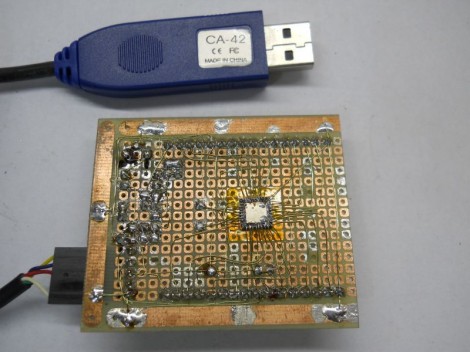
We’re impressed by the ARM prototyping board which [Danjovic] is showing off. He proves that in this day of ever shrinking packages it’s still possible to make your own development tools with protoboard and a soldering iron.

To tell you the truth, if he had designed and etched his own board we probably wouldn’t have featured it. But he didn’t need to spend time on the layout, etching, and reflow. Instead it’s just some enamel wire and a lot of patience. The patience is because the NXP ARM Cortex-M0 chip comes in a HVQFN package. We’re not entirely sure about the HV part (the package alphabet was not entirely clear on this) but QFN means Quad Flat No-Lead. That means no legs on the chip. So [Danjovic] glued it upside down and soldered point-to-point to break out all of the pins.

The top side of the board has a bootloader button, reset button, power regulation, and a crystal oscillator. He doesn’t mention what bootloader he’s using, but a Nokia USB cable gives him the connectivity to push his programs onto the chip.

Frequency Analyzer Built From The New Stellaris Launchpad

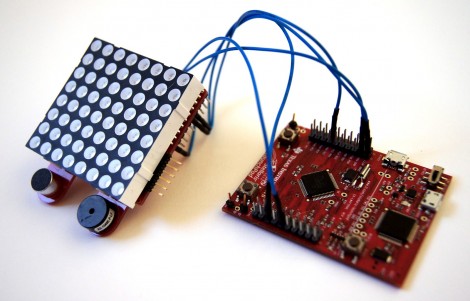
Here’s the first project we’ve seen for the new Stellaris Launchpad. It’s a frequency analyzer which displays a graph on an 8×8 LED module. What’s that you say? You haven’t received your new Launchpad board yet? Neither have we since they don’t start shipping until the end of the month. But [EuphonistiHack] works as a software dev for TI and snagged one of the early development units.

Hardware is rather simple. He uses an OpAmp to feed audio from his laptop to the ARM processor. The 8×8 LED module is an MSP430 booster pack that is addressed via SPI. On the software side of things he’s really taking advantage of hardware peripherals to simplify his work. A timer triggers each ADC reading which in turn writes the values using uDMA. Digital Signal Processing (available as a CMSIS library for many ARM chips) is then used to translate the ADC value to one that can be displayed on the LEDs. Check out the video after the break to see the final version.

The Hackaday writers are looking for an easier name for this hardware than “Stellaris Launchpad”. It doesn’t seem to lend itself to a shorter name, like RPi or Raspi does for the Raspberry Pi. If you’ve got a catchy nick name for the new board please share it in the comments.

5-keg Tap System Treats Your Home Brew Right

One of the biggest expenses when moving to a kegging system for your homebrew beer is finding a way to keep it cold. [Sanchmo] took a traditional route of using a chest freezer, but a bit of extra effort made the ordinary looking appliance into a 5 tap showpiece in his livingroom.

Home brewing is most often done in five gallon batches, so Cornelius kegs (for soda) work perfectly. The chest freezer used here has plenty of room for five of them and a canister of carbon dioxide.  A temperature controller (something along these lines) turns the freezer into a refrigerator. But to make it beautiful [Sanchmo] hit the wood shop pretty hard. He screwed a sheet of plywood to the lid and then trimmed it out, along with a tower to hold the taps. This was further accented with the inclusion of some LEDs for effect.

We did find one word of warning in the Reddit discussion. It’s possible that the original metal housing of the freezer is used as a heat sink which is now covered in wood paneling. We’re not sure if this is true of this particular model or not, but some investigation is warranted if you’re thinking of building your own.

Hacking Dog Collars To Save Money On Batteries.

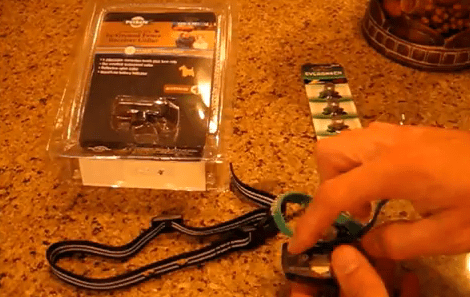
[Lou] sent in this amazingly simple hack that has been saving him money on special batteries for his dog collar. He uses an invisible fence system which gives the dog a shock if it passes beyond certain markers in his yard. The collars use special batteries so you’re not strapping multiple full sized cells to your dogs neck. This is especially necessary when you have a smaller dog that doesn’t weigh much to begin with.

What [Lou] found was that the $8 replacement batteries were simply a plastic shell on a battery he could buy for considerably less. All that was required were a few small cuts to the plastic casing to release the old battery, then he presses the new one into place. This tiny modification will be saving him a considerable amount since the unit burns through a battery in a few weeks.

Continue reading “Hacking Dog Collars To Save Money On Batteries.”

Building A Classic Coin-op Game In An FPGA

This game of Bomb Jack is the same as the original arcade version. The difference is that this hardware was built in an FPGA using schematics found on the Internet.

We’re a little shocked by the complexity of such a project. We’ve been impressed before by the use of FPGAs to implement classic CRT vector graphics. But that project used a library that had already implemented the original game. For this effort, [Alex] wanted to find a game that hadn’t ever been translated to an FPGA, and used stock parts. Bomb Jack is a 1984 platformer which ran on a Z80 processor, AY-3-8192 sound generators, and common TTL logic chips. This meant he didn’t have to write the cores himself, but rather use already existing versions of the chips and code together the hardware.

You can read about his experience at the page linked at the top, or just jump after the break to see video of the final project. You can see the monitor is on its side, and the game sounds great and runs flawlessly.

Continue reading “Building A Classic Coin-op Game In An FPGA”

Can A Robot Be A Safe And Cost-effective Alternative To Guide Dogs?

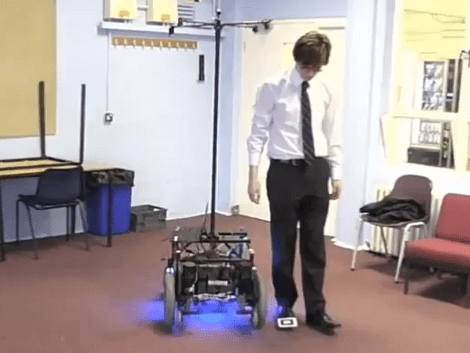
[Tom Ladyman] is making the case that a robot can take the place of a guide dog. According to his presentation, guide dogs cost about £45,000 (around $70k) to train and their working life is only about six years. On the other hand, he believes that this robot can be put into service for about £1,000 (around $1500). The target group for the robots is blind and visually impaired people. This makes since, because the robot lacks a dog’s ability to assist in other ways (locating and returning items to their companion, etc.). The main need here is independent travel.

He starts with the base of an electric wheelchair — a time-tested and economy-of-scale platform. The robot navigates based on images from four downward facing cameras mounted on the pole seen above. The X on the top of the pole allows for a much wider range of sight. The robot identifies its companion via a tag on their shoe, but it’s got another trick up its sleeve. The cameras feed to a set of four BeagleBoards which work together to process them into a 3D map at about 12 FPS, allowing for obstacle avoidance.

Check out the video after the break for a bit more information. The 3D guidance system is also explained in detail at the link above.

Continue reading “Can A Robot Be A Safe And Cost-effective Alternative To Guide Dogs?”

Alarm System Makes Sure Your Moving Truck Doesn’t Get Raided

When you move you generally load up everything you own into one truck. If your entire life is ever going to get ripped off, this is probably when it’s going to happen. To guard against the threat [Tim Flint] built his own alarm for a moving truck. If someone opens the door on the truck it’ll alert him via text message. Hopefully he’s got an annoying notification sound that will wake him up in time to catch them red-handed.

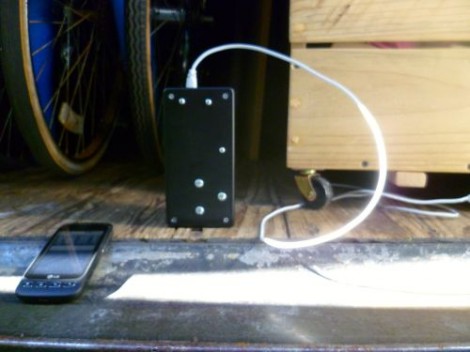
The setup is simple and shouldn’t distract you too much from your packing and loading. [Tim] connected a proximity sensor to an Arduino board which has its own WiFi module. The entire thing is housed in the black project box seen above and the proximity sensor is pointed at the moving truck door. When the door is opened the Arduino pushes an alert to Twilio which is configured to send him text messages.

The alarm system doesn’t protect from someone stealing the entire truck… that kind of system is an entirely different project.