How The 2020s Chip Crisis Led To A Buggy Saleae Analyzer In 2026

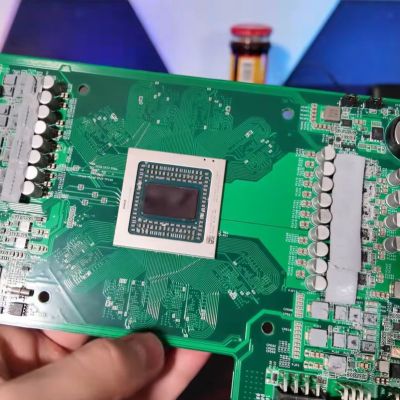
For those of us old enough to remember the harrowing days of the early 2020s, alongside another major kerfuffle there was a complete breakdown in global supply chains that led to the 2020-2023 global chip shortage. Unsurprisingly, this pushed many hardware manufacturers into less orthodox approaches, massive BOM changes, and hurried redesigns. One of the results of this era found its way into the hands of the bloke over at the [Playduino] YouTube channel, who was mystified to find two bodge wires in his fancy Saleae logic analyzer.

The reason for popping open the LA was crosstalk between two channels, which was bad enough that it made the unit quite unusable for the intended task. After seeing the cut traces and bodge wires he initially assumed that since he bought it used that the previous owner had modified it, but said person denied having opened it since purchasing it from an official retailer.

This was when he emailed Saleae support to see whether they knew anything. Initially they denied knowing anything about such a modification, but then the CTO emailed back with a long and very detailed confession. As explained in the video, during the aforementioned chip crisis Saleae was forced to rapidly redesign their LAs to use whatever FPGAs and other parts they could still get their hands on.

An initial prototype unit passed their internal tests, so they had a first batch manufactured using PCBs from a different supplier. Despite sending the same Gerber files, the resulting PCBs had ground fill issues that necessitated the observed rework, but due to insufficient testing for crosstalk a total of 406 units made it into the wild.

Sadly he had to return the defective unit for a replacement, making it somewhat hard to let go of such a piece of history. That said, if you want to know whether you’re also one of the lucky remaining 405 LA owners, the CTO provided the affected serial number range: 00200026245 to 00200026675 are affected.

Continue reading “How The 2020s Chip Crisis Led To A Buggy Saleae Analyzer In 2026”

The Secret Wattcycle LFP Battery Downgrade

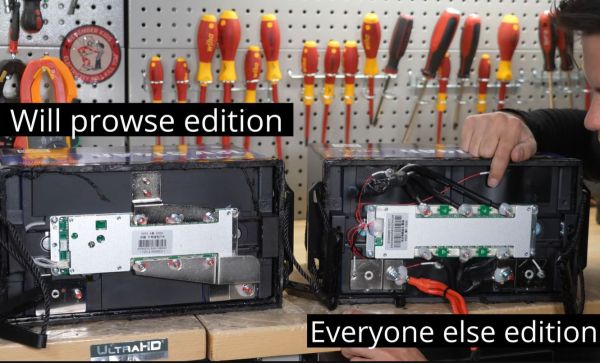
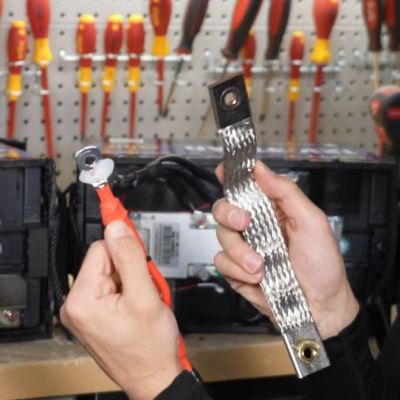
After recently reviewing a Wattcycle LFP battery sent over by the manufacturer, [Will Prowse] was made aware of some disturbing changes to the internals of batteries received by regular customers. Rather than the nice protected cables, thick solid metal busbars, braided wire and excellent build quality, the units that a regular customer – got as well as the one that [Will] bought off Amazon – all feature something more akin to what you’d find in a budget LFP battery, including a wide variety of LFP cells.

With these LFP batteries generally coming in fully opaque plastic cases, it’s really hard to tell what the internals look like without either going medieval on them or using less intrusive methods such as an X-ray machine. In this case less capable braided cables were replaced with regular cables that in a test showed a much higher voltage drop compared to the braided type.

Along with all the other changes between these batteries, this makes it impossible to rely on any reviews as a customer. [Will] notes that Wattcycle isn’t alone in doing this, and makes the case for more transparent cases for LFP batteries. After all, if you can see at a glance through the transparent case what the cables and wiring looks like, what BMS is installed and even what any LEDs on said BMS PCB are doing.

There are some LFP batteries with such a transparent case already, and with some smaller LFP batteries you can even pop the top off without having to resort to very permanent levels of violence, so this is not a problem without solutions. From a consumer perspective it definitely would be nice to see the internals as literal transparency from the manufacturer’s side, as well as an increased ability to monitor the battery for any thermal, leakage or other issues.

Continue reading “The Secret Wattcycle LFP Battery Downgrade”

Custom FM Radio Station Powered By Shell Scripts

[Trwmato] wanted to spend more time listening to a normal radio to cut back on phone use. But the programming wasn’t quite right so, of course, the solution was to spin up a custom radio station!

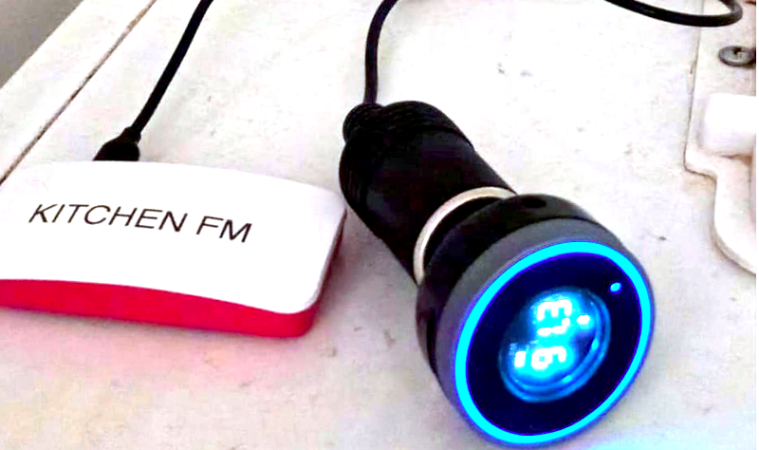
The station in question uses a Pi Zero to poll podcasts and news from RSS feeds and automatically mixes them with local content and sends it out via Bluetooth. An FM transmitter allows it to still work on the FM radio, too. Grabbing podcasts isn’t very difficult, thanks to podget. The real logic is in how long to retain things and creating a playlist that both prioritizes fresh content while not repeating things too often. Did we forget to mention the whole thing is a collection of shell scripts?

We could see this as the start of a cool project to have a “radio station” for a school, organization, or company. It is easy to understand and modify.

We often argue that the much-maligned bash script is sometimes the right tool for the job. You can even do things like critical sections in them.

Questions Remain About Tense Moment Aboard ISS

Even if you’re not normally interested in what’s happening in low Earth orbit, you probably heard that last week NASA ordered its personnel aboard the International Space Station to button themselves up in the docked Dragon spacecraft and await further instructions should they need to make a hasty departure. Known as Safe Haven, this emergency procedure is performed whenever there’s an elevated risk of damage to the Station.

NASA has provided an update on what happened, but it arguably leaves more questions than answers. Usually, crews go to their Safe Haven because some bit of space junk has wandered to close to the orbiting complex, but this time it was because Russian cosmonauts Sergey Kud-Sverchkov and Sergei Mikayev were getting ready to start cutting into the walls of the PrK transfer tunnel in an effort to address its persistent air leak.

After about an hour and a half, the Russians called off the effort and NASA gave their people the OK to leave the Dragon and return to their normal duties. NASA Press Secretary Bethany Stevens later posted on social media that the space agency would “look forward to working with Roscosmos on a collaborative approach to address the leaks” in the future. There’s currently no word on what a future repair attempt may entail, or when it would be attempted.

This is one of those things were we might not hear the full story for some time, but it sure does sound like not only did the Russians want to do something that NASA didn’t think was safe, but that the whole thing was sprung on them at the last moment. To give you an idea of how serious Mission Control was taking the situation, they decided to cram five people into a Dragon capsule that only has four seats — it certainly would have made for one wild ride down to Earth if they were given the order to evacuate.

What do you want to bet there were some frantic international calls taking place while the astronauts were hiding out in their designated lifeboat?

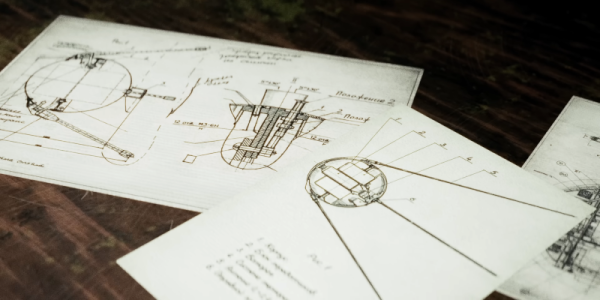
The Winners Of The 2025 Obfuscated C Code Contest

One of the most exciting challenges available to any software developer is that of writing brilliantly working code that’s so obtuse, so indecipherable, and opaque, that even its own author would struggle to grasp its inner workings after returning to it a year later. While for some this is just how they naturally write code, for others it’s part of the International Obfuscated C Coding Challenge (IOCCC), with 2025’s entrants once again showing their mettle.

The IOCCC judges entries among a range of categories, as it can be hard to otherwise quantify what is the ‘best’ entry, with ground rules limiting what the entry can entail. Generally as long as your code adheres to the C11 standard with a source size of 4,993 bytes or less and final binary size of under 2,503, is accompanied by a GNU-style Makefile and doesn’t turn a judge’s computer into a raging inferno — it should qualify.

Among the winning entries we got fun ones like ‘Most likely to shock’ by [Yusuke Endoh] which generates a Lichtenberg figure in ASCII in the terminal. There are also quite practical ones, such as the ‘Best real emulator’ winner by [Nick Craig-Wood], whose entry is a functional Game Boy emulator. Although not full-featured, it can play a range of real GB ROMs, just do not expect to get any sounds or fancy terminal-based graphics.

Automatic Tutorial Generator Is Perhaps The Best-Case For Vibe Coding

Quick question: how did you learn to code? It probably wasn’t bribing someone a year or two ahead of you in CS to finish all your homework, but that’s exactly what ‘vibe coders’ are doing — even in class. Odds are, you learned by working through exercises, following tutorials, and doing it yourself. Finding good tutorials isn’t getting any easier in the age of LLMs, and that’s where [Deven Jarvis]’s Lathe comes in: it’s a project to get an LLM to make the tutorial for you. Instead of doing the work for you, it gets the clanker to show you how to do it yourself.

Everyone’s different, so this may not apply to you, but it’s a journey/destination sort of problem. Some people just want a piece of software, and they can vibe code until the oceans dry up and will have no interest in this project. Other people take great joy in learning how to do things; [Deven] is one of those. A good tutorial is a great way to learn, since it artificially softens the learning curve compared to just jumping into a project with a man page or a datasheet.

Of course you’re still faced with the hallucination problem, something [Deven] admits in his excellent write-up. As he points out, the advantage is that you can call whatever model you plug into Lathe on its BS, and try and get a correct answer. Try that on Reddit, or most other places online. Sure, the tutorials aren’t going to match the best human-generated content, and [Deven] admits that. He’s using it for topics (like slicer design) that don’t have easy tutorials online — and sadly, his prediction that nobody is going to bother making good learning resources like they used to when they’ll just be scraped by LLMs is very likely true. It’s not that your options are vibe code or vibe-generated tutorial, but if that’s the direction the world is going, we’ll take the tutorial, thanks.

Getting the LLM to hold your hand through a tutorial might not appeal to the most Butlerian among us, but it’s a big step from that to the full cognitive surrender some people worry about.