Xilinx Borrows Code For Their Own Devices

Back in 2012, [tmbinc] discovered a neat little undocumented feature in the Xilinx ISE: the ability to use TCP/IP instead of JTAG cables. [tmbinc] was working on an Open Hardware USB analyzer and discovered the nearly undocumented Xilinx Virtual Cable, a single ‘shift’ command that opens up a TCP connection and sends JTAG data out to another computer on the network. It’s extraordinarily useful, [tmbinc] wrote a daemon for this tool, and everything was right with the world.

Yesterday, [tmbinc] discovered the Xilinx Virtual Cable again, this time in one of Xilinx’s Github repos. The code was extraordinarily familiar, and looking closer at a few of the revisions, he saw it was very similar to code he had written three years ago.

The offending revision in the Xilinx repo is nearly identical to [tmbinc]’s Xilinx Virtual Cable Driver daemon. Variable names are the same, the variables are declared in the same order, and apart from whitespace, code conventions are the same. This is not to say someone at Xilinx stole code from [tmbinc], but if this were a computer science lab, there would be an academic disciplinary hearing. What’s worse, Xilinx plastered their copyright notice at the top of the code.

In an issue [tmbinc] raised, he said he was flattered, but clarified that his code was developed entirely from scratch. He believes the Xilinx code was derived from his own code written three years ago. Since [tmbinc]’s code was uploaded without a license, it defaulted to All Rights Reserved. This does not bode well for the Xilinx legal department.

In any event, you really, really have to wonder what Xilinx’s internal documentation looks like if a random person on the Internet can discover a barely-documented protocol, write a daemon, put it on the Internet, and have someone at Xilinx use that code.

Thanks to the anonymous tipster for sending this into the Hackaday tip jar.

Hackaday Prize Entry: Junkyard Fuel Cell

Modern hydrogen fuel cells are incredible pieces of engineering. While a simplistic diagram of a fuel cell is just a stream of hydrogen, an anode, cathode, and a bit of oxygen, this does’t convey the complexity of the most important part of the fuel cell – the proton exchange membrane.

The proton exchange membrane is the part of a fuel cell that takes in hydrogen, spits out electrons, and produces water. They can be made from platinum to expensive DuPont products, and if [Charlie]’s hypothesis is correct, stuff you can pull out of a junkyard.

The goal of [Charlie]’s Prize entry is to create a small, proof of concept fuel cell that’s safe, low cost, and very easy to build. Right now he’s focused on finding a cheap, readily available proton exchange membrane to make this build accessible to everyone.

A hydrogen fuel cell will of course have pressurized hydrogen in it, and [Charlie] is taking some steps to mitigate the risks of having his limbs blown off. His first real project update is about the safety considerations of working with hydrogen. He’ll be using a simple hydrogen gas sensor to measure for leaks and sound an alarm.


The 2015 Hackaday Prize is sponsored by:

Life Sized Lego Spaceship Parts

Ah, 1980s space Lego sets. You may think the pirate ship and castle sets are cooler, but you’re wrong, because spaceship. spaceship. spaceship.

These space Lego sets had some very interesting parts, with tiny two-by sloped pieces printed with Lego analogs of computers, monitors, phones, intercoms, speakers, control panels, and everything else that makes a voxellated spaceship fly to the moon. Now, these pieces are functional, and they’re nearly life-size.

[Love Hultén] took these fantastic parts, modeled them, and scaled them up to six times normal Lego dimensions. These blocks were then fitted with buttons, displays, the guts of an old telephone, and all the other accoutrements to make these bricks functional. Two computer blocks can be connected together, and it will play video games with a Lego-shaped controller. The intercom works, and the buttons on control panels can be used to turn on lights.

It should be noted the Lego family is more than just the small bricks that really hurt when you step on them. Duplo, the blocks made for children who would stuff Lego down their own throats, is twice the size of Lego. Quatro are blocks made for toddlers, and are twice the size of Duplo and four times the size of Lego. Since [Love] made blocks that are six times the size of normal Lego blocks, we’ll leave it up to the comments to determine what this class of blocks should be named.

Video below.

Continue reading “Life Sized Lego Spaceship Parts”

Makey Makey Made Smaller

When it launched in 2012, the Makey Makey was the golden child of the maker movement. It was a simple, easy to use board with holes for alligator clips and a USB socket that would present capacitive touch pads as a USB HID device. Thus, the banana piano was born.

The Makey Makey is a device specifically designed to introduce kids to electronics in a way the Arduino can’t match; even with an Arduino, most of the work is with code. If you’re introducing electronics to a class of 10-year-olds, that might be a bit too much.

Now there’s a new Makey Makey on the block. It’s the Makey Makey Go, and it’s the same user experience as the Makey Makey classic made cheaper and much more rugged.

The Makey Makey Go features a single touch pad to clamp an alligator clip to. That’s enough to send any keypress or a mouse click over USB, where a wide variety of apps and games can make this tiny thumb drive-sized board useful. Banana pianos are out, and plant harps and Jello Flappy Bird are in.

There aren’t many details about the internals of the Makey Makey Go, but [Jay] from Makey Makey says the prototypes are based on the ATMega32u4, while the production units will use cheaper chips. Video below.

Continue reading “Makey Makey Made Smaller”

Hackaday Links Column Banner

Hackaday Links: May 10, 2015

Here’s a cool crowdfunding campaign that somehow escaped the Hackaday Tip Line. It’s a remote control SpaceShipOne and White Knight. SpaceShipOne is a ducted fan that has the high-drag feathering mechanism, while White Knight is a glider. Very cool, and something we haven’t really seen in the scratchbuilding world.

[Sink] has a Makerbot Digitizer – the Makerbot 3D scanner – and a lot of time on his hands. He printed something, scanned it, printed that scan… you get the picture. It’s a project called Transcription Error.

Keurig has admitted they were wrong to force DRM on consumers for their pod coffee cups.

The Apple ][, The Commodore 64, and the Spectrum. The three kings. Apple will never license their name for retro computer hardware, and there will never be another computer sold under the Commodore label. The Spectrum, though… The Sinclair ZX Spectrum Vega is a direct-to-TV console in the vein of [Jeri Ellisworth]’s C64 joystick doohickey.

Infinity mirrors are simple enough to make; they’re just one mirror, some LEDs, and another piece of glass. How about a 3D infinity mirror? They look really, really cool.

Here’s the six-day notice for some cool events: Hamvention in Dayton, OH. [Greg Charvat] will be there, and [Robert] is offering cold drinks to anyone who mentions Hackaday. If anyone feels like scavenging for me, here’s a thread I created on the Vintage Computer Forum.  Bay Area Maker Faire is next weekend. Most of the rest of the Hackaday crew will be there because we have a meetup on Saturday night

How To Make Hardware, With Examples And An Electric Pickle

Right now we’re throwing a two-day hackathon in Pasadena. As with all hackathons, people are going to build something, but that’s only going to happen today. Yesterday was an incredible Zero to Product talk that goes over PCB layout techniques, manufacturing, and schematic capture. In a seven hour talk, our own [Matt Berggren] took the audience through building a product, in this case a little ESP8266 breakout board. We livestreamed this; the video (and electric pickles) are below.

Continue reading “How To Make Hardware, With Examples And An Electric Pickle”

Hackaday Prize Entry: Open Source Diesel

There are plans for open hardware farming equipment that can be brought to third world countries to relieve the beasts of burden and increase the production of fields. Want an open source car? You can 3D print one. Just about anything you can strap a motor to has been replicated in open hardware; all you need to do is buy a motor and bolt it on.

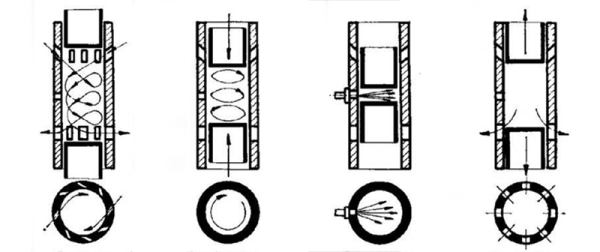
But what about the motors themselves? For his entry to The Hackaday Prize, [Shane] is designing an open source engine. It’s small, it’s a two-stroke, and it’s diesel, but it’s completely open hardware; a great enabling project for all the open source dirt bikes and microcombines.

The design of [Shane]’s engine is based on the Junkers Jumo 205; a weird engine that had opposing pistons in one cylinder. This allows the engine to have variable compression, allowing for a wide variety of fuels to be used. If you have kerosene, that’ll work with this engine. French fry oil will as well. It’s exactly what you need for an engine that could be used for anything.


The 2015 Hackaday Prize is sponsored by: