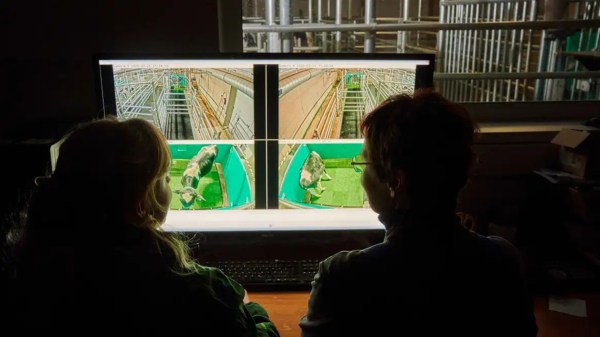
Researchers monitor calves as they use the MooLoo, a special pen for urination.

Toilet-Training Cows Is No Bull

Human activity may be the main cause of climate change, but all these cows milling and mooing about don’t help, either. Everyone knows that cows produce methane-laden flatulence, but there’s another problem — their urine contains ammonia. The nitrogen leeches into the soil and turns into nitrous oxide, which is no laughing matter. So what’s the answer, giant diapers? No, just train them to use a toilet instead of the soil-let.

A pair of researchers from the University of Auckland traveled to a research institute’s farm in Germany with the hope of training a group of 16 calves to do their business in a special pen. The “MooLoo” is painted bright green and carpeted with artificial turf so it’s less weird for the cows. First they left the calves in the pen until they peed, and then gave it a reward of sugar water. From there, they started extended the animals’ distance from the MooLoo. Whenever the calves thought outside the box, they would be sprayed with water for three seconds. The results are kind of surprising: within an average of 15-20 urination sessions, 11 of the 16 cows had been trained successfully and were using the MooLoo 75% of the time. Watch a calf earn some sugar water after the break.

German cows mostly live in barns, but millions of other cows spend much of their time outside. So, how would that work? The researchers believe that cows could be trained to go when they gather for milking time. Makes sense to us, but how do you train cows on a large scale? Maybe with bovine VR?


Continue reading “Toilet-Training Cows Is No Bull”

Interactive Clips For Game Boy: Sit Back And Watch Or Take Control

How often does this happen to you? You find yourself describing something that happened in a game to someone, and they’re not sure they know what part of the map you’re talking about, or they’ve never gotten that far. Wouldn’t it be cool to make a bookmark in a video game so you can jump right to the beginning of the action and show your friend what you mean using the actual game?

That’s the idea behind [Joël Franusic] and [Adam Smith]’s fantastic Playable Quotes for Game Boy — clip-making that creates a 4-D nugget of gameplay that can either be viewed as a video, or played live within the bounds of the clip. The system is built on a modified version of the PyBoy emulator.

Game Boy game ROM -- complete and partial
Left: the full game ROM. Right: a bookmarked slice of the game ROM with the rest set to zero.

Basically, a Playable Quote is made up of a save state and all that entails, plus a slice of the game’s ROM that includes just enough game data to recreate an interactive clip. Everything is zipped up and steganographically encoded into a PNG file. Here’s a Tetris quote you can play (or watch) right now — you might recognize it from the post thumbnail. You’ll find the others on the games site, which allows people to create and share and build on each other’s work.

There’s so much more that can be done with this type of immersive and interactive tool outside the realm of games, and we’re excited to see where this leads and what people do with it.

Haven’t heard of PyBoy before? Let us introduce you.

We’d Like, Totally Carry This Retro Boombox Cyberdeck On Our Shoulder

Cyberdeck. For those of a certain age, the ‘deck’ part conjures visions of tape decks, be they cassette, 8-track, or quarter-inch, and we seriously have to wonder why haven’t seen this type of build before. But here we are, thanks to [bongoplayingmonkey]’s Sanyo Cyberdeck, a truly retro machine built into a cool old boombox.

According to [bongoplayingmonkey], this was a unicorn of a build wherein everything more or less came together, soup to nuts. Right now, [bongoplayingmonkey] is cracking the nuts of a few remaining issues, like calibrating the analog VU meter that inspired the build in the first place. The plan is to use that to indicate various analog things such as battery power and the WiFi signal.

Luckily, everything survived the teardown, parts-wise. That huge knob has a new life has a rotary encoder for scrolling and middle click. And the VU meter made it too, thank Zod. This baby has full mouse controls thanks to a PS/2 joystick and a pair of vintage momentary buttons are likely chrome and bakelite to round out the look.

So apparently [bongoplayingmonkey]’s personal jury is still out on whether this is a blasphemous build or a divine ‘deck, but we say one thing is for sure: this is definitely art.

Unfortunately, the cassette deck didn’t survive. Otherwise, we might have to question its categorization — is it still a boombox if the tape deck works? This, however, is definitely a laptop that grew up to be a cyberdeck.

Thanks for the tip, [Blasto]!

RoboTray Is A Secret Tea Butler

How far would you go for your cup of tea? [samsungite]’s missus doesn’t like clutter on her countertops, so away the one-cup kettle would go back into the cupboard for next time while the tea steeped. As long as there’s room for it in there, why not install it there permanently? That’s the idea behind RoboTray, which would only be cooler if it could be plumbed somehow.

RoboTray went through a few iterations, most importantly the switch from 6mm MDF to 4 mm aluminum plate. A transformer acts as a current sensor, and when the kettle is powered on, the tray first advances forward 7 cm using a 12 VDC motor and an Arduino. Then it pivots 90° on a lazy Susan driven by another 12 VDC motor. The kettle is smart enough to turn itself off when finished, and the Arduino senses this and reverses all the steps after a ten-second warning period. Check it out in action after the break.

If [samsungite] has any more Arduinos lying around, he might appreciate this tea inventory tracker.

Continue reading “RoboTray Is A Secret Tea Butler”

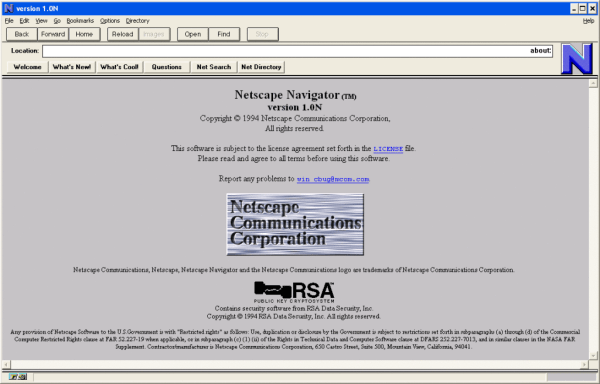
Netscape Navigator 1.0

So, Why Are Hyperlinks Blue, Anyway?

You’ve no doubt noticed by now that while some links are gold and/or bold, most links out there are blue, especially on web pages of yore. But why? the TL;DR answer is that the Mosaic browser, released in early 1993 used blue links, and since the browser was widely distributed, blue just became the norm. Okay, fine. But why did they choose blue? That’s a question that requires a deep dive into technology through the ages as the Web and personal computing developed in tandem.

It’s important to remember that the idea of hyperlinks predates the invention of color monitors, which thickens the plot a bit. But the pivotal point seems to be Windows 3.1, released April 6th, 1992, when hyperlink blue becomes a navigational and interactive color. A year later, the April 12, 1993 release notes for Mosaic include a bullet that becomes the point of origin for blue hyperlinks:

Changed default anchor representations: blue and single solid underline for unvisited, dark purple and single dashed underline for visited.Mosaic release notes

Around the same time, the Cello browser was developed at Cornell Law, which also used blue hyperlinks. So the blue hyperlink concept was arguably browser-agnostic even before Netscape Navigator and Internet Explorer came along.

The writer speculates that blue was chosen to stand out against black and white once color monitors took over, and that seems legit to us. Can you imagine blue hyperlinks on Hackaday, though? Ouch.

Speaking of important questions in computing history — who invented the mouse?

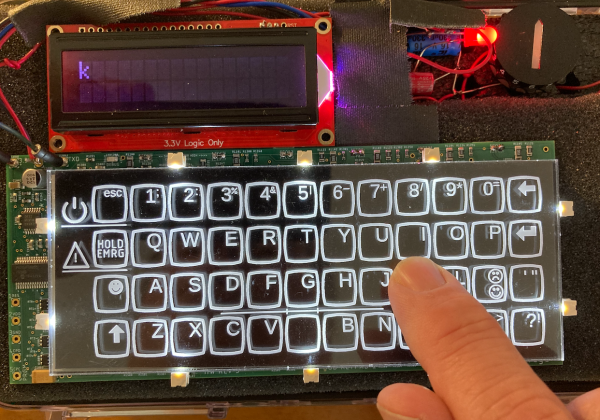
An optical keyboard that works using IR LEDs and phototransistors.

Take A Look At This Optical Keyboard

Making keyboards is easy, right? Just wire up a bunch of switches matrix-style to a microcontroller, slap some QMK and a set of keycaps on there and you’re good to go. Well, yeah, that might work for cushier environments like home offices and Hackaday dungeons, but what if you need to give input under water, in a volatile area, or anywhere else you’d have to forego the clacking for something hermetically sealed? Mechanical switches can only take you so far — at some point, you have to go optical.

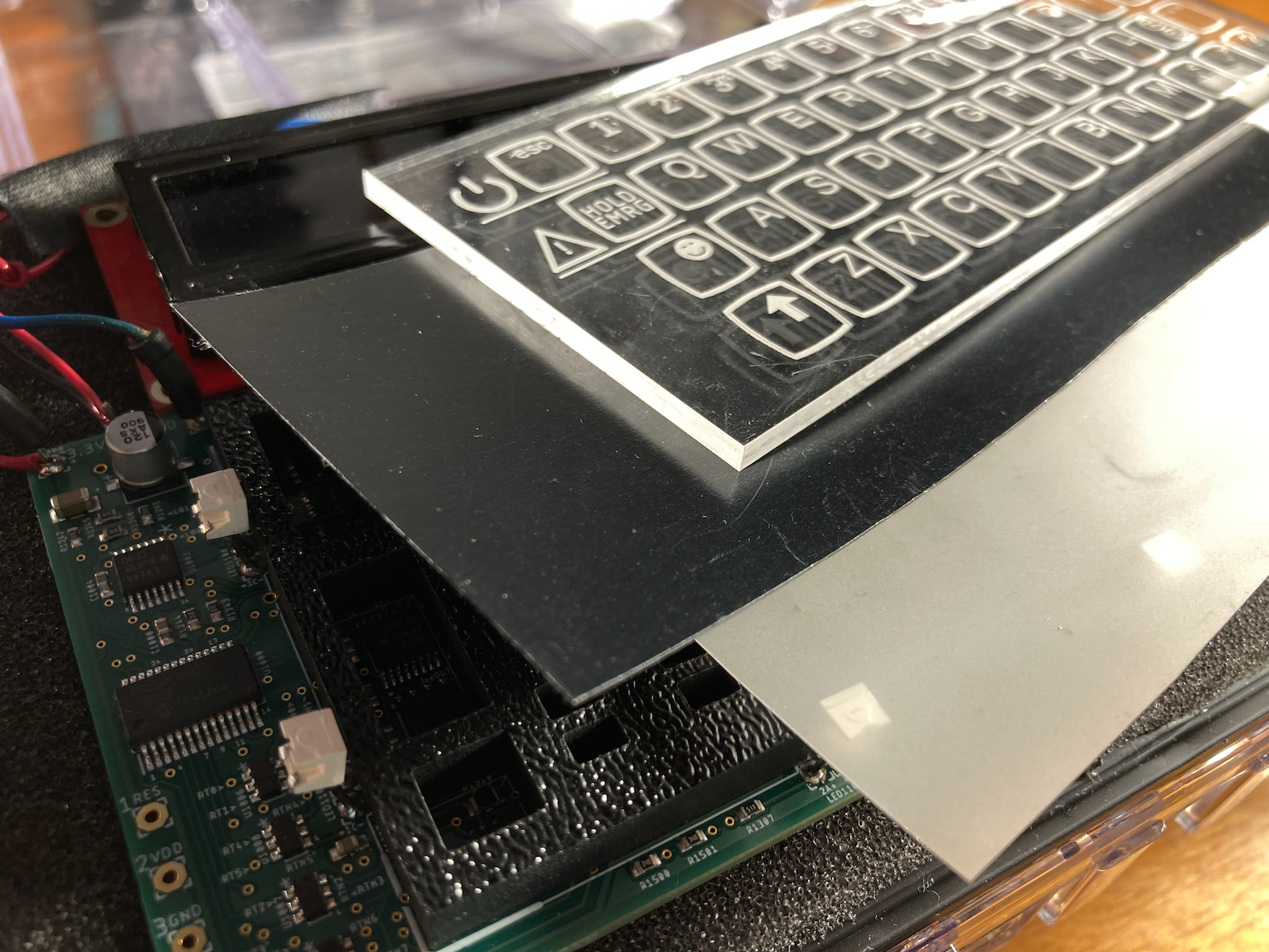
the layers of an optical keyboardThis gorgeous keyboard works with reflected IR beams to determine when a finger is occupying a given key site (because what else are you going to call them?). Each key site has an IR LED and a phototransistor and it works via break-beam.

[BenKoning] wanted a solution that would be easy for others to build, with a low-cost BOM and minimal software processing cost. It just so happens to be extremely good-looking, as well.

The reason you can’t see the guts is that black layer — it passes infrared light, but is black to the eye. The frosted layer diffuses the beams until a finger is close enough to register. Check it out in action after the break, and then feed your optical key switch cravings with our own [Bob Baddeley]’s in-depth exploration of them.

Continue reading “Take A Look At This Optical Keyboard”

A bee pollinates a flower.

Even Bees Are Abuzz About Caffeine

Many of us can’t get through the day without at minimum one cup of coffee, or at least, we’d rather not think about trying. No matter how you choose to ingest caffeine, it is an awesome source of energy and focus for legions of hackers and humans. And evidently, the same goes for pollinator bees.

You’ve probably heard that there aren’t enough bees around anymore to pollinate all the crops that need pollinating. That’s old news. One solution was to raise them commercially and then truck them to farmers’ fields where they’re needed. The new problem is that the bees wander off and pollinate wildflowers instead of the fields they’re supposed to be pollinating. But there’s hope for these distracted bees: Scientists at the University of Greenwich have discovered that bees under the influence of caffeine are more likely to stay on track when given a whiff of the flower they’re supposed to be pollinating.

Continue reading “Even Bees Are Abuzz About Caffeine”