Pomodachi: A Productivity Pet You Feed By Working

Being productive doesn’t have to be a lonely endeavor. Even if you’re a lone wolf, who wouldn’t benefit from having a cute little productivity pet to cheer them on? That’s the idea behind [droxpopuli]’s Pomodachi, which combines a hardware implementation of the Pomodoro technique with a virtual pet. It adds some fun, but doesn’t overly gamify time tracking to the point of distraction. And this is way more fun than just sticking a pair of googly eyes on a tomato-shaped timer.

Inside the box is an Adafruit HalloWing M4 Express and a NeoKey FeatherWing with two Kailh box white switches for a satisfying clack. [droxpopuli] printed up a PyPortal-inspired case and added a glass lens for a spiffy tube TV look.

Pomo himself is a cute little jack-o-lantern looking creature with a teddy bear face and no arms or legs. He could eat with his face, but prefers to be fed. That’s where you come in. You feed him by completing a set of four 20-minute work intervals.

Don’t worry about keeping track of time, because he does that for you and spends the time foraging for food. When it’s break time, Pomo lets you know and suggests an activity. This is when you press the button and feed him. If your productivity begins to flag a bit, don’t freak out — there’s a multiplier for catching up, and you have seven chances before Pomo runs away forever.

The Pomodoro Technique is pretty great for productivity, and it’s versatile, too. Here’s a hydration-based Pomodoro that will flood your desk if you don’t drink enough water.

[via Hackaday.io]

Rotary Time Tracker Puts A New Spin On Productivity

Like many of us, [quincy] feels the distracting pull of non-work programs on what has become a mixed-use computer. So what’s the answer to the puzzle of work-life balance? We’re not sure, but time management and keeping track of tasks will probably get you most of the way there. The only problem is that keeping track of these things is boring and tedious and way too easy to forget, even for the fun tasks.

Similar commercial gadgets exist to serve this time-tracking purpose, but [quincy] wanted something much cooler that would work the same way: turn the indicator to the current task, and the status gets recorded on a computer. Rather than some smart polygon with informative stickers on each face à la the Timeflip2, [quincy] built a rotary task manager that serves the same purpose, but does it with magnets.

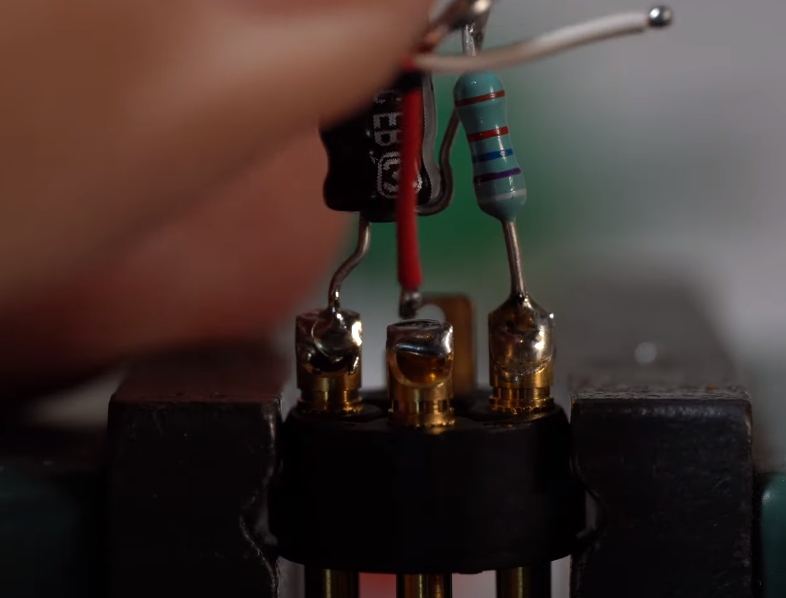
Our favorite part aside from the magnets has to be the clever binary encoding work. [quincy] is using three photoresistors and a single green LED to create a 3D-printed gray encoder that sidesteps the need to ever flip two bits at once. An Arduino takes care of reading the 3-bit code and converting it back into a decimal. There are more updates to come, including the main .ino file, but you can start printing the pieces while you wait.

If you have trouble staying on task, maybe you need a Pomodoro timer. We’ve seen a few over the years, ranging from the minimal to the sculptural.

How To Make Resin Prints Crystal Clear

[Matou] has always been entranced by the beauty of natural crystal formations [and has long wished for a glowing crystal pendant]. Once he got a resin-based 3D printer, he was majorly disappointed to find out that although transparent resin prints look like delicious candy when they’re still wet, they turn cloudy and dull after being washed in an isopropyl bath and cured with UV light. There must be a way to either polish pieces back to clear, or keep them clear in the first place, [Matou] thought, and set about experimenting with some test crystals (video, embedded below).

As [Matou] found out, the dullness is caused by surface imperfections. Resin prints have layer lines, too, and although they may be super fine and invisible to the naked eye, they will still scatter light. The choices seem obvious — either polish the proud parts down with many grits of sandpaper, or fill the valleys with something to smooth everything out. As you’ll see in the video after the break, [Matou] tried it all, including a coat of the same resin that made the print. It’s an interesting look at the different ways to smooth out resin prints, though you may not be surprised to find that the one with the most work put into it looks the best.

We were hoping to see [Matou] try a green LED in the pendant, but it didn’t happen. If you’re dying to know what that looks like, you can get one of these pendants for yourself by supporting [Matou] on Patreon.

We think crystals are pretty cool, too — especially crystal radios. Here’s the hack-iest one of those we’ve ever seen, free of charge.

Continue reading “How To Make Resin Prints Crystal Clear”

Hackaday Links Column Banner

Hackaday Links: August 8, 2021

Do you have burning opinions about GitHub Copilot, the AI pair programmer that Microsoft introduced a few months ago? Are you worried about the future of free and open software? The Free Software Foundation is funding a call for white papers of 3,000 or fewer words that address either Copilot itself or the subjects of copyright, machine learning, or free software as a whole. If you need more background information first, check out [Maya Posch]’s excellent article on the subject of Copilot and our disappointing AI present. Submissions are due by 10AM EDT (14:00 UTC) on Monday, August 23rd.

There are big antique books, and then there are antiphonaries — these are huge tomes full of liturgical chants and things of that nature. When one of them needs a lot of restoration work, what do you do? You build an all-in-one housing, display case, and cart that carefully holds it up and open (YouTube). Otherwise, you have to have multiple gloved people being extra careful. Jump to about the 14-minute mark to see the device, which is mostly made from extruded aluminum.

In more modern news: you may be waiting out this chip shortage like everyone else, but does it require renting out a bunch of real estate in perpetuity? We didn’t think so. Here’s an aerial photo of a stockpile of Ford Super Duty trucks that are waiting for chips at a dead stop outside the Kentucky Speedway. Thousands of brand new trucks, exposed to the elements for who knows how long. What could go wrong?

While we’re asking questions, what’s in a name? Well, that depends. We’ve all had to think of names for everything from software variables to actual children. For something like a new exoplanet survey, you might as well make the demonym remarkable, like COol COmpanions ON Ultrawide orbiTS, or COCONUTS. Hey, it’s more memorable than calling them X-14 and -15, et cetera. And it’s not like the name isn’t meaningful and descriptive. So, readers: do you think this is the worst name ever, planetary system or otherwise? Does it shake your tree? We’re on the fence.

Kinesis + Teensy = QMK Advantage Over Your Keyboard

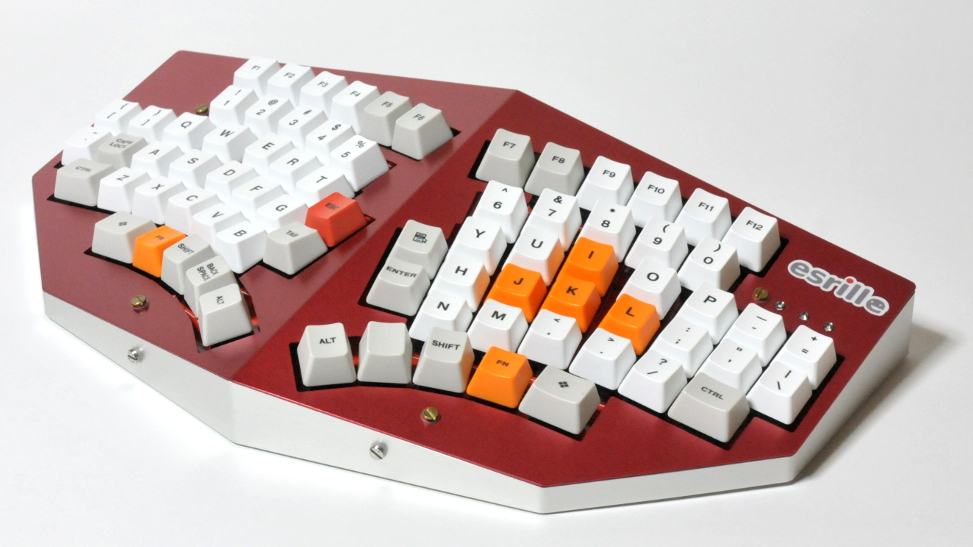
Back in 2013, [Michael Stapelberg] created what is lovingly referred to as the Stapelberg controller: a replacement keyboard controller for the original Kinesis Advantage, the decades-old darling of the ergonomic clacking world. Whether you’re building a new keeb, you’ve got a broken Kinesis, or you simply want to run QMK on the thing and don’t mind getting your hands dirty, there’s a new Stapelberg controller on the block. It’s called the kinT, for Kinesis + Teensy.

[Michael] built kinT in response to the Advantage 2, which came along in 2017 and changed the way the thumb clusters connect to the main board from a soldered cable to an FPC connector. Whereas the original Stapelberg controller was built in Eagle, this one was done in KiCad and is open-source, along with the firmware. You can use a Teensy 4 with this board but if you don’t have one, don’t worry — kinT is backwards-compatible with pretty much every Teensy, and it will even work on the original Advantage.

Are you on the fence about going full ergo? Check out my in-depth review of the original Kinesis Advantage I got that’s almost 20 years old and still clacking along like new. But don’t wait for a repetitive stress injury to go full ergo. Trust me.

Vintage Computer Festival West Is This Weekend

This weekend is the Vintage Computer Festival (VCF) West, which will be held in-person at the Computer History Museum in Mountain View, California. Here is the complete schedule of events.

If you’re in the area, go get your retrocomputing on at this two-day event that Hackaday are proud to sponsor. Who knows? You may end up hobnobbing with original system developers who are finally at liberty to spill the tea about the old days.

Case in point: Hackaday’s own Bil Herd will be there virtually to talk about the new Commodore inside history book he wrote with Margaret Moribito. Other speakers include Bob Purvy, who will discuss his novel about the Xerox Star. This isn’t your average history book — it uses fictional characters to play out actual events. Another talk delves into the history of computerized tic-tac-toe, and yet another will cover recovering lost floppy disks with an oscilloscope. Finally, Liza Loop will speak about the history of computing in education to close out the weekend’s talks.

There are also plenty of exhibitions on the schedule, too, including Rare Computers from Japan and Analog Computing in the 1960s. And don’t forget, you’re at the Computer History Museum, so there should never be anything approaching a dull moment. Have fun!

Light Bulb Plant Propagation Station Is A Bright Idea

We’ve always enjoyed having a few indoor plants around the Hackaday dungeon because they just make the days more cheerful. Apparently there’s a big craze for them right now, which has led to price increases of things like propagation stations — places where cuttings from mature plants go to grow a root system before getting planted in dirt. Many plants will root readily in water, and it’s better for them to start out this way because soil can come with a bunch of problems.

This goes really well with the older craze of Edison-style light bulbs. We’re glad we never bothered with those because [JGJMatt] says they don’t last long at all. The bulbs themselves are really nice looking, so [JGJMatt] decided to turn a few of them into hanging water propagation stations. After cleaning out the bulb and embiggening the opening, [JGJMatt] formed a holder by applying a torch to brass rod. This dulls the brass, so they shined it up with steel wool and some automotive polishing compound. Then it’s time for some simple macrame to hang it with, because it will soon be full of water.

Does the handle sound familiar? It ought to — [JGJMatt]’s elegant builds have graced these pages a few times before.