Some people just won’t wake up. Alarm clocks don’t cut it, flashing lights won’t work, loud music just becomes the soundtrack of an impenetrable dream. Maybe an alarm clock that rudely yanks the covers off the bed will do the trick.
Or not, but [1up Living] decided to give it a go. His mechanism is brutally simple — a large barrel under the foot of the bed around which the warm, cozy bedclothes can wind. An alarm clock is rigged with a switch on the bell to tell an Arduino to wind the drum and expose your sleeping form to the harsh, cold world. To be honest, the fact that this is powered by a 2000-lb winch that would have little trouble dismembering anyone who got caught up in the works is a bit scary. But we understand that the project is not meant to be a practical solution to oversleeping; if it were, [1up Living] might be better off using the winch to pull the bottom sheet to disgorge the sleeper from the bed entirely.
Something gentler to suit your oversleeping needs might be this Neopixel sunrise clock to coax you out of bed naturally.
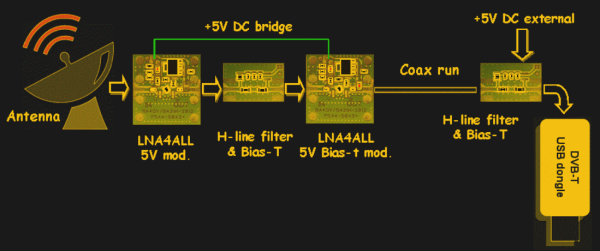
It may not be the radio station with all the hits and the best afternoon drive show, but 1420.4058 MHz is the most popular frequency in the universe. That’s the electromagnetic spectral line of hydrogen, and it’s the always on the air. But studying the H-line is a non-trivial task unless you know how to cascade low-noise amplifiers and filters to use an SDR for radio astronomy.
Because the universe is mostly made of hydrogen, H-line emissions are abundant, and their distribution can tell us a lot about the structure of galaxies. The 21-cm emission line is so characteristic and so prevalent that we used it as a unit of measurement on the plaques aboard the Pioneer probes as well as in the instructions for playing back the Voyager recordings. But listening in on 21-cm here on Earth requires a special setup, which [Adam (9A4QV)] describes in a detailed paper on the subject (PDF). [Adam] analyzes multiple configurations of LNAs and filters, both of which he sells, to determine the optimum front-end for 21-cm work. His analysis is a good primer on LNAs and explains why the front-end gear needs to be as close to the antenna as possible. Using his LNAs and filters and an SDR dongle, a reasonable 21-cm rig can be had for about $200 or so, less the antenna. He promises a follow-up paper on homebrew 21-cm antennas; we’ll be looking forward to that.
Not keen on the music of the spheres and prefer to listen to our own spacecraft instead? Then read up on the Deep Space Network and how you can snoop in.
Q: What do you call 8000 dead mosquitoes in a Mason jar?
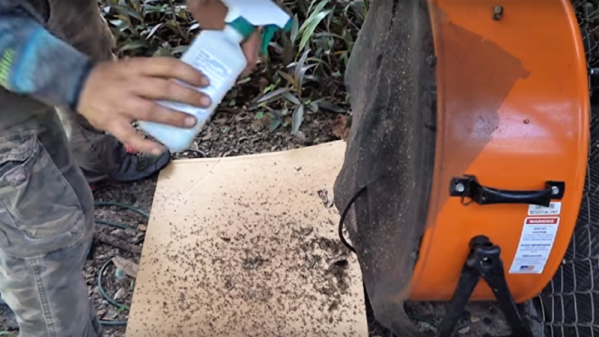
A: A good start. And [Dan Rojas]’s low-tech mosquito trap accomplished the feat in two nights with nothing fancier than a fan and a bottle of seltzer.
We know what you’re thinking: Where’s the hack? Why not at least use a laser sentry gun to zap skeeters on the fly? We agree that [Dan]’s mosquito trap, consisting of a powerful fan to create suction and a piece of window screen to catch the hapless bloodsuckers, is decidedly low-tech. But you can’t argue with results. Unless he’s fudging the numbers, a half-full Mason jar of parasite cadavers is pretty impressive. And you have to love the simplicity of the attractant he’s using. Mosquitoes are attracted to the CO2 exhaled by tasty mammals, but rather than do something elaborate with a paintball gun cartridge or the like, [Dan] simply cracks a bottle of seltzer and lets it outgas. Dead simple, and wickedly effective. The trapped bugs quickly desiccate in the strong air stream, aided by a few spritzes of isopropyl alcohol before cleaning the screen, which leaves them safely edible to frogs and insects.
Simple, cheap, and effective. Sounds like a great hack to us. And it’s really just a brute-force implementation of this mosquito-killing billboard for areas prone to Zika.
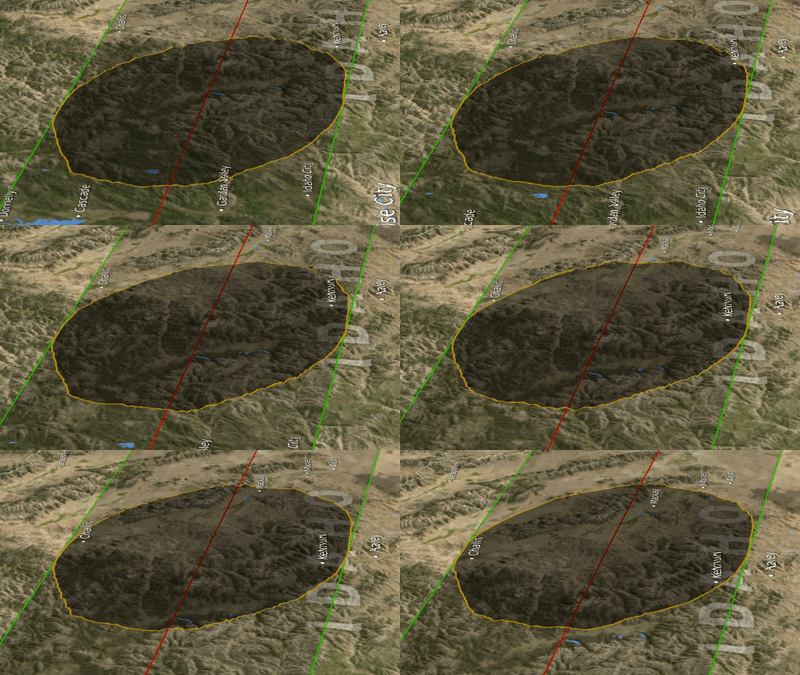
In less than a month, on August 21, 2017, the Moon will cast its shadow upon the Earth, a relative pinprick at only 60 miles across. The shadow will begin in the Pacific Ocean off North America, make landfall south of Portland, Oregon, and rake diagonally across the United States. Charging southeastward at about 2000 miles an hour, the path of totality will touch 12 states before racing off into the Atlantic Ocean around Charleston, South Carolina.
Those are the dry facts of the eclipse, the wheres and the whens of an event that hasn’t been visible to a majority of the US population in 47 years. But beyond the science and the natural wonder of the celestial alignment lies a simple question: Where will you be when the sun goes away?
An Eclipse from a Volcano
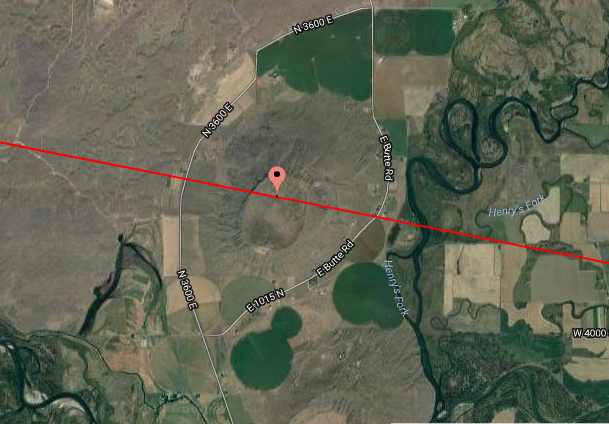
Bullseye! The center of totality passes right through North Menan Butte in Rexburg, ID.
For me, the answer is simple: I’ll be smack dab in the middle of totality on top of an extinct volcano in eastern Idaho. To see an eclipse is pretty cool; to watch the mechanics of the heavens work above you while standing in a unique geological feature will be far cooler.
It will take me eight hours to drive to Menan Buttes with my family from our home in the Panhandle; Idaho is an enormous state. We’ll be camping on private land outside the southern butte, probably in pretty rustic conditions and without a lot of rough camping experience. OK, none. But I don’t care because I want to see totality, and the 92% totality we’d see if we stayed home just won’t cut it.
While most people will likely have their eyes cast heavenward with their cheap cardboard and plastic eclipse glasses or shade 14 welding lens when the big moment arrives, my eyes will be locked on the ground to the west of our vantage point. Menan Butte stands about 500′ above the flat, featureless Snake River plain, and I intend to watch the moon’s shadow racing across the planet toward us. That’s the draw for me, and I hope I get to see it.
That’s not to say I won’t look skyward once the shadow is upon us, gazing in wide wonder at the incandescent dance of our sun’s atmosphere against the suddenly dark sky. I’ll bask in the unnatural twilight, listen to the gasps and cheers of my fellow watchers, and feel the sudden temperature drop, which should be quite marked in the east Idaho drylands. We’ll have about two minutes of totality before the shadow races east toward the vast majority of the US population, and I plan to enjoy every second of it.
Hackaday Eclipse Meetups
Aside from just watching the eclipse, there’s plenty else to do. Hackaday.io members across the country are hosting Hackaday Eclipse Meetups, where like minded folks can mix and mingle before the eclipse. If you know where you’ll be to watch the eclipse — like an extinct volcano, for instance — and you don’t mind sharing the experience with some of your fellow enthusiasts, be sure to post a meetup on the Eclipse Meetups page. Make your event page and we’ll send you some eclipse glasses with the Jolly Wrencher on the side of them for you and your guests.
Have you started thinking of what you’re going to bring with you to the viewing? There are a lot of eclipse projects, from pinhole cameras to watch the eclipse safely, to the Ham operators who will be taking advantage of localized ionospheric changes to make long-distance contacts. Those of us with telescopes might want to build a low-cost solar filter. Someone will likely be trying to prove General Relativity somewhere along the path of totality, and we’d love to see the rig for that. And there will no doubt be petabytes of photographs and videos taken with everything ranging from smartphones to professional cinematic cameras. We’d love to hear what you’re planning and see your setups. And even if you’ve got something cool that’s not eclipse related, bring it along. It’s always a good time to talk shop for hackers.
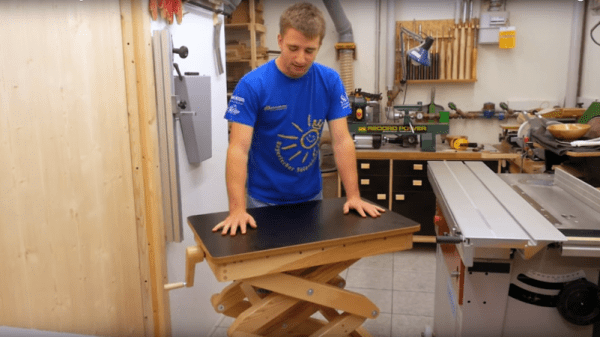
The value of a mobile adjustable height cart in the shop can’t be overestimated. From moving tools around to installing heavy fixtures on walls and ceiling, a scissor-lift platform is a great tool. Commercial versions get a bit expensive, though, so a shop-built scissor lift table made of wood might be a nice project for the budget-minded to tackle.
Wood might not be your first choice for a fixture such as this, but it’s what [Marius Hornberger] is set up to use, and with proper species selection and careful engineering, it can make for an amazingly sturdy table. [Marius] chose ash for his parts, a wood with a long history of performing well under difficult conditions. The table is not all wood, of course; metal bushings and pins are used in the scissor mechanism, and the lift drive is a stout Acme-thread screw and nut. We’re impressed by [Marius]’ joinery skill, and with how sturdy the table proved to be.
Not a lot of woodworking projects seem to show up in our tip line for some reason, which is a shame. We love to feature wood builds, and like our own [John Baichtal] recently pointed out, the health of the wood shop is often a leading indicator of the health of a hackerspace.
As with all the many, many, many flamethrower projects we’ve featured before, we’ve got to say this is just as bad an idea as they are and that you should not build any of them. That said, [Sufficiently Advanced]’s wrist-mounted, dual-wielding flamethrowers are pretty cool. Fueled by butane and containing enough of the right parts for even a minimally talented prosecutor to make federal bomb-making charges stick, the gauntlets each have an Arduino and accelerometer to analyze your punches. Wimpy punch, no flame — only awesome kung fu moves are rewarded with a puff of butane ignited by an arc lighter. The video below shows a few close calls that should scare off the hairy-knuckled among us; adding a simple metal heat shield might help mitigate potential singeing.
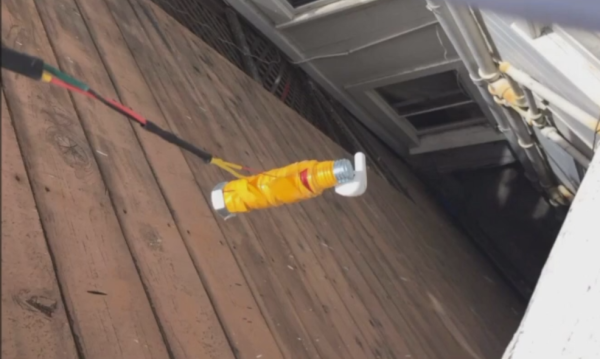
Apartment dweller [Tyler Efird]’s tale of woe began with a wee-hours 3D print in need of sanding. Leaning out his third-story window to blow off some dust, he knocked one AirPod free and gravity did the rest. With little light to search by and a flight to catch, the wayward AirPod sat at the bottom of a 10-foot shaft below his window, keeping company with a squad of spiders for two weeks. Unwilling to fork over $69 and wait a month and a half for a replacement, [Tyler] set about building a recovery device. A little magnet wire wound onto a bolt, a trashed 100-foot long Ethernet cable, and a DC bench supply were all he needed to eventually fish up the AirPod. And no spiders were harmed in the making of this hack.