A Datasheet Manifesto For The 21st Century

Selecting electronic components can be a frustrating process, one of trawling through the websites of distributors such as DigiKey, Mouser, or RS, and then poring over manufacturer data sheets. These documents produced as detailed guides to the technical specifications of a device contain enough to give an engineer everything they need to incorporate it into their designs.

Unfortunately many datasheets fall short of the ideal, and have instead become marketing documents designed to “win the socket”. This is a problem that vexes Boldport’s [Saar Drimer], and he has written a personal manifesto outlining his vision to make the world of datasheets a better place.

It’s a common-sense designer’s wishlist, and it’s one we could completely get behind. Chief among his desires are web-readable datasheets as well as the ubiquitous PDFs, with full data in human and machine readable forms instead of tiny printed graphs and tables. He also makes a plea for better UX testing to combat the scourge of the inaccurate pad layout, to which we’d add providing footprints ready-made for all popular CAD packages. These and the rest of his manifesto would be a game-changer, and wouldn’t displace the existing paper or PDF sheet for those who still use them. Whether or not the manufacturers will take heed is anyone’s guess, but to have such an ideal laid out is a start.

If you’re not familiar with [Saar]’s work, you’re in for a treat. Boldport produce some of the most beautiful artistic PCBs, and we’ve featured them before more than once.

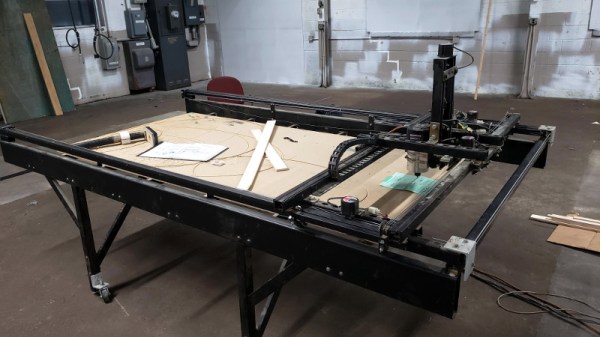
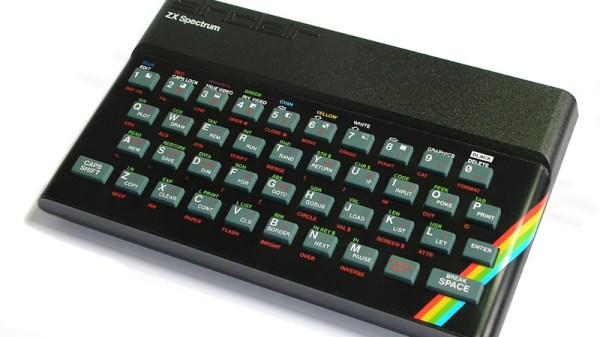
Thanks to our colleague [Ted Yapo] for the header image.

Add USB-C To Your Laptop (Almost)

It’s a very brave person who takes a Dremel or similar to the case of their svelte new laptop in the quest for a new connector, it sounds as foolhardy as that hoax from a while back in which people tried to drill a 3.5mm jack into their new iPhones. But that’s what [BogdanTheGeek] has done, in adding a USB-C port to his Acer.

Of course, the port in question isn’t a fully functioning USB-C one, it’s a power supply jack, and it replaces the extremely unreliable barrel jack the machine was shipped with. He’s incorporated one of those little “ZYPDS” USB-C power delivery modules we’ve no-doubt all seen in the usual cheap electronic sources, and in a move of breathtaking audacity he’s cut away part of the Acer mainboard  to do so. He’s relying on the laptop’s ability to accept a range of voltages, and presumably trusting his steady hand with a rotary tool. Some Kapton tape and a bit of wire completes the work, and with a carefully reshaped hole in the outer case he’s good to go.

The result is beautifully done, and a casual observer would be hard pressed to know that it hadn’t always been a USB-C port. We’re sure there will come a moment at which someone will plug in a USB-C peripheral and expect it to work, it’s that good.

If you’d like to know a little bit more about USB-C, we’d like to direct you to our in-depth look at the subject.

A Million Zombie Taxis By 2020? It’s Not Going To Happen

The tech world has a love for Messianic figures, usually high-profile CEOs of darling companies whose words are hung upon and combed through for hidden meaning, as though they had arrived from above to our venture-capital-backed prophet on tablets of stone. In the past it has been Steve Jobs or Bill Gates, now it seems to be Elon Musk who has received this treatment. Whether his companies are launching a used car into space, shooting things down tubes in the desert, or synchronised-landing used booster rockets, everybody’s talking about him. He’s a showman whose many pronouncements are always soon eclipsed by bigger ones to keep his public on the edge of their seats, and now we’ve been suckered in too, which puts us on the spot, doesn’t it.

Your Johnny Cab is almost here

The latest pearl of Muskology came in a late April presentation: that by 2020 there would be a million Tesla electric self-driving taxis on the road. It involves a little slight-of-hand in assuming that a fleet of existing Teslas will be software upgraded to be autonomous-capable and that some of them will somehow be abandoned by their current owners and end up as taxis, but it’s still a bold claim by any standard.

Here at Hackaday, we want to believe, but we’re not so sure. It’s time to have a little think about it all. It’s the start of May, so 2020 is about 7 months away. December 2020 is about 18 months away, so let’s give Tesla that timescale. 18 months to put a million self-driving taxis on the road. Can the company do it? Let’s find out.

Continue reading “A Million Zombie Taxis By 2020? It’s Not Going To Happen”

A Function Generator In Its Purest Form

If you have a modern function generator on your bench it is quite likely to contain a direct-digital synthesis circuit that creates arbitrary waveforms using a microprocessor controlled DAC. If you have a cheap function generator it’s likely to contain a one-chip solution that generates approximations to sine and triangle waveforms through modifying a square wave with a set of filters.

These methods both produce adequate waveforms for most of your function generator needs, but they are both far from perfect for the purist. Both methods introduce some distortion, and to address this [michal777] has produced a generator that takes the process back to basics with all stages implemented using building block ICs and transistors. The circuit follows the same square-wave-modifying path as the cheaper integrated devices, but with significant attention paid to the design to ensure that it does as good a job as possible. It also makes for a fascinating dive into function generator design.

The generator hardware has been neatly fitted onto a PCB with a riser for a set of front panel controls. He shares a few pictures of previous designs. We particularly like one that appears to have been fitted into a redundant cooking pot.

We’ve brought you a few function generators over the years. If you’ve got one of the cheaper examples, we’ve even covered how you might improve it a little.

Drone Registration Tax Sought By UK’s CAA

As the UK’s aviation regulator, the Civil Aviation Authority is tasked with “making aviation better for those who choose to fly and those who do not”. Their latest plan to further this mission comes in the form of a drone registration tax. The proposal, which is open to online responses until 7 June, seeks to pass on the cost of a drone registration system to those who register themselves.

Proposals for a drone registration scheme have been in the works for a while now, and if enacted it would go into effect on 1 November. Owners of craft weighing more than 250 g (0.55 lbs) would have to fork out £16.50 ($21.50) per year, ostensibly to pay for the administration of the scheme. The CAA are basing this rate on as many as 170,000 people registering. In the US, the FAA has a drone registration program in place that requires registration based on the same 250 g weight guideline, but only charges $5 (£3.82) for a 3-year license, about thirteen times less than the CAA proposal.

Long-time readers will be familiar with our ongoing coverage of the sometimes-farcical saga of drone sightings in British skies. Airports have been closed (and implausible excuses have been concocted), but one thing remains constant: no tangible proof of any drone has yet been produced. Faced with a problem it doesn’t fully understand, the British Government is looking to this registration program.

It goes without saying that people misusing drones and endangering public safety should be brought to justice as swiftly as possible. But our concern is that the scale of the problem has been vastly over-represented, and that this scheme will do little to address either the problem of bogus drone sightings or the very real problem of criminal misuse of drones for example to smuggle contraband into prisons. It’s difficult to think this measure will have an effect on the number of incidents blamed on drones, and the high cost included in the proposal is a troubling burden for enthusiasts who operate responsibly.

MIT Cryptographers Are No Match For A Determined Belgian

Twenty years ago, a cryptographic puzzle was included in the construction of a building on the MIT campus. The structure that houses what is now MIT’s Computer Science and Artificial Intelligence Laboratory (CSAIL) includes a time capsule designed by the building’s architect, [Frank Gehry]. It contains artifacts related to the history of computing, and was meant to be opened whenever someone solved a cryptographic puzzle, or after 35 years had elapsed.

The puzzle was not expected to be solved early, but [Bernard Fabrot], a developer in Belgium, has managed it using not a supercomputer but a run-of-the-mill Intel i7 processor. The capsule will be opened later in May.

The famous cryptographer, [Ronald Rivest], put together what we now know is a deceptively simple challenge. It involves a successive squaring operation, and since it is inherently sequential there is no possibility of using parallel computing techniques to take any shortcuts. [Fabrot] used the GNU Multiple Precision Arithmetic Library in his code, and took over 3 years of computing time to solve it. Meanwhile another team is using an FPGA and are expecting a solution in months, though have been pipped to the post by the Belgian.

The original specification document is a fascinating read, for both the details of the puzzle itself and for [Rivest]’s predictions as to the then future direction of computing power. He expected the puzzle would take the full 35 years to solve and that there would be 10Ghz processors by 2012 when Moore’s Law would begin to tail off, but he is reported as saying that he underestimated the corresponding advances in software.

Header image: Ray and Maria Stata Center, Tafyrn (CC BY 3.0)

OpenGL Shaders And An LED Cube

Back in February at the Hacker Hotel camp in the Netherlands, among the many pieces of work around the venue was a rather attractive LED cube. Very pretty, but LED cubes have been done many times before.

If a casual attendee had taken the time to ask though, they might have found something a little more interesting, for while the cube in question might have had the same hardware as the others it certainy didn’t have the same software. [Polyfloyd] had equipped his LED cube with OpenGL shaders to map arbitrary images to the cube’s pixels in 3D space.

Hardware-wise it’s the same collection of AliExpress LED panels and Raspberry Pi driver board that the other cubes use, in this case mounted on a custom laser-cut frame. Driver software comes from an open-source library round which he’s put a wrapper allowing input through a UNIX pipe. This can take the RGB output of an OpenGL shader, of which he has created both 2D to 3D and spherical projection versions. The must-see demo is a global map of light pollution, and the result is a rather impressive piece of work.

If LED cubes are your thing, don’t forget this recent Hackaday Prize entry.