Weekly Winners: Stickvise

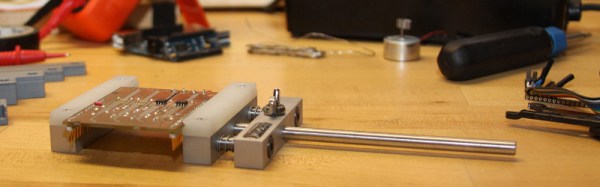
We’re in the middle of an epic run to award $50,000 in loot to Hackaday Prize entries this summer. This week we doled out a Stickvise low-profile PCB vise to 65 different projects! This actually started out as a really great project on Hackaday.io.

Winners are listed below, please check out their projects; skull the ones you find awesome and leave your words of encouragement as comments on those projects. Then get to work and submit something of your own. Your odds of winning during these weekly giveaways are quite good. Our recommendation for your best chances at winning are to polish up the information you’re sharing — tell the whole story of what you’ve done so far and what you plan to do. Post some images whether pictures of the prototype, renders of what you are working on, or hand-drawn diagrams from the back of a napkin.

Normally we launch the following week’s contest in this winner-announcement post. But we’re changing it up a bit this time around. Look for a post on Monday that shares all the details of what is coming next!

Last Week’s Winners of 65 Stickvise

Each project creator will find info on redeeming their prize as a message on Hackaday.io.


The 2015 Hackaday Prize is sponsored by:

1-Pixel Pacman

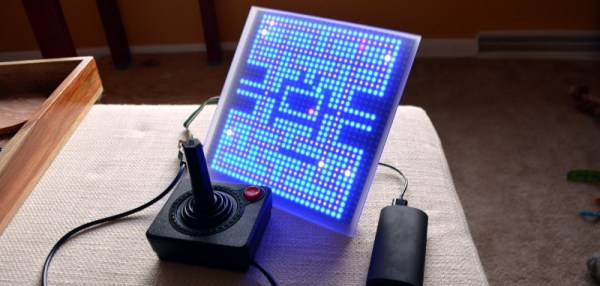
I usually see retro-gaming projects using tiny screens with a fair number of pixels (64×64) but what I really like is the look of making every pixel count. With this in mind I built 1-Pixel Pac-Man, the classic coin-op experience but with characters that consist of just one pixel. Playing a throw-back like this wouldn’t be the same without some vintage controls so I picked up an Atari joystick, patched it into a microcontroller, and started coding. Check it out:

Smartmatrix Bundle

This piece of hardware made the project build really easy: the Smartmatrix. [Louis Beaudioin] developed the Smartmatrix and it’s been in the Hackaday Store for a while now. The display module itself is a commodity item that is used in LED billboards. There are shrouded headers on the back of the panels, to the left and right sides, which allow them to be daisy chained. The Smartmatrix PCB plugs into one of these shields, provides a soldering footprint for the Teensy 3.1 which drives the display, and gives you the wiring to connect screw terminals from the PCB to the power terminals on the module. Why the need for beefy power jumpers? At full white the thing can draw about 3.5A — don’t worry there’s a power supply included in the bundle.

Also integral to making this look good is the diffuser panel which is frosted acrylic. The Smartmatrix is designed to be housed in a shadowbox frame; it even includes a frame backer board with a cut-out for the Teensy 3.1 so it can be programmed without opening the thing up. I like looking at the guts so I’m leaving my free floating until I come up with an interesting way to mount everything as one unit.

Programming Pac-Man from the Ground Up

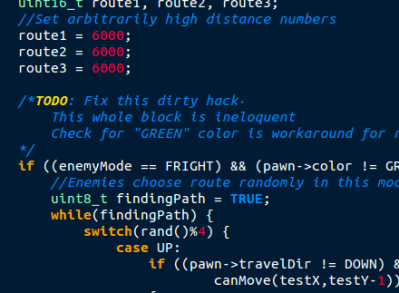
matrix-man-code

If you haven’t looked into it before, the ghost AI and gameplay details for Pac-Man are absolutely brilliant. [Toru Iwatani] did a masterful job with the original, and you should take a look at all of the analysis that has been done over the years. The best collection I could find was the Pac-Man Dossier and I based most of my code on the rules described there.

Basically the ghosts have two modes, chase and scatter. The modes set the enemy targets differently; to points at the four corners of the board in scatter, and to points relative to the player in chase. The relative part is key; only the red enemy actually chases you. Another one of them looks at the red enemy’s distance and angle, and targets the reflection of that vector. Really easy, really clever, and results in enemy behavior that’s believable. It isn’t just the enemy movement, little touches like a speed penalty (1/60 of a second) for each dot the player gobbles up means the enemies can catch up if you continuously eat, but you can escape by taking the path already-eaten.

Library, DMA, and Extra Hardware

The hardware and software running the Smartmatrix made the display portions of the project really simple. First off, the Teensy 3.1 is fast, running at 96MHz in this case. Second, it has Direct Memory Access (DMA) which [Louis] used in the Smartmatrix library. This means that driving the display takes almost no CPU time at all, leaving the rest for your own use. This example of a game is under-utilizing this power… it’s totally capable of full-motion video and calculating amazing visualizations on the fly.

The PCB hosting the Teensy 3.1 breaks out several pins to one side. I’m not sure what I’ll add in the future so I actually used the extra surface-mount IO pins on the bottom of the Teensy to connect the Atari joystick (which is simply a set of switches). The are enough pads for two joysticks so I used pin sockets to interface the Teensy to the PCB so that I can get to it again later.

The kit also includes an IR receiver and remote, and also a microSD card to loading animations (there’s an SD socket on the PCB). The bundle in the Hackaday Store is a kit you solder yourself, but [Louis’] company, Pixelmatix, has a Kickstarter running for fully-assembled versions that come with a black remote and sound-visualization hardware.

Future Improvements

The game is fully working, but there are a few key things that I really want to add. The Teensy 3.1 has a single DAC pin available. I’m fairly certain the original coin-op game had mono audio. It should be possible to reproduce the sound quite accurately with this board. That would really make the project pop.

There are also a bunch of touch-ups that need to happen. I’d like to add an animation when the player is eaten by an enemy, and a countdown before the level restarts. The score, shown in binary on the right column, should be scrolled out in decimal when the game ends, and what’s a coin-op recreation without a high-score screen?

Hackaday Prize Worldwide: San Francisco

Summer is heating up and so is the Hackaday Prize. In two weeks we’ll put down stakes in San Francisco for a day-long workshop followed by a meetup in the hippest of bars.

The Zero to Product workshop will be held on June 13th at Highway1 — the well-known hardware startup accelerator in San Francisco. This workshop is created and led by [Matt Berggren] who is an expert in electronic design and PCB layout.

RSVP Before Tickets are Gone!

Zero to Product workshop in Pasadena a few weeks ago

RSVP for the workshop and you’ll be well on your way to knowing what goes into professional-level PCB design. Basic knowledge of electronics is all you need, prior layout experience isn’t required. Bring along a computer with the newest version of Eagle on it if you want to follow along, but this is not a requirement. It will certainly jumpstart any PCB design you are working on for your 2015 Hackaday Prize entry. If you haven’t started your entry yet, this is a great crowd to help with brainstorming!

Whether or not you are at the workshop, we’re planning to head out for a bit of fun afterward. This casual meet up is at Lucky Strike starting around 7:30pm. It’s up to you if you want to bowl, imbibe, or both. Please RSVP; since we haven’t rented the place out we’d like to have an idea of how many hackers are coming. And don’t forget, it’s a tradition at Hackaday bar meetups to bring a small bit of hardware to show off as you meet new people. See you in June!


The 2015 Hackaday Prize is sponsored by:

$50k In Play: Awarding 65 Stickvise This Week

Pushing your circuit boards around the bench while trying to solder the components is a fools game. Clamp that board in place with a Stickvise you won from Hackaday! This week we’ll choose 65 projects to receive one of these PCB clamps. You must submit your project as a Hackaday Prize entry to be eligible. Do it now and you’ll be considered for our weekly prizes all summer long — they total $50,000 that we’re putting into your hands.

We’re particularly proud of the Stickvise story. It was posted as a project on Hackaday.io and immediately caught our eye as an interesting idea. We worked with [Alex Rich] as he made his way through the process of getting it ready for manufacturing and it just became available in the Hackaday Store.

Regarding your entry to win one: find a problem facing your community and start a project that helps to solve it. We’ve seen many great entries so far, but with so many prizes your chances of winning are still really good! We recommend adding a project log each week that discusses your progress and perhaps mentions what you would use the Stickvise for while progressing toward a working prototype. Even if you don’t think your idea can win one of the big prizes, a great idea and solid write up is definitely a contender for our $50k in Play weekly prizes. Just look at the projects that won last week:

Last Week’s 20 Winners of a Bulbdial Clock Kit

bulbdial-clock-50k-in-play-prize-blogview

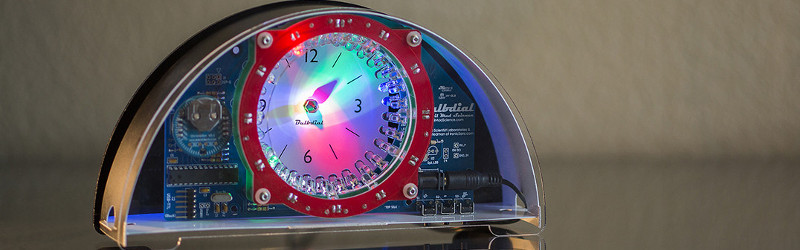
Congratulations to these 20 projects who were selected as winners from last week. You will receive a Bulbdial Clock Kit. It takes the concept of a sundial and recreates it using different colors of LEDs for each hand of the clock. This is our favorite soldering kit. It ventures a bit away from our mission of awarding tools and supplies to help with your entry, but sometimes you just need to have some fun!

Each project creator will find info on redeeming their prize as a message on Hackaday.io.


The 2015 Hackaday Prize is sponsored by:

Hackaday Prize Worldwide: Shenzhen

That’s right, we’re headed to the epicenter of electronics manufacturing next month: Shenzhen, China. We have a ton planned and this is the quick and dirty overview to get you thinking. If you are in the area (or are itching to travel) join us for a week of hardware hacker culture. Highlights for our tour include:

  • Meet Up on June 18th – (RSVP details coming soon)
  • Zero to Product PCB Workshop on June 19th – RSVP Now
  • Hackaday Talks presented at Maker Faire Shenzhen on June 19th and June 21st
  • Hackaday Booth at MFSZ on June 20-21

Zero to Product Workshop at MakerCamp Shenzhen

shenzhen-makercamp-drawingMakerCamp brings 30 talented Makers, Hackers, Designers, and Engineers together for a few days to build a makerspace inside of a shipping container.

We won’t be part of that build team (registration is open until 6/1 if you want to be). We will be supporting the event as part of the workshops that help celebrate the completion of the space. A mobile hackerspace full of interesting tools is one thing. But the sharing of knowledge, experience, and skill is what truly makes a hackerspace work.

zero-to-product-workshop-LAOur Zero to Product workshop created by [Matt Berggren] has been generating a ton of buzz and will be offered at Shenzhen MakerCamp.

RSVP for the Workshop

The workshop runs from 10am to 6pm on Friday, June 19th on the grounds of Maker Faire: Shenzhen. The event covers PCB design and at the end you will have laid out a development board for use with the ESP8266 WiFi module.

We were totally sold out for the workshop in LA a few weeks ago this is another chance to join in. If Shenzhen is a bit too far for you to travel, we are also planning the next installment in San Francisco on June 13th.

2015-bamf-meetupHackaday Shenzhen Meetup

If you just want to hang out, so do we! On the night of Thursday, June 18th we’ll be rolling into an area bar for a tasty beverage and a night of interesting conversation. As always, we want to see the hardware you’ve been working on. We do recommend bringing things that fit easily in your pocket or backpack since we’re meeting up to spend some time with other Hackaday community members in the area.

We don’t have the location nailed down for this one. Check this post again as we’ll be adding it here. And if you have a bar to suggest to us please leave a comment below.

The picture above is from just a few weeks ago. We had a huge turnout for the BAMF meetup. There was a ton of hardware on hand which makes for really easy conversation as you meet other hackers for the first time.

Talks by [Mike] and [Sophi] plus Booth at Maker Faire Shenzhen

[Mike] is giving a talk on Friday, June 19th about the power of Open Design to move education forward. [Sophi] will be presenting her talk on Sunday, June 21st about making stuff that matters and working on research equipment used to investigate the world around us such as solar, medicine and disease.

Come to the Faire to hear our talks, but make sure you swing by the Hackaday booth as well. We’ll be bringing some of our most favorite projects to exhibit but we can’t resist the opportunity to do something interactive. Stop by and build an oscillator, wire up a sequencer, and create your own rudimentary music based on [Elliot Williams’] series Logic Noise.

Tag Along with Hacker Camp Shenzhen?

hcsz2015-thumbnailOne of the adventures we’ve always wanted to take part in is Hacker Camp Shenzhen which is run by Hackaday alumnus and Hackaday Prize Judge [Ian Lesnet]. The week-long camp leverages [Ian’s] knowledge of the area, manufacturers, markets, and people to provide tours and workshops for those interested in manufacturing. It just so happens that HackerCamp lines up the same week as all of the Hackaday events. We can’t take part in the entire thing, but are hoping that we have a free day to meet up (and possibly tag along) with the HackerCamp crew.

The 2015 Hackaday Prize is sponsored by:

The Ease Of Adding Trojans To Major Financial Android Apps

This was both an amusing and frightening talk. [Sam Bowne] presented How to Trojan Financial Android Apps on Saturday afternoon at the LayerOne Conference. [Sam] calculates that 80-90% of the apps provided by major financial institutions like banks and investment companies are vulnerable and the ease with which trojans can be rolled into them is incredible.

Some Background

[Sam] did a great job of concisely describing the circumstances that make Android particularly vulnerable to the attacks which are the subject of the talk. Android programs are packaged as APK files which are easy to unpack. The “compiled” code itself is called smali and is readable in a similar way as Java. It’s super easy to unpack and search this byte code using grep. Once the interesting parts are located, the smali code can be altered and the entire thing can be repackaged. The app will need to be resigned but Google doesn’t control the signing keys so an attacker can simply generate a new key and use that to sign the app. The user still needs to install the file, but Android allows app installation from webpages, email, etc. so this isn’t a problem for the bad guys either.

The Attack

So what can be done? This is about information harvesting. [Sam’s] proof of concept uses a python script to insert logging for every local variable. The script looks at the start of every module in the smali code, grabs the number of local variables, increments it by one and uses this extra variable to write out the values through logcat.

bank-of-america-logcat
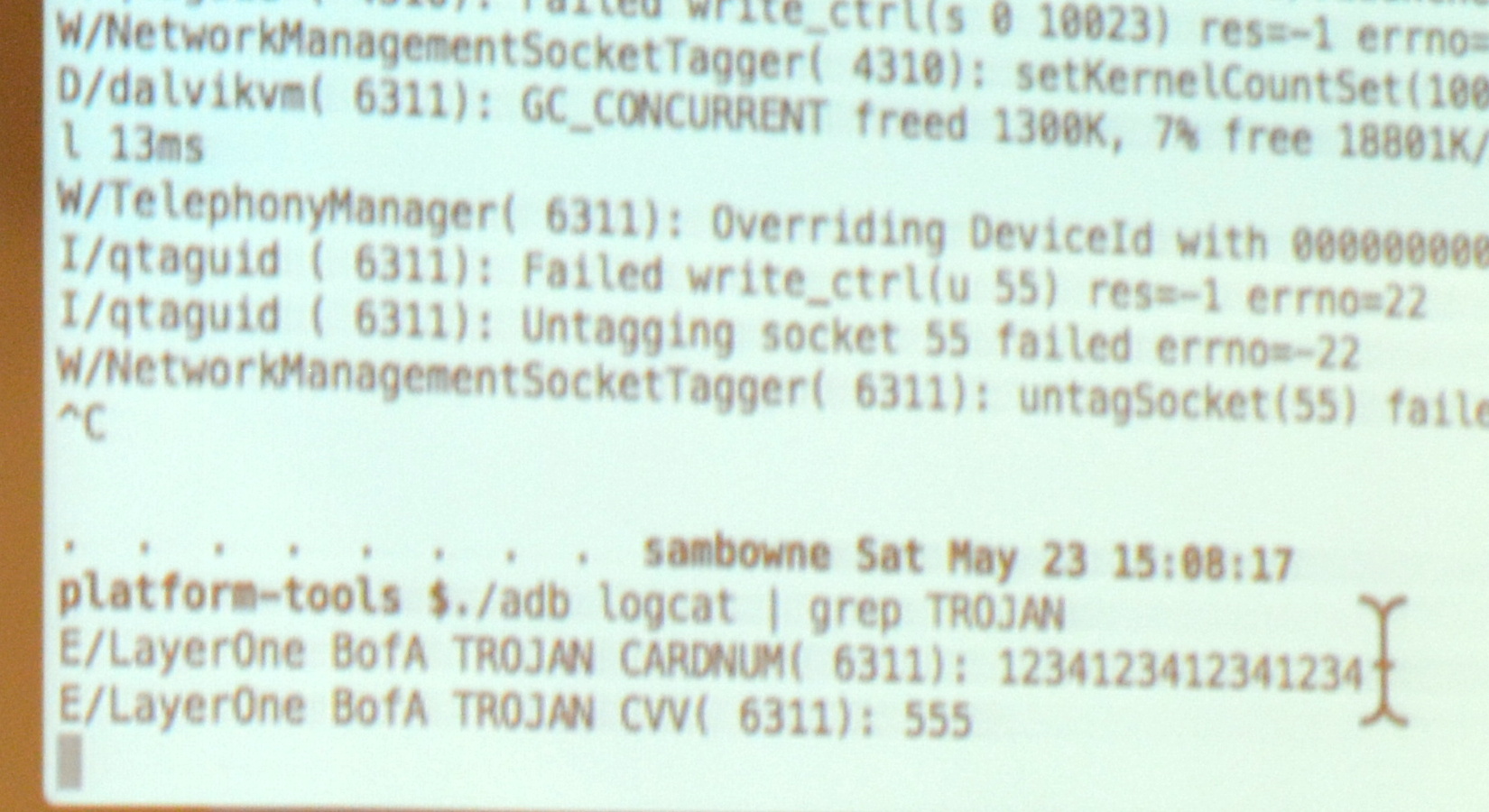
ADB Log shows the Credit Card Number

He demonstrated live on the Bank of America app. From the user side of things it looks exactly like the official app, because it is the official app. However, when you register your account the log reports the card number as you can see here. Obviously this information could easily be phoned-home using a number of techniques.

As mentioned, the vast majority of banking and financial apps are vulnerable to this, but some have made an attempt to make it more difficult. He found the Bancorp app never exposes this information in local variables so it can’t just be logged out. However, the same trojan technique works as a keylogger since he found the same function kept getting called every time a key is pressed. The same was true of the Capital One app, but it echos out Google’s Android keymap values rather than ascii; easy enough to translate back into readable data though.

The Inability to Report Vulnerabilities

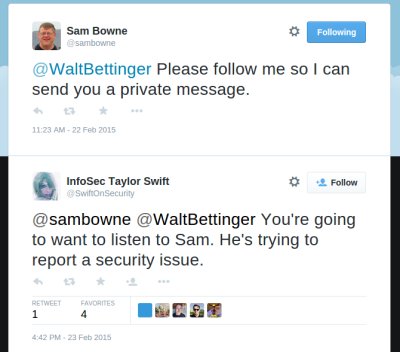
bowne-schwab-twitter-security-reportWhat is the most troubling is that none of these companies have a means of reporting security vulnerabilities. It was amusing to hear [Sam] recount his struggle to report these issues to Charles Schwab. Online contact forms were broken and wouldn’t post data and several publicly posted email addresses bounced email. When he finally got one to accept the email he later discovered another user reporting on a forum that nobody ever answers back on any of the Schwab accounts. He resorted to a trick he has used many times in the past… Tweeting to the CEO of Charles Schwab to start up a direct-message conversation. This itself is a security problem as @SwiftOnSecurity proves by pointing out that whenever @SamBowne Tweets a CEO it’s because he found a vulnerability in that company’s platform and can’t find a reasonable way to contact the company.

There is Hope

Although very rare, sometimes these apps do get patched. The Trade King app was updated after his report and when [Sam] tried the exploit again it crashes at start-up. The log reports a verification failure. This indicates that the injected code is being noticed, but [Sam] wonders if the verification is included in the app itself. If it is, then it will be possible to track it down and disable it.

This may sound like all of us Android users should despair but that’s not the case. Adding verification, even if it’s possible to defeat it, does make the apps safer; attackers may not want to invest the extra time to try to defeat it. Also, there are obsfucators available for a few thousand dollars that will make these attacks much more difficult by making variable names unreadable. The free obsfucator available now with the Android development suites doesn’t change names of everything… local variables are left unaltered and programmers have a habit of using descriptive names for variables. For instance, BofA used “CARDNUM” in the example above.

The Slides

[Sam Bowne’s] slides and testing results for the entire talk are available under the “Upcoming Events” part of his website.

Pictures That Defeat Key Locks

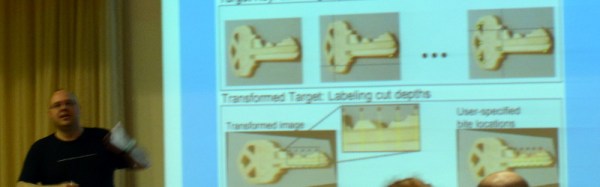
We’re at LayerOne this weekend and one of the talks we were excited about didn’t disappoint. [Jos Weyers] presented Showing Keys in Public — What Could Possibly Go Wrong? The premise is that pictures of keys, in most cases, are as good as the keys themselves. And that pictures of keys keep getting published.

[Jos] spoke a bit about new services that offer things like 3D scanning and storage of your key for printing when you get locked out, or apps that ask you to take a picture of your key and they’ll mail you a duplicate. Obviously this isn’t the best of ideas; you’re giving away your passwords. And finding a locksmith is easier than findind a 3D printer. But it’s the media gaffs with important keys that intrigues us.

We’ve already seen the proof of concept for taking covert images to perfectly duplicate a key. But these examples are not so covert. One example is a police officer carrying around handcuff keys on a belt clip. Pose for a picture and that key design is now available to all. But news stories about compromised keys are the biggest offenders.

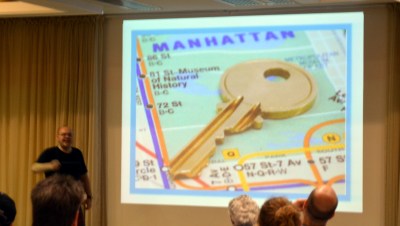
subway-keysA master key for the NYC Subway was compromised and available for sale. The news coverage not only shows a picture at the top of the story of a man holding up the key straight on, but this image of it on a subway map which can be used to determine scale. This key, which is still published openly on the news story linked above, opens 468 doors to the subway system and these are more than just the ones that get you onto the platform for free. We were unable to determine if these locks have been changed, but the sheer number of them has us thinking that it’s unlikely.
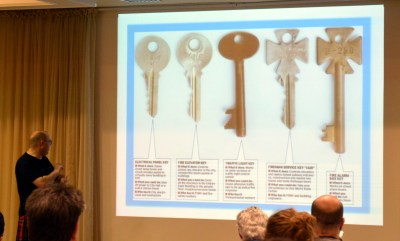
firemans-keysWorse, was the availability of fire-department master keys which open lock boxes outside of every building. (Correction: these are fire department keys but not the actual lock-box keys) A locksmith used to cut the original keys went out of business and sold off all their stock. These keys were being sold for $150, which is bad enough. But the news coverage showed each key on a white background, straight on, with annotations of where each type of key will work.
Other examples include video news stories about credit card skimmers installed in gas pumps — that coverage showed the key used to open the pump housing. There was also an example of speed camera control cabinet keys being shown by a reporter.

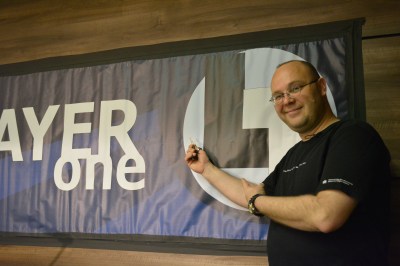
key-photo-duplication-layerone[Jos’] example of doing the right thing is to use a “prop” key for news stories. Here he is posing with a key after the talk. Unfortunately this is my own house key, but I’m the one taking pictures and I have blurred the teeth for my own security. However, I was shocked during image editing at the quality of the outline in the image — taken at 6000×4000 with no intent to make something that would serve as a source for a copy. It still came out remarkably clear.



Some locks are stronger than others, but they’re all meaningless if we’re giving away the keys.