VCF Swap Meet Takes Step Back To Move Forward

When computers were the sort of thing you ordered from a catalog and soldered together in your garage, swap meets were an invaluable way of exchanging not just hardware and software, but information. As computers became more mainstream and readily available, the social aspect of these events started to take center stage. Once online retail started really picking up steam, it was clear the age of the so-called “computer show” was coming to a close. Why wait months to sell your old hardware at the next swap when you could put it on eBay from the comfort of your own home?

Of course, like-minded computer users never stopped getting together to exchange ideas. They just called these meets something different. By the 2000s, the vestigial remnants of old school computer swap meets could be found in the vendor rooms of hacker cons. The Vintage Computer Festival (VCF) maintained a small consignment area where attendees could unload their surplus gear, but it wasn’t the real draw of the event. Attendees came for the workshops, the talks, and the chance to hang out with people who were passionate about the same things they were.

Consignment goods at VCF East XIII in 2018.

Then came COVID-19. For more than a year we’ve been forced to cancel major events, suspend local meetups, and in general, avoid one another. Some of the conventions were revamped and presented virtually, and a few of them actually ended up providing a unique and enjoyable experience, but it still wasn’t the same. If you could really capture the heart and soul of these events with a video stream and a chat room, we would’ve done it already.

But this past weekend, the folks behind VCF East tried something a little different. As indoor gatherings are still strongly discouraged by New Jersey’s stringent COVID restrictions, they decided to hold a computer swap meet in the large parking lot adjacent to the InfoAge Science and History Museum. There were no formal talks or presentations, but you could at least get within speaking distance of like-minded folks again in an environment were everyone felt comfortable.

Continue reading “VCF Swap Meet Takes Step Back To Move Forward”

Exploring The World Of Nintendo 3DS Homebrew

When Nintendo officially ended production of the 3DS in September 2020, it wasn’t exactly a surprise. For one thing, some variation of the handheld system had been on the market since 2011. Which is not to say the product line had become stagnant: the system received a considerable mid-generation refresh, and there was even a more affordable variant introduced that dropped the eponymous stereoscopic 3D effect, but nearly a decade is still a fairly long life in the gaming industry. Of course Nintendo’s focus on the Switch, a hybrid device that blurs the line between console and handheld games, undoubtedly played a part in the decision to retire what could effectively be seen as a competing product.

While putting the 3DS out to pasture might have been the logical business move, a quick check on eBay seems to tell a different story. Whether it’s COVID keeping people indoors and increasing the demand for at-home entertainment, or the incredible library of classic and modern games the system has access to, the fact is that a used 3DS in good condition is worth more today than it was when it was brand new on the shelf this time last year.

I’ve certainly made more expensive mistakes.

In short, this was the worst possible time for me to decide that I finally wanted to buy a 3DS. Then one day I noticed the average price for a Japanese model was far lower than that of its American counterpart. I knew the hardware was identical, but could the firmware be changed?

An evening’s worth of research told me the swap was indeed possible, but inadvisable due to the difficulty and potential for unexpected behavior. Of course, that’s never stopped me before.

So after waiting the better part of a month for my mint condition 3DS to arrive from the land of the rising sun, I set out to explore the wide and wonderful world of Nintendo 3DS hacking.

Continue reading “Exploring The World Of Nintendo 3DS Homebrew”

Supersized Van De Graaff Generator Packs A Punch

The Van de Graaff generator is a staple of science museums, to the point that even if the average person might not know its name, there’s an excellent chance they’ll be familiar with the “metal ball that makes your hair stand up” description. That’s partly because they’re a fairly safe way to show off high voltages, but also because they’re surprisingly cheap and easy to build.

In his latest Plasma Channel video [Jay Bowles] builds a large Van de Graaff generator that wouldn’t look out of place in a museum or university, which he estimates is producing up to 500,000 volts. It can easily throw impressive looking (and sounding) sparks 10 inches or more, and as you can see in the video below, is more than capable of pulling off those classic science museum tricks.

Lower pulley assembly.

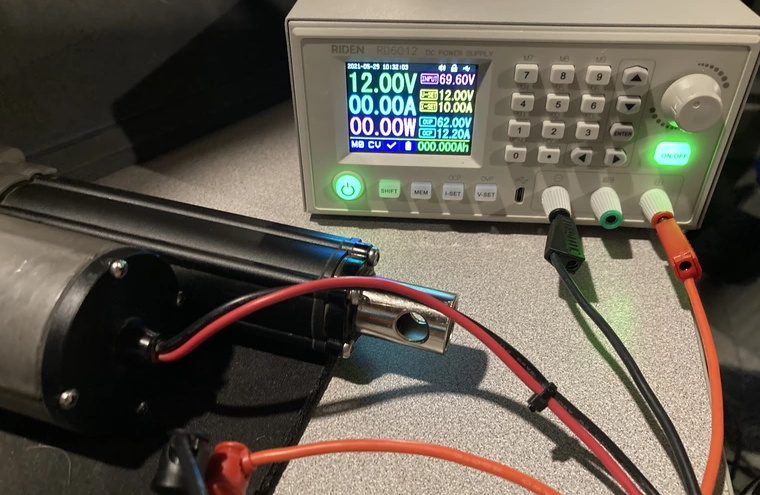
It’s really quite amazing to see just how little it takes to generate these kinds of voltages with a Van de Graaff. In fact there’s nothing inside that you’d immediately equate with high voltage, the only electronic component in the generator’s base beyond the battery pack is a motor speed controller. While everything else might look suspiciously like magic, our own [Steven Dufresne] wrote up a properly scientific explanation of how it all works.

In this particular case, the motor spins a nylon pulley in the base of the generator, which is connected to a Teflon pulley in the top by way of a neoprene rubber belt. Combs made from fine metal mesh placed close to the belt at the top and bottom allow the Van de Graaff to build up a static charge in the sphere. Incidentally, it sounds like sourcing the large metal sphere was the most difficult part of this whole build, as it took [Jay] several hours to modify the garden gazing ball to fit atop the acrylic tube that serves as the machine’s core.

In the past we’ve seen Van de Graaff generators built out of literal trash, and back in 2018, [Jay] himself put together a much smaller and more simplistic take on the concept. But this beauty certainly raises the bar beyond anything we’ve seen previously.

Continue reading “Supersized Van De Graaff Generator Packs A Punch”

The Evil Crow Is Ready To Cause Some RF Mayhem

There’s no doubt that the RTL-SDR project has made radio hacking more accessible than ever, but there’s only so far you can go with a repurposed TV tuner. Obviously the biggest shortcoming is the fact that you can only listen to signals, and not transmit them. If you’re ready to reach out and touch someone, but don’t necessarily want to spend the money on something like the HackRF, the Evil Crow RF might be your ideal next step.

This Creative Commons licensed board combines two CC1101 radio transceivers and an ESP32 in one handy package. The radios give you access to frequencies between 300 and 928 MHz (with some gaps), and the fact that there are two of them means you can listen on one frequency while transmitting on another; opening up interesting possibilities for relaying signals. With the standard firmware you connect to a web interface running on the ESP32 to configure basic reception and transmission options, but there’s also a more advanced RFQuack firmware that allows you to control the hardware via Python running on the host computer.

Using the Evil Crow RF without a computer.

One particularly nice feature is the series of buttons located down the side of the Evil Crow RF. Since the device is compatible with the Arduino IDE, you can easily modify the firmware to assign various functions or actions to the buttons.

In a demonstration by lead developer [Joel Serna], the physical buttons are used to trigger a replay attack while the device is plugged into a standard USB power bank. There’s a lot of potential there for covert operation, which makes sense, as the device was designed with pentesters in mind.

As an open source project you’re free to spin up your own build of the Evil Crow RF, but those looking for a more turn-key experience can order an assembled board from AliExpress for $27 USD. This approach to hardware manufacturing seems to be getting popular among the open source crowd, with the Open-SmartWatch offering a similar option.

[Thanks to DJ Biohazard for the tip.]

Pneumatic Can Crusher Awaits Your Command

A powerful robot awaiting for a verbal command to crush its foes might sound like something from a science fiction film, but now it’s a permanent fixture of the [Making Stuff] garage.  (Video, embedded below.) Thankfully this robot’s sworn enemy are aluminum cans, and the person controlling it with their voice isn’t a maniacal scientist, just a guy who’s serious about recycling. Well, we hope so anyway.

The star of the show is a heavy duty wall-mounted can crusher that [Making Stuff] built from some scrap steel and a pneumatic cylinder hooked up to the garage’s compressed air system. A solenoid operated valve allows an Arduino with attached ESP-01 to extend the cylinder whenever the appropriate command comes over the network. In this case, the goal was to tie the crusher into Google Assistant so a can would get smallified whenever one of Google’s listening devices heard the trigger phrase.

Note the ejector air line.

Obviously, those who’d rather keep Big Data out of their recycling bin don’t have to go down the same path. But that being said, having to give a specific voice command to activate the machine does provide a certain level of operational safety. At least compared to trusting some eBay sensor to tell the difference between an aluminum can and a fleshy appendage.

After crushing a few cans with his new toy, [Making Stuff] noticed a fairly troubling flaw in the design. Each time a can was crushed he had to reach into the maw of the machine to push its little flattened carcass out of the way. In other words, he was one bad line of code away from having one good hand.

The solution ended up being a new hose that runs from the exhaust port of the valve to the crushing chamber: once the cylinder retracts, the air exiting the valve pushes the crushed can out the rear of the machine and into a waiting pail underneath. Very slick.

Even if you’re not interested in the voice control aspect, this is a great design to base your own can crusher on. While it’s always a treat when a fully automatic crusher comes our way, we’ll admit the challenges of getting one to work reliably probably aren’t worth the hassle.

Continue reading “Pneumatic Can Crusher Awaits Your Command”

Build An ESP32 Stock Ticker To Watch Your GME Gains

Meme investing is all the rage these days, and what better way to get in on the loss fun than with your very own old-timey mechanical stock ticker? Unfortunately, they’re about as expensive and rare as you might expect for a piece of Victorian-era electronics. Lucky for us, [secretbatcave] has shown that you can put together a functional look-alike that costs about as much as a GameStop (GME) share was worth before it started heading to the Moon.

This might seem like an ambitious project, but in actuality the machine only has a few moving parts. There’s a stepper motor to feed the paper, another to spin an inked embossing wheel, and a couple of solenoids attached to a pusher plate. Rather than trying to move the heavy wheel, the pusher plate smashes the paper up into it. The fact that this produces a satisfying “clack” sound as each character is printed is just an added bonus.

Extending the base to hold the solenoids.

To sell the look, [secretbatcave] put the whole mechanism inside a tall glass dome from IKEA. The matching wooden base was extended so the pusher plate solenoids could fit inside, after which it was dunked in ink and sprayed with a gloss sealer to give it that shiny black finish people seemed to love in the 1900s. With the addition of an engraved brass nameplate, it looks like the machine fell out of a time warp.

In terms of electronics, there’s an ESP32, a pair of stepper motor controllers, and a relay for the solenoids. As of right now it all lives in a rather utilitarian box that’s tethered to the ticker, but we’re sure the lot could get tucked under the base with the help of a custom PCB should you be so inclined.

With an ESP32 at the helm, the ticker could easily be configured to print out whatever data it receives over the network or picks up from MQTT. With hardware like this and a pair of Diamond Hands, those tendies are as good as yours.

Continue reading “Build An ESP32 Stock Ticker To Watch Your GME Gains”

This ESP8266 Dev Board Has A Surprising Story Behind It

If you’re looking to get started with the ESP8266, there’s no shortage of development boards out there to select from. But we don’t think you’ll find one with a more unique a backstory than the open source ME-ESP8266. That’s because Malouf, the company that makes the $20 USD board, is a home goods company better known for their pillows and bed frames.

So how do you go from mattress toppers to microcontrollers? Well, as unlikely as it might seem, the missing element is Toys R’ Us. Or more specifically, the liquidation of Toys R’ Us. A Texas distribution center Malouf purchased from the iconic toy retailer included an automated conveyor belt system to move product through the gargantuan building, but unfortunately, they couldn’t get it to work with their existing system. The company decided to use their in-house team of engineers to solve the problem, and the ME-ESP8266 was born.

It turns out that an ESP8266 board developed to move bedding around an old Toys R’ Us warehouse has a lot of useful features for hackers and makers. It’s got an integrated relay, 16 MB of flash storage, an IR receiver, beefy screw terminals, and a 2.54mm-pitch GPIO pin header. There’s even a MAX232 on the board so it can talk to RS-232 devices. The hardware is compatible with the standard Arduino IDE as a “Generic ESP8266 Module”,  so you’ll have no problem using existing libraries and example code.

Now under normal circumstances, the public would never know about this sort of behind the scenes engineering. But instead of keeping their new ESP board to themselves, the team at Malouf got the go ahead from the company’s Chief Technology Officer (CTO) to release it as an open source project. Even more impressive, they got the company to put the board into production so it could be sold to the public. So today we not only learned that bedding companies have CTOs, but that they can be exceptionally open-minded.

Our hats off to the engineers at Malouf and the forward thinking brass that green lit production of the ME-ESP8266. It’s not the first interesting development to come from the liquidation of Geoffrey’s kingdom, but it just might be the most useful.