3D Printed Rover Enjoys Long Walks On The Beach

More than a few hackers have put in the considerable time and effort required to build a rover inspired by NASA’s robotic Martian explorers, but unfortunately even the most well funded home tinkerer can’t afford the ticket to send their creation offworld. So most of these builds don’t journey through anything more exciting than a backyard sandbox. Not that we can blame their creators, we think a homebrew rover will look just as cool in your living room as it would traipsing through a rock quarry.
But the DIY rover status quo clearly wasn’t sufficient for [Jakob Krantz], who decided the best way to test his new Curiosity-inspired rover was to let it frolic around on the beach for an afternoon. But judging by the video after the break, his beefy 3D printed bot proved to be more than up to the task; powering through wildly uneven terrain with little difficulty.

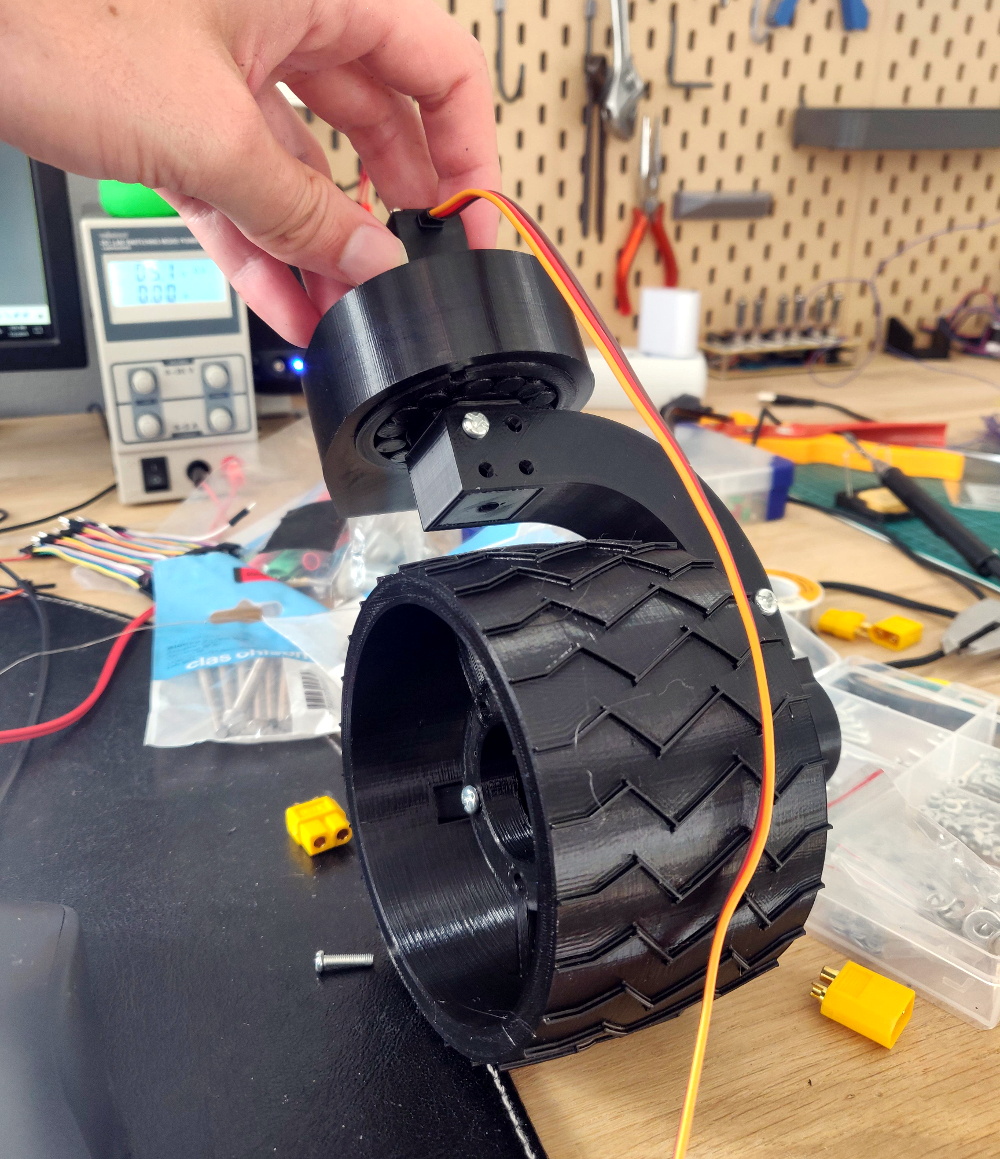
Beyond a few “real” bearings here and there, all of the key components for the rover are 3D printed. [Jakob] did borrow a couple existing designs, like a printable bearing he found on Thingiverse, but for the most part he’s been toiling away at the design in Fusion 360 and using images of the real Curiosity rover as his guide.

Right now, he’s controlling the rover with a standard 6 channel RC receiver. Four channels are mapped to the steering servos, and a fifth to the single electronic speed control that commands the six wheel motors. But he’s recently added an Arduino to the rover which will eventually be in charge of interpreting the RC commands. This will allow more complex maneuvers with fewer channels, such as the ability to rotate in place.

We’re proud to count our very own [Roger Cheng] among the rover wrangling hackers of the world. An entire community has sprung up around his six-wheeled Sawppy, and the knowledge gained during its design and construction could be applicable to any number of other projects.

Continue reading “3D Printed Rover Enjoys Long Walks On The Beach”
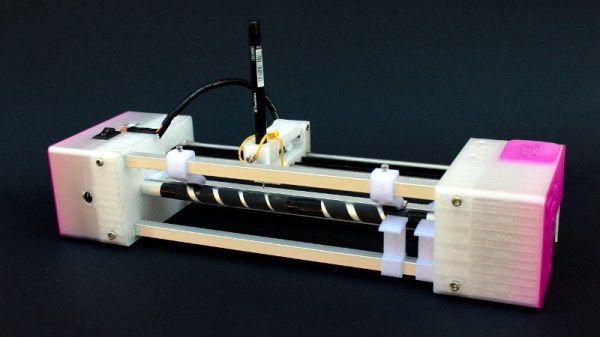
3D Printed Pen Plotter Is As Big As You Need It To Be

There’s nothing quite like building something to your own personal specifications. It’s why desktop 3D printers are such a powerful tool, and why this scalable plotter from the [Lost Projects Office] is so appealing. You just print out the end pieces and then pair it with rods of your desired length. If you’ve got some unusually large computer-controlled scribbling in mind, this is the project for you.

The design, which the team calls the Deep Ink Diver (d.i.d) is inspired by another plotter that [JuanGg] created. While the fundamentals are the same, d.i.d admittedly looks quite a bit more polished. In fact, if your 3D printed parts look good enough, this could probably pass for a commercial product.

For the electronics, the plotter uses an Arduino Uno and a matching CNC Shield. Two NEMA 17 stepper motors are used for motion: one to spin the rod that advances the paper, and the other connected to a standard GT2 belt and pulley to move the pen back and forth.

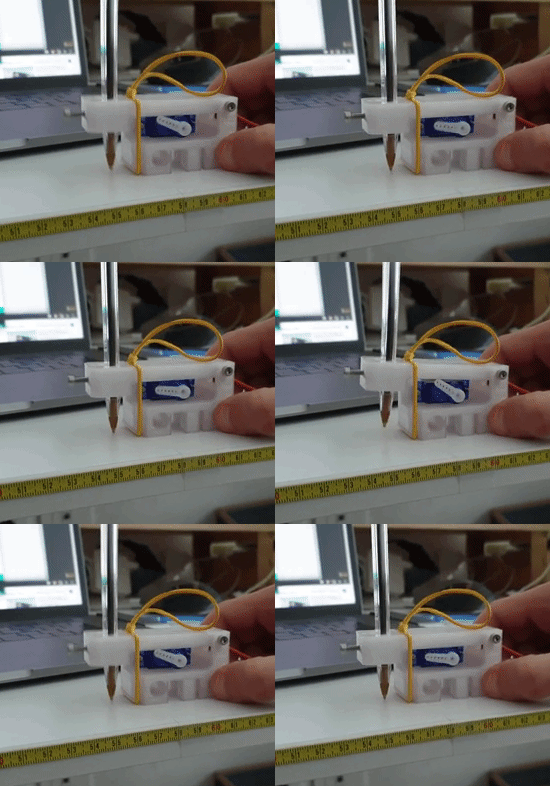
We particularly like the way [Lost Projects Office] handled lifting the pen off the paper. In the original design a solenoid was used, which took a bit of extra circuitry to drive from the CNC Shield. But for the d.i.d, a standard SG90 servo is used to lift up the arm that the pen is attached to. A small piece of elastic puts tension on the assembly so it will drop back down when the servo releases.

If this plotter isn’t quite what you’re after, don’t worry. There’s more where that came from. We’ve seen a number of very interesting 3D printed plotters that are just begging for a spot in your OctoPrint queue.

Glia Is Making Open Medical Devices, And You Can Help

The Glia project aims to create a suite of free and open-source medical equipment that can be assembled cheaply and easily when and where it’s needed. Even essential tools like stethoscopes and tourniquets can be difficult to acquire in certain parts of the world, especially during times of war or civil unrest. But armed with a 3D printer and the team’s open-source designs, an ad-hoc factory can start producing these lifesaving tools anywhere on the planet.

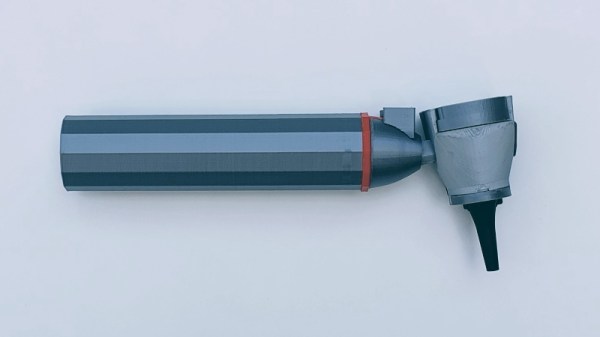
Glia member [Tarek Loubani] has recently written a blog post discussing the team’s latest release: an otoscope that can be built for as little as $5. Even if you don’t recognize the name, you’ve almost certainly seen one of them in use. The otoscope is used to look inside the ear and can be invaluable in diagnosing illnesses, especially in children. Unfortunately, while this iconic piece of equipment is quite simple on a technical level, professional-quality versions can cost hundreds of dollars.

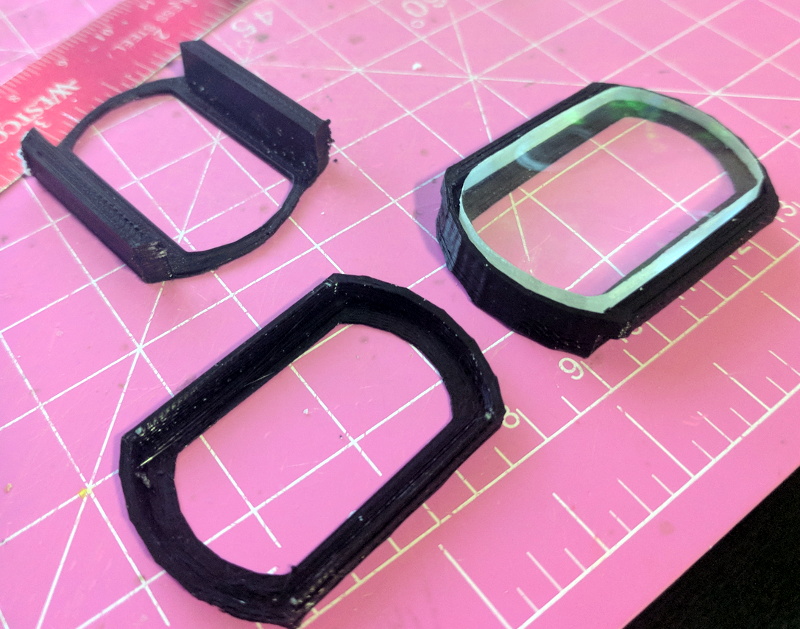
Now to be fair, you’ll need quite a bit more than just the 3D printed parts to assemble the device. The final product requires some electrical components such as a battery holder, rocker switch, and LED. It also requires a custom lens, though the Glia team has thought ahead here and provided the files for printable jigs that will allow you to cut a larger lens down to the size required by their otoscope. In a situation where you might have to improvise with what you have, that’s a very clever design element.

So far the team is very happy with how the otoscope performs, but they’ve run into a bit of a logistical snag. It turns out that early work on the project was done in the web-based TinkerCAD, which isn’t quite in line with the team’s goals of keeping everything free and open. They’d like some assistance in recreating the STLs in FreeCAD or OpenSCAD so they’re easier to modify down the road. So if you’re a FOSS CAD master and want to earn some positive karma, head over to the GitHub page for the project and put those skills to use.

We’ve previously covered Glia’s work with 3D printed tourniquets to treat gunshot wounds, a project that led to [Tarek] himself being shot by a sniper while attempting to field test the design in Gaza. If that’s not commitment to the principles of open-source hardware, we don’t know what is.

Continue reading “Glia Is Making Open Medical Devices, And You Can Help”

DIY ZigBee Therapy Lights Are Hue Compatible

Working on a project into the wee hours is hardly uncommon for us hackers, but if you’re consistently sleeping until the afternoon, it’s possible you’re suffering from a condition known as Delayed Phase Sleep Disorder (DPSD). Put simply, your body’s internal clock is out of alignment with the world around you. One of the ways to treat this condition is to expose yourself to bright light in the morning, which can help you wake up and feel more refreshed. Unfortunately, these so-called “Bright Light Therapy” boxes tend to be pretty expensive.

Looking for a way to treat his own DPSD, [Edward Shin] decided to build his own light box based on the research he’d done on the various commercial offerings out there. After all, a box full of bright lights that operates on a timer doesn’t seem particularly complex. Of course, in reality there’s a bit more to it than that, but so far the results are certainly promising.

The first decision [Edward] had to make was what kind of light he wanted. Classic light therapy devices, often used to treat Seasonal Affective Disorder (SAD), tend to be full spectrum lights that try and simulate sunlight. But in his research, he found a paper from Nature that explained the melanopsin in the human eye responds primarily to blue and green light. But as intense blue light can apparently lead to macular degeneration, he decided to go with green.

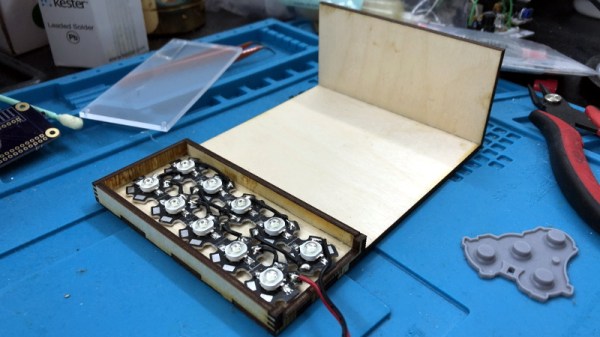
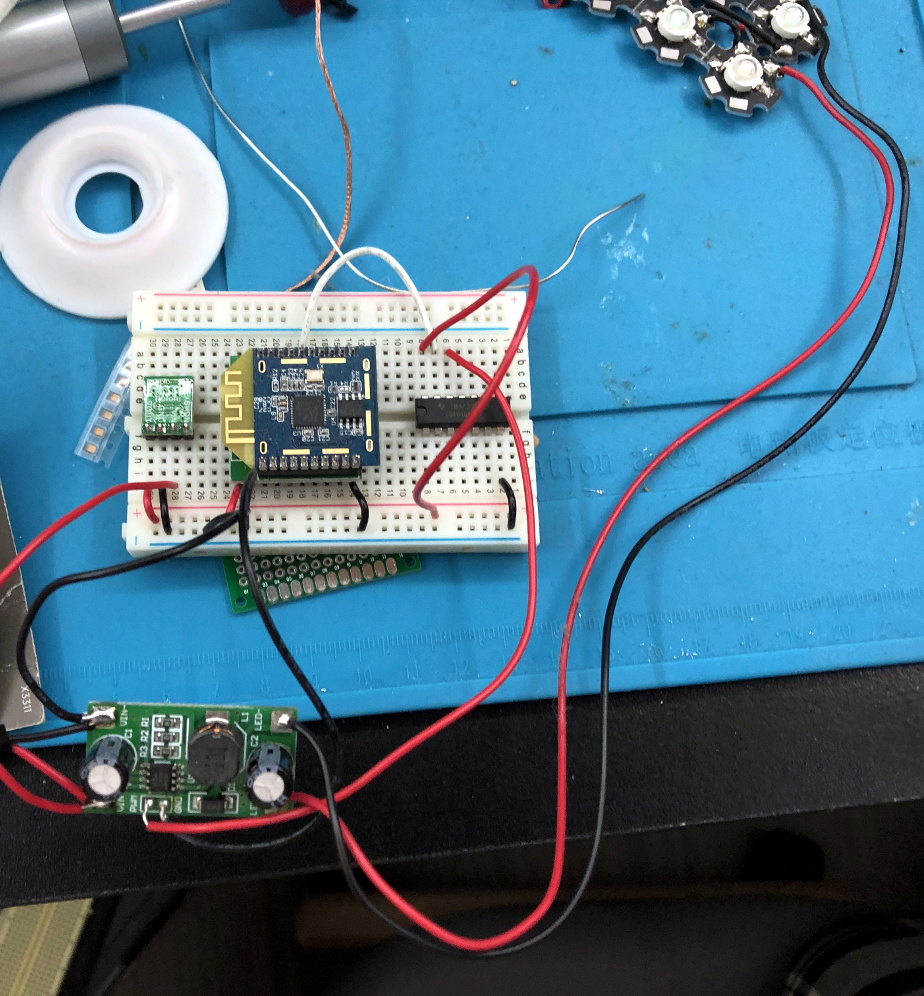
Since [Edward] already uses the Philips Hue system for his home’s lighting, he wanted to bring his therapy light into that ecosystem. The idea was that he could easily schedule his new green light box to go on when he wanted to wake up in the morning. So he used the Mesh Bee from Seeed Studio which not only supports ZigBee, but for which software is available to emulate a Hue bulb. Then he just needed to pair that with a sufficiently beefy LED driver and some 510 nm emitters. Everything is enclosed in a box made of laser cut wood that’s designed to hang from the headboard and shine down onto his face.

Over the years we’ve seen a number of similar projects trying to address SAD, so the idea of a hacker tweaking the concept to tackle DPSD seems a natural enough evolution of the idea. Just remember to speak with a medical professional before coming up with a homebrew treatment plan.

OTA Flash Tool Makes Fitness Tracker Hacking More Accessible

Over the last several months, [Aaron Christophel] has been working on creating a custom firmware for cheap fitness trackers. His current target is the “D6 Tracker” from a company called MPOW, which can be had for as little as $7 USD. The ultimate goal is to make it so anyone will be able to write their own custom firmware for this gadget using the Arduino IDE, and with the release of his new Android application that allows wirelessly flashing the device’s firmware, it seems like he’s very close to realizing that dream.

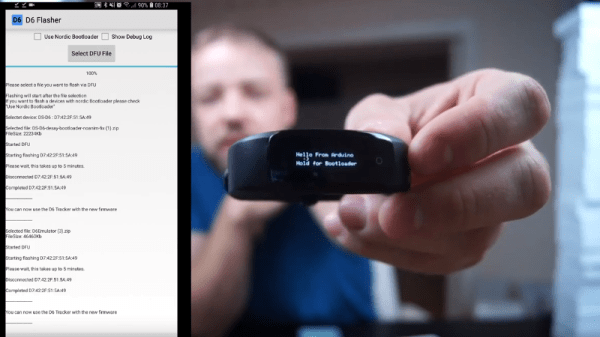
Previously, [Aaron] had to crack open the trackers and physically connect a programmer to update the firmware on the NRF52832-based devices. That might not be a big deal for the accomplished hardware hacker, but it’s a bit of a hard sell for somebody who just wants to see their own Arduino code running on it. But with this new tool, he’s made it so you can easily switch back and forth between custom and original firmware on the D6 without even having to take it off your wrist.

After the break, you can see the video that [Aaron] has put together which talks about the process of flashing a new firmware image. It’s all very straightforward: you simply pick the device from the list of detected BLE devices, the application puts the tracker into bootloader mode, and then you select the DFU file you want to flash.

There are a couple of ready-made firmwares you can put on the D6 right now, but where’s the fun in that? [Aaron] has put together a customized version of the Arduino IDE that provides everything you need to start writing and flashing your own firmware. If you’ve ever dreamed about creating a wearable device that works exactly the way you want, it’s hard to imagine a cheaper or easier way to get in on the action.

When we last heard from [Aaron] earlier this year, he was working on the IWOWN I6HRC tracker. But it looks like the availability of those devices has since dried up. So if you’re going to try your hand at hacking the MPOW D6, it might be wise to buy a few now while they’re still cheap and easy to find.

Continue reading “OTA Flash Tool Makes Fitness Tracker Hacking More Accessible”

Rocket Lab Sets Their Sights On Rapid Reusability

Not so very long ago, orbital rockets simply didn’t get reused. After their propellants were expended on the journey to orbit, they petered out and fell back down into the ocean where they were obliterated on impact. Rockets were disposable because, as far as anyone could tell, building another one was cheaper and easier than trying to reuse them. The Space Shuttle had proved that reuse of a spacecraft and its booster was possible, but the promised benefits of reduced cost and higher launch cadence never materialized. If anything, the Space Shuttle was often considered proof that reusability made more sense on paper than it did in the real-world.

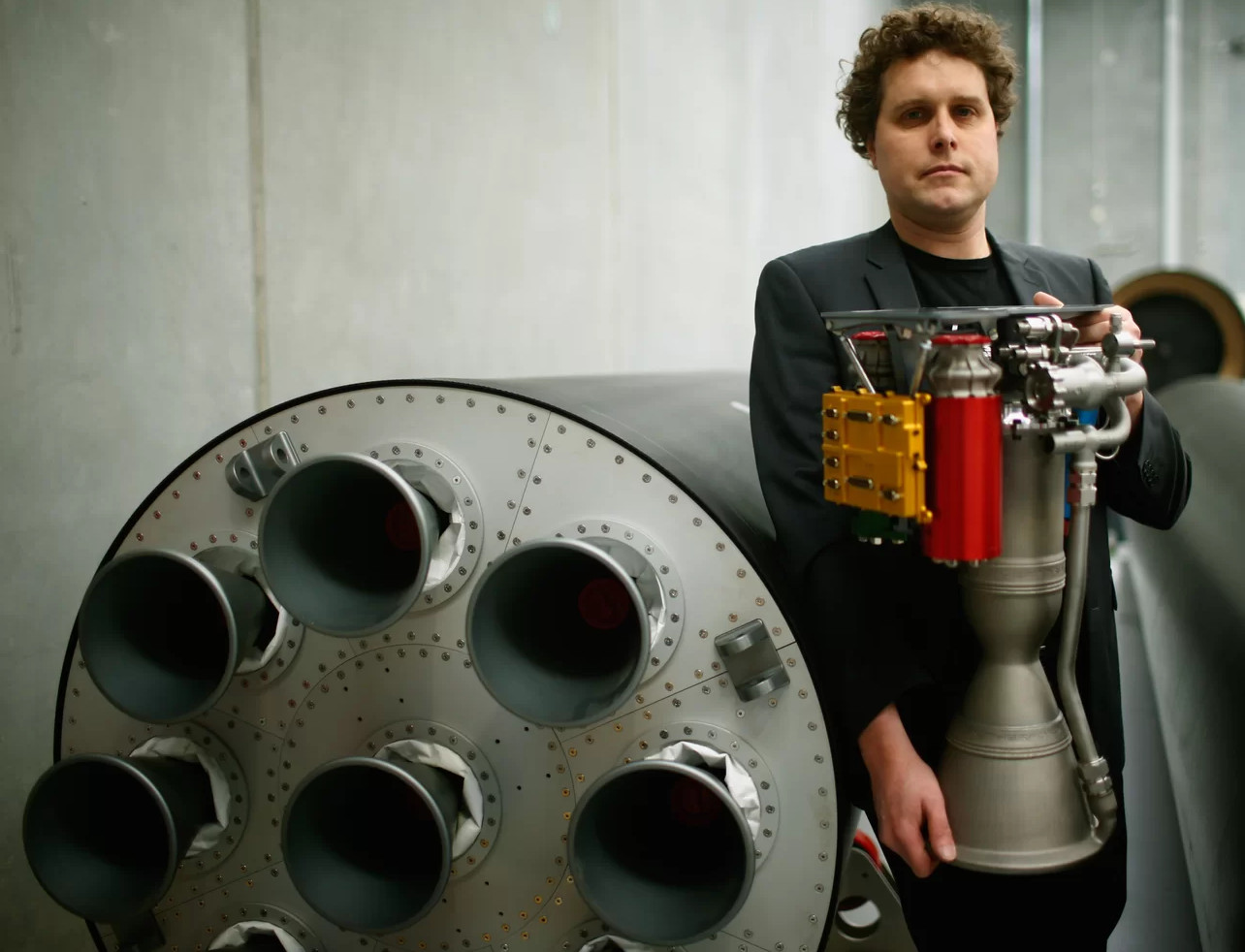
Rocket Lab CEO Peter Beck with Electron rocket

But that was before SpaceX started routinely landing and reflying the first stage of their Falcon 9 booster. Nobody outside the company really knows how much money is being saved by reuse, but there’s no denying the turn-around time from landing to reflight is getting progressively shorter. Moreover, by performing up to three flights on the same booster, SpaceX is demonstrating a launch cadence that is simply unmatched in the industry.

So it should come as no surprise to find that other launch providers are feeling the pressure to develop their own reusability programs. The latest to announce their intent to recover and eventually refly their vehicle is Rocket Lab, despite CEO Peter Beck’s admission that he was originally against the idea. He’s certainly changed his tune. With data collected over the last several flights the company now believes they have a reusability plan that’s compatible with the unique limitations of their diminutive Electron launch vehicle.

According to Beck, the goal isn’t necessarily to save money. During his presentation at the Small Satellite Conference in Utah, he explained that what they’re really going after is an increase in flight frequency. Right now they can build and fly an Electron every month, and while they eventually hope to produce a rocket a week, even a single reuse per core would have a huge impact on their annual launch capability:

If we can get these systems up on orbit quickly and reliably and frequently, we can innovate a lot more and create a lot more opportunities. So launch frequency is really the main driver for why Electron is going reusable. In time, hopefully we can obviously reduce prices as well. But the fundamental reason we’re doing this is launch frequency. Even if I can get the stage back once, I’ve effectively doubled my production ratio.

But, there’s a catch. Electron is too small to support the addition of landing legs and doesn’t have the excess propellants to use its engines during descent. Put simply, the tiny rocket is incapable of landing itself. So Rocket Lab believes the only way to recover the Electron is by snatching it out of the air before it gets to the ground.

Continue reading “Rocket Lab Sets Their Sights On Rapid Reusability”

Echos Of The Cold War: Nuclear-Powered Missiles Have Been Tried Before

On August 8th, an experimental nuclear device exploded at a military test facility in Nyonoksa, Russia. Thirty kilometers away, radiation levels in the city of Severodvinsk reportedly peaked at twenty times normal levels for the span of a few hours. Rumors began circulating about the severity of the event, and conflicting reports regarding forced evacuations of residents from nearby villages had some media outlets drawing comparisons with the Soviet Union’s handling of the Chernobyl disaster.

Today, there remain more questions than answers surrounding what happened at the Nyonoksa facility. It’s still unclear how many people were killed or injured in the explosion, or what the next steps are for the Russian government in terms of environmental cleanup at the coastal site. The exceptionally vague explanation given by state nuclear agency Rosatom saying that the explosion “occurred during the period of work related to the engineering and technical support of isotopic power sources in a liquid propulsion system”, has done little to assuage concerns.

The consensus of global intelligence agencies is that the test was likely part of Russia’s program to develop the 9M730 Burevestnik nuclear-powered cruise missile. Better known by its NATO designation SSC-X-9 Skyfall, the missile is said to offer virtually unlimited flight range and endurance. In theory the missile could remain airborne indefinitely, ready to divert to its intended target at a moment’s notice. An effectively unlimited range also means it could take whatever unpredictable or circuitous route necessary to best avoid the air defenses of the target nation. All while traveling at near-hypersonic speeds that make interception exceptionally difficult.

Such incredible claims might sound like saber rattling, or perhaps even something out of science fiction. But in reality, the basic technology for a nuclear-powered missile was developed and successfully tested nearly sixty years ago. Let’s take a look at this relic of the Cold War, and find out how Russia may be working to resolve some of the issues that lead to it being abandoned. Continue reading “Echos Of The Cold War: Nuclear-Powered Missiles Have Been Tried Before”