You Need A Cyberdeck, This Board Will Help

In 1984, William Gibson’s novel Neuromancer helped kick off the cyberpunk genre that many hackers have been delighting in ever since. Years before Tim Berners-Lee created the World Wide Web, Gibson was imagining worldwide computer networks and omnipresent artificial intelligence. One of his most famous fictional creations is the cyberdeck, a powerful mobile computer that allowed its users to navigate the global net; though today we might just call them smartphones.

While we might have the functional equivalent in our pockets, hackers like [Tillo] have been working on building cyberdecks that look a bit more in line with what fans of Neuromancer imagined the hardware would be like. His project is hardly the first, but what’s particularly notable here is that he’s trying to make it easier for others to follow in his footsteps.

There’s a trend to base DIY cyberdecks on 1980s vintage computer hardware, with the logic being that it would be closer to what Gibson had in mind at the time. Equally important, the brutalist angular designs of some of those early computers not only look a lot cooler than anything we’ve got today, but offer cavernous internal volume ripe for a modern hardware transfusion. Often powered by the Raspberry Pi, featuring a relatively small LCD, and packed full of rechargeable batteries, these cyberdecks make mobile what was once anchored to a desk and television.

[Tillo] based his cyberdeck on what’s left of a Commodore C64c, reusing the original keyboard for that vintage feel. That meant he needed to adapt the keyboard to something the Raspberry Pi could understand, for which some commercially available options existed already. But why not take the idea farther for those looking to create their own C64c cyberdecks?

He’s currently working on a new PCB specifically designed for retrofitting one of these classic machines with a Raspberry Pi. The board includes niceties like a USB hub, and should fill out some of those gaping holes left in the case once you remove the original electronics. [Tillo] has already sent the first version of his open source board out for fabrication, so hopefully we’ll get an update soon.

In the meantime, you might want to check out some of the other fantastic cyberdeck builds we’ve covered over the last couple of years.

Home Automation At A Glance Using AI Glasses

There was a time when you had to get up from the couch to change the channel on your TV. But then came the remote control, which saved us from having to move our legs. Later still we got electronic assistants from the likes of Amazon and Google which allowed us to command our home electronics with nothing more than our voice, so now we don’t even have to pick up the remote. Ushering in the next era of consumer gelification, [Nick Bild] has created ShAIdes: a pair of AI-enabled glasses that allow you to control devices by looking at them.

Of course on a more serious note, vision-based home automation could be a hugely beneficial assistive technology for those with limited mobility. By simply looking at the device you want to control and waving in its direction, the system knows which appliance to activate. In the video after the break, you can see [Nick] control lamps and his speakers with such ease that it almost looks like magic; a defining trait of any sufficiently advanced technology.

So how does it work? A Raspberry Pi camera module mounted to a pair of sunglasses captures video which is sent down to a NVIDIA Jetson Nano. Here, two separate image classification Convolutional Neural Network (CNN) models are being used to identify objects which can be controlled in the background, and hand gestures in the foreground. When there’s a match for both, the system can fire off the appropriate signal to turn the device on or off. Between the Nano, the camera, and the battery pack to make it all mobile, [Nick] says the hardware cost about $150 to put together.

But really, the hardware is only one small piece of the puzzle in a project like this. Which is why we’re happy to see [Nick] go into such detail about how the software functions, and crucially, how he trained the system. Just the gesture recognition subroutine alone went through nearly 20K images so it could reliably detect an arm extended into the frame.

If controlling your home with a glance and wave isn’t quite mystical enough, you could always add an infrared wand to the mix for that authentic Harry Potter experience.

Continue reading “Home Automation At A Glance Using AI Glasses”

Uncovering The Echo Dot’s Hidden USB Port

If you upgraded to Amazon’s latest Echo Dot, you might have been surprised to find that the diminutive voice assistant had shed its USB port. Earlier models of the Dot used a garden variety micro USB port for power, which hackers eventually figured out also provided a helpful way to snoop around inside the device’s firmware. The fact that the USB port was deleted on the latest Echo Dot in favor of a simple barrel connector for power was seen by some as a sign that Amazon was trying to keep curious owners out of their hardware.

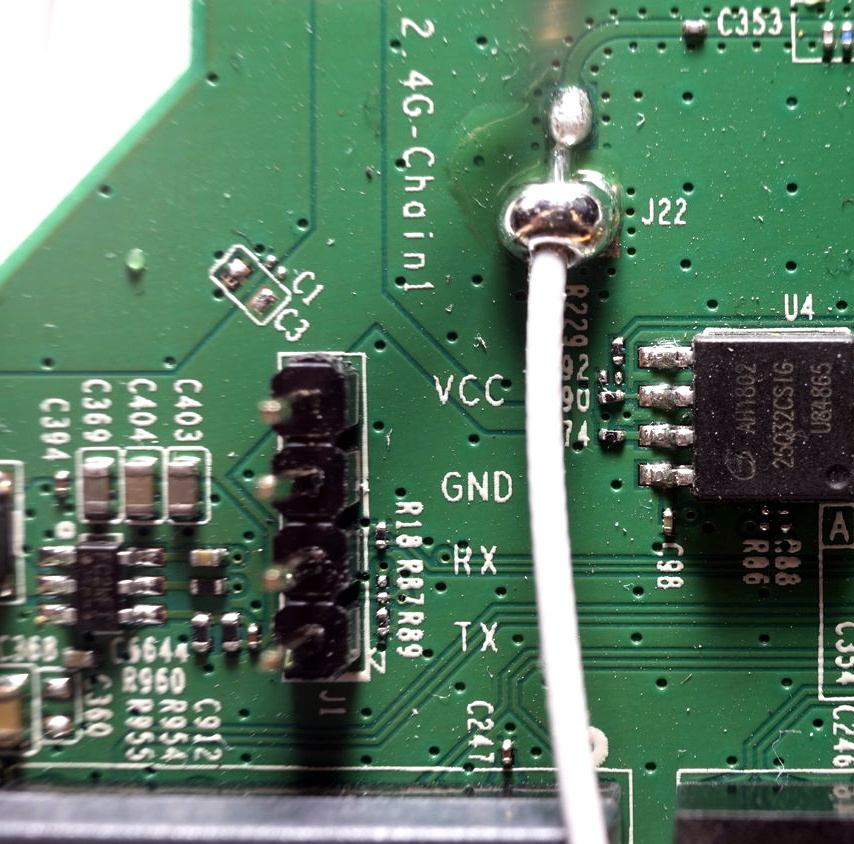
But as [Brian Dorey] shows, all they did was put a bump in the road. While they removed the external USB connector, the traces for it are still on the board waiting to be accessed. Even better, it turns out the USB data lines are connected to the test points located on the bottom of the Dot. All you need is a simple breakout that will connect through the existing opening in the device’s case, and you’ve got your USB port back.

So what can you do with USB on the Echo Dot? Well, not much right now. [Brian] found that the Dot shows up as a Mediatek device under Linux using lsusb, and fastboot can see it and even confirms the presence of a locked bootloader. It’s going to take some work from the community to see how deep this particular rabbit hole goes.

Even if you’re not interested in restoring its USB port, [Brian] has uncovered a wealth of fascinating hardware information about the Echo Dot during his deep-dive. He’s mapped out many of the test points located throughout the device’s PCBs, and found a few interesting points that might be worth further investigation. For example, he found that driving one of the pins high would trigger the Dot to mute its microphones; which could be useful for anyone looking to cover Alexa’s ears.

[Brian] first cracked open the Echo Dot last month, after scoring one for cheap during Amazon’s Prime Day sale. It looks like he’s making fairly rapid progress on unraveling the mysteries of this popular gadget, and we’re very interested in seeing where this research takes us.

India Launched A Moon Orbiter, Lander, And Rover All In One Shot With Chandrayaan-2

On July 22nd, India launched an ambitious mission to simultaneously deliver an orbiter, lander, and rover to the Moon. Launched from the Satish Dhawan Space Centre on a domestically-built GSLV Mk III rocket, Chandrayaan-2 is expected to enter lunar orbit on August 20th. If everything goes well, the mission’s lander module will touch down on September 7th.

Attempting a multifaceted mission of this nature is a bold move, but the Indian Space Research Organisation (ISRO) does have the benefit of experience. The Chandrayaan-1 mission, launched in 2008, spent nearly a year operating in lunar orbit. That mission also included the so-called Moon Impact Probe (MIP), which deliberately crashed into the surface near the Shackleton crater. The MIP wasn’t designed to survive the impact, but it still secured India a position on the short list of countries that have placed an object on the lunar surface.

If the lander component of Chandrayaan-2, named Vikram after Indian space pioneer Vikram Sarabhai, can safely touch down on the lunar surface it will be a historic accomplishment for the ISRO. To date, the only countries to perform a controlled landing on the Moon are the Soviet Union, the United States, and China. Earlier in the year, it seemed Israel would secure its position as the fourth country to perform the feat with their Beresheet spacecraft, but a last second fault caused the craft to crash into the surface. The loss of Beresheet, while unfortunate, has given India an unexpected chance to take the coveted fourth position despite Israel’s head start.

We have a few months before the big event, but so far, everything has gone according to plan for Chandrayaan-2. As we await word that the spacecraft has successfully entered orbit around the Moon, let’s take a closer look at how this ambitious mission is supposed to work.

Continue reading “India Launched A Moon Orbiter, Lander, And Rover All In One Shot With Chandrayaan-2”

Data Mining Home Water Usage; Your Water Meter Knows You A Bit Too Well

The average person has become depressingly comfortable with the surveillance dystopia we live in. For better or for worse, they’ve come to accept the fact that data about their lives is constantly being collected and analyzed. We’re at the point where a sizable chunk of people believe their smartphone is listening in on their personal conversations and tailoring advertisements to overheard keywords, yet it’s unlikely they’re troubled enough by the idea that they’d actually turn off the phone.

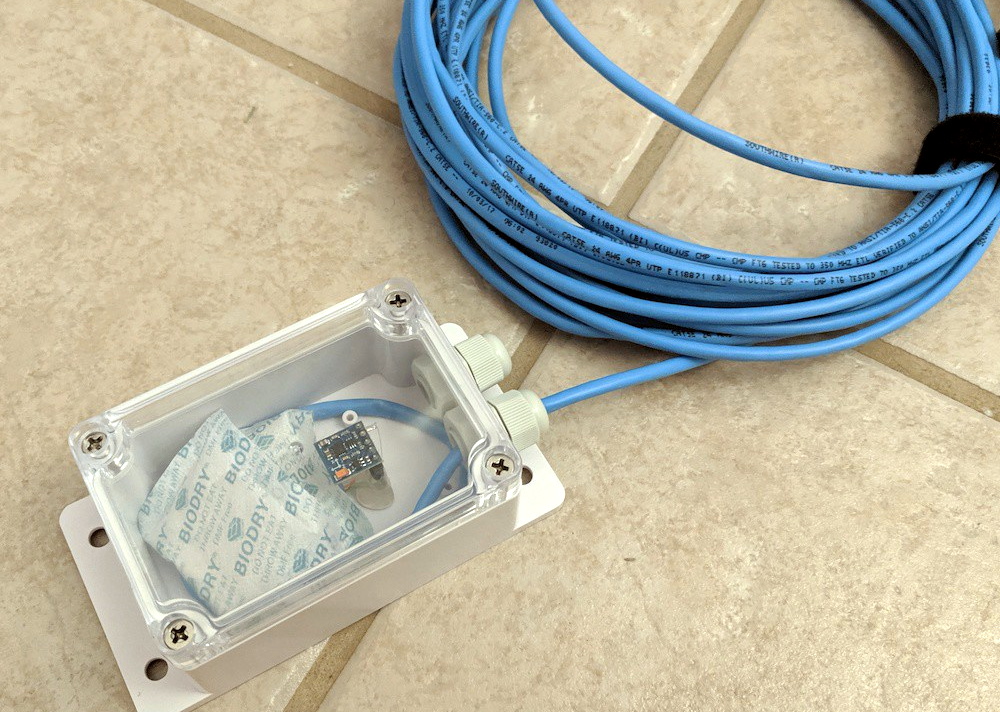
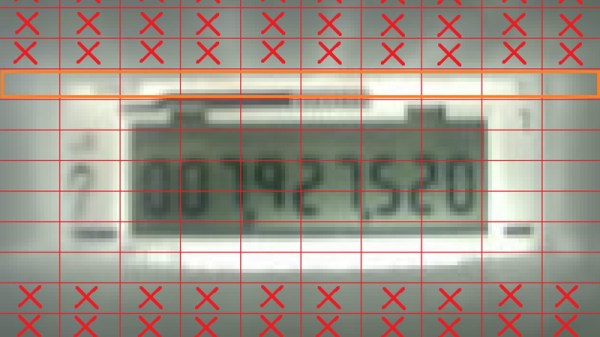
But even the most privacy-conscious among us probably wouldn’t consider our water usage to be any great secret. After all, what could anyone possibly learn from studying how much water you use? Well, as [Jason Bowling] has proven with his fascinating water-meter data research, it turns out you can learn a whole hell of a lot by watching water use patterns. By polling a whole-house water flow meter every second and running the resulting data through various machine learning algorithms, [Jason] found there is a lot of personal information hidden in this seemingly innocuous data stream.

The key is that every water-consuming device in your home has a discernible “fingerprint” that, with enough time, can be identified and tracked. Appliances that always use the same amount of water, like an ice maker or dishwasher, are obvious spikes among the noise. But [Jason] was able to pick up even more subtle differences, such as which individual toilet in the home had been flushed and when.

Further, if you watch the data long enough, you can even start to identify information about individuals within the home. Want to know how many kids are in the family? Monitoring for frequent baths that don’t fill the tub all the way would be a good start. Want to know how restful somebody’s sleep was? A count of how many times the toilet was flushed overnight could give you an idea.

In terms of the privacy implications of what [Jason] has discovered, we’re mildly horrified. Especially since we’ve already seen how utility meters can be sniffed with nothing more exotic than an RTL-SDR. But on the other hand, his write-up is a fantastic look at how you can put machine learning to work in even the most unlikely of applications. The information he’s collected on using Python to classify time series data and create visualizations will undoubtedly be of interest to anyone who’s got a big data problem they’re looking to solve.

Bolt-On Stepper Motor Driver For The Raspberry Pi

For his entry into the 2019 Hackaday Prize, [Tobius Daichi] is working on adding some motion control capabilities to everyone’s favorite Linux SBC. His 3+Pi board attaches to the Raspberry Pi’s GPIO header and gives you a convenient way to control four individual stepper motors. Perfect for a 3D printer, laser cutter, CNC, or anything else you can think of that needs to move in a few dimensions.

But such a simplistic description of the 3+Pi might be underselling it a bit. While [Tobius] says he was inspired by the classic Arduino CNC Shield that powers countless DIY 3D printers, he’s managed to improve on the concept. Rather than having the host Pi communicate directly with the stepper drivers, the 3+Pi features an onboard STM32F302CBT6 that handles the actual motor control. The Pi just needs to tell it what to do over UART.

If you’re looking to do things in real-time, having an onboard microcontroller handle the low-level aspects of talking to the stepper drivers can be a big help. A natural extension for this board could be support for the Klipper firmware, which leverages the fact that the Raspberry Pi is many times more powerful than your average 3D printer control board. With the Pi handling the math and providing the microcontroller instructions, Klipper allows for faster and more accurate printing than the microcontroller alone could accomplish.

As for the stepper drivers themselves, [Tobius] has decided to go with the Trinamic TMC2041-LA-T. This chip is notable as it puts dual drivers in one 48-QFN package, which is great if you’re looking to save space on your board. Some might complain that the 3+Pi doesn’t allow for easily swapping out the stepper drivers if you manage to cook one like on the Arduino CNC shield, but realistically you could say the same about many purpose-built stepper control boards.

[Tobius] is tackling this project by himself currently, but does mention that he’s open to teaming up with anyone who’s got an interest in this sort of thing. There have been previous attempts at creating Linux-powered 3D printer controllers in the past, but we think this approach holds particular promise if for no other reason than the Raspberry Pi’s popularity.

PaperLedger: An E-Ink Cryptocurrency Ticker

For a long time it seemed like e-ink displays were outside the reach of us lowly hackers, as beyond the handful of repurposed Kindles that graced these pages, we saw precious few projects utilizing this relatively exotic display. But that’s changed over the last couple of years, and we’re thrilled to start seeing hackers bend this incredible technology to their will.

A perfect example is PaperLedger, an entry into the 2019 Hackaday Prize by [AIFanatic]. This wireless device is designed to display the current price of various cryptocurrencies on its 2.9-inch e-ink screen and provide audible price alerts with its built-in speaker. It even has a web portal where users can configure the hardware or view more in-depth price information.

The PaperLedger is based on the TTGO T5 V2.2 ESP32, but it looks like [AIFanatic] is in the process of spinning up a new board for the MIT licensed project to address some nagging issues for this particular application. Unfortunately, it doesn’t look like there are any pictures of the new board yet, but a description of the changes on the Hackaday.IO page shows that most of the work seems to be going into improving support for running on batteries.

Even if you’re not interested in cryptocurrency, the PaperLedger looks like a fantastic little e-ink monitor for pretty much anything else you’d like to keep a close eye on. The GPLv3 licensed firmware is available on the project’s GitHub page, so expanding or completely changing the device’s functionality shouldn’t be too tricky for anyone with a desire to do so and a working knowledge of C++.

We’ve seen several projects using the various TTGO boards that mate an ESP32 with a display at this point, and it looks like a great platform to check out if you want to push some data to a little WiFi screen with the minimum amount of hassle.