Custom Prusa MK3 Fan Duct Gives Camera Perfect View

A growing trend is to mount a borescope “inspection camera” near a 3D printer’s nozzle to provide a unique up-close view of the action. Some argue that this perspective can provide valuable insight if you’re trying to fine tune your machine, but whether or not there’s a practical application for these sort of nozzle cams, certainly everyone can agree it makes for a pretty cool video.
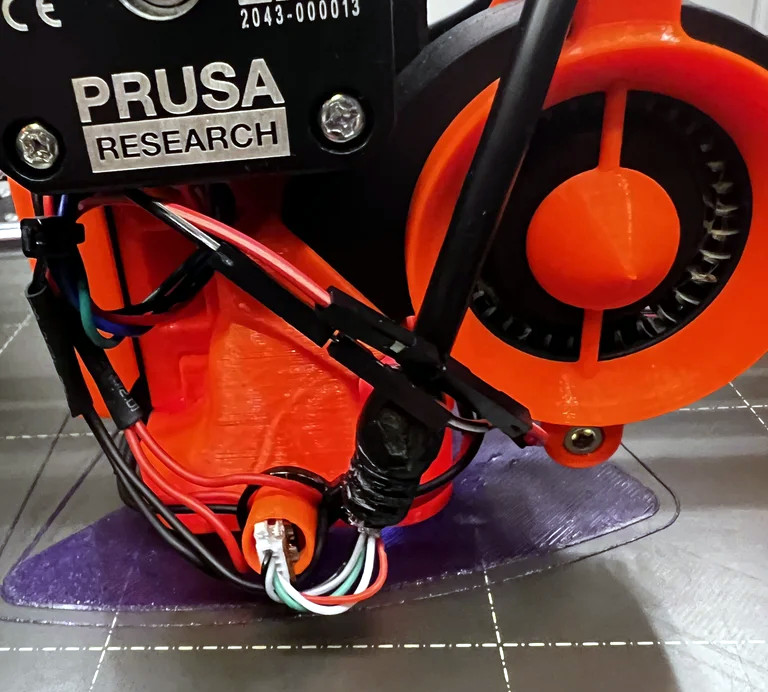
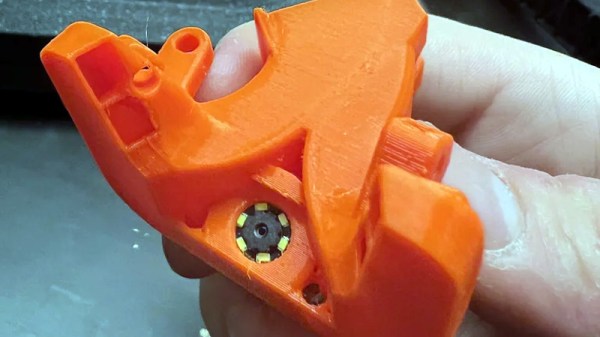
[Caelestis Cosplay] recently decided to outfit his Prusa i3 MK3S+ with such a camera, and was kind enough to share the process in a write-up. The first step was to find a community-developed fan duct, which he then modified to hold the 7 mm camera module. Since the duct blows right on the printer’s nozzle, it provides an ideal vantage point.

The camera module included a few tiny SMD LEDs around the lens, but [Caelestis Cosplay] added holes to the fan duct to fit a pair of 3 mm white LEDs to really light things up. While modifying the printed parts took some effort, he says the hardest part of the whole build was salvaging a 5X lens from a handheld magnifier and filing it down so it would fit neatly over the camera. But judging by the sharp and bright demo video he’s provided, we’d say the extra effort was certainly worth it.

After covering how the camera rig was put together, [Caelestis Cosplay] then goes over how it was integrated into OctoPrint, including how the external LEDs are switched on and off. He’s running OctoPrint on a Raspberry Pi, though as we’ve covered recently, a small form factor desktop computer could just as easily run the show.

Continue reading “Custom Prusa MK3 Fan Duct Gives Camera Perfect View”
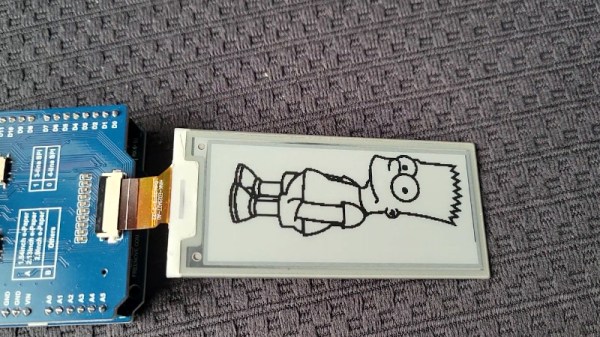
Driving E-Paper Displays With Memory Limited MCUs

It’s easy to become jaded by modern microcontrollers: for just a few bucks you can get a MCU that’s powerful enough to give a desktop computer from the early 90s a run for its money while packing in contemporary technology like WiFi and Bluetooth. For many projects we don’t even have to consider optimizing our code, because we aren’t even scratching the surface of what the hardware is capable of.

But sometimes you don’t have the luxury of using the latest-and-greatest chip, and have to play the hand you’re dealt. That’s when folks like [Larry Bank] really shine. In a recent write-up, he goes over his experiments with driving e-paper displays (specifically, salvaged electronic shelf labels) with 8-bit MCUs that on paper shouldn’t have the resources to run them.

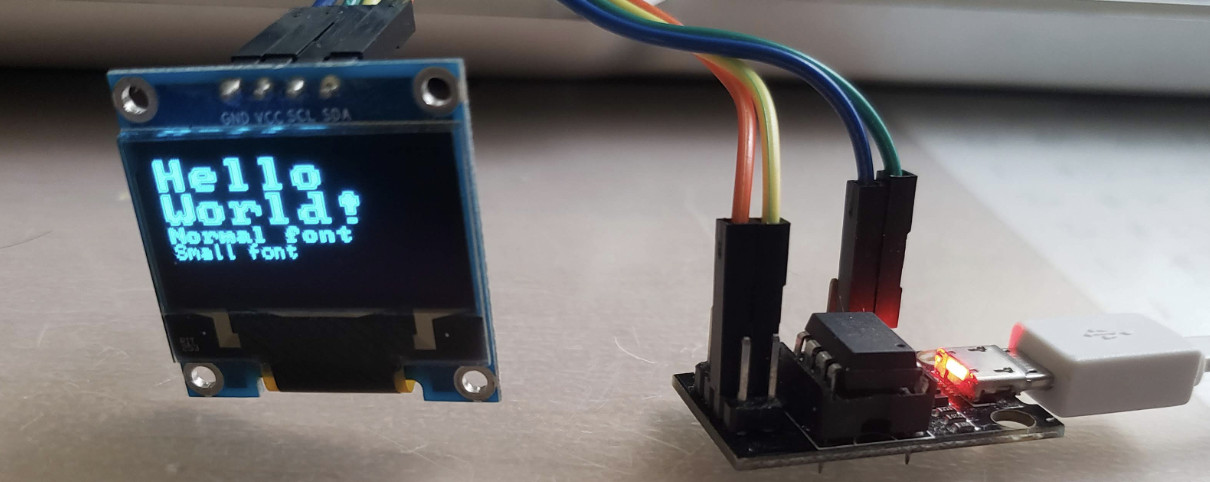
A similar trick can be used on OLEDs

The problem is that these displays generally expect to be handed a fully-formed image, which can easily exceed the free RAM on a low-end chip. For example, a 1-bit 128 x 128 image would consume 2 KB of RAM — more than four times the available memory on an ATtiny85.

As [Larry] explains, his alternate approach is to write data to the display in columns that are only one byte wide. Combined with his existing work with image decompression on constrained hardware, he’s able to rapidly draw out full-screen TIFF images using an Arduino UNO as demonstrated in the video after the break. He hopes the work will inspire others to experiment with what’s possible using the dinky MCUs you generally find in second-hand shelf labels.

Continue reading “Driving E-Paper Displays With Memory Limited MCUs”

A Handy OSHW USB Cable Tester For Your Toolkit

There’s no shame in admitting you’ve been burned by a cheapo USB cable — ever since some bean counter realized there was a few cents to be saved by producing “power only” USB cables, no hardware hacker has been safe. But with this simple tester from [Álvaro Prieto] in your arsenal, you’ll never be fooled again.

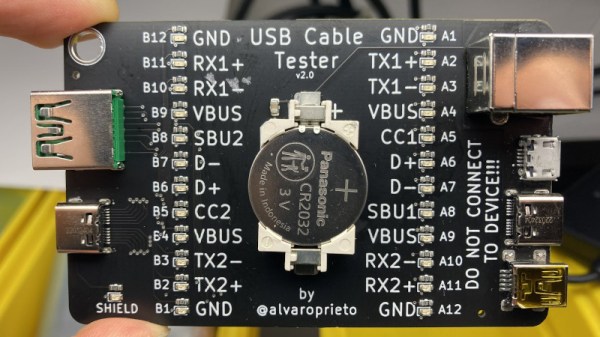
It’s about as straight-forward a design as possible, utilizing nothing more than a two dozen LEDs, their associated resistors, and a common CR2032 coin cell. Simply plugging both sides of your cable into the various flavors of USB connectors on the tester will complete the necessary circuits to light up the corresponding LEDs, instantly telling you how many intact wires are inside the cable. So whether you’re dealing with some shady cable that doesn’t have the full complement of conductors, or there’s some physical damage that’s severed a connection or two, you’ll know at a glance.

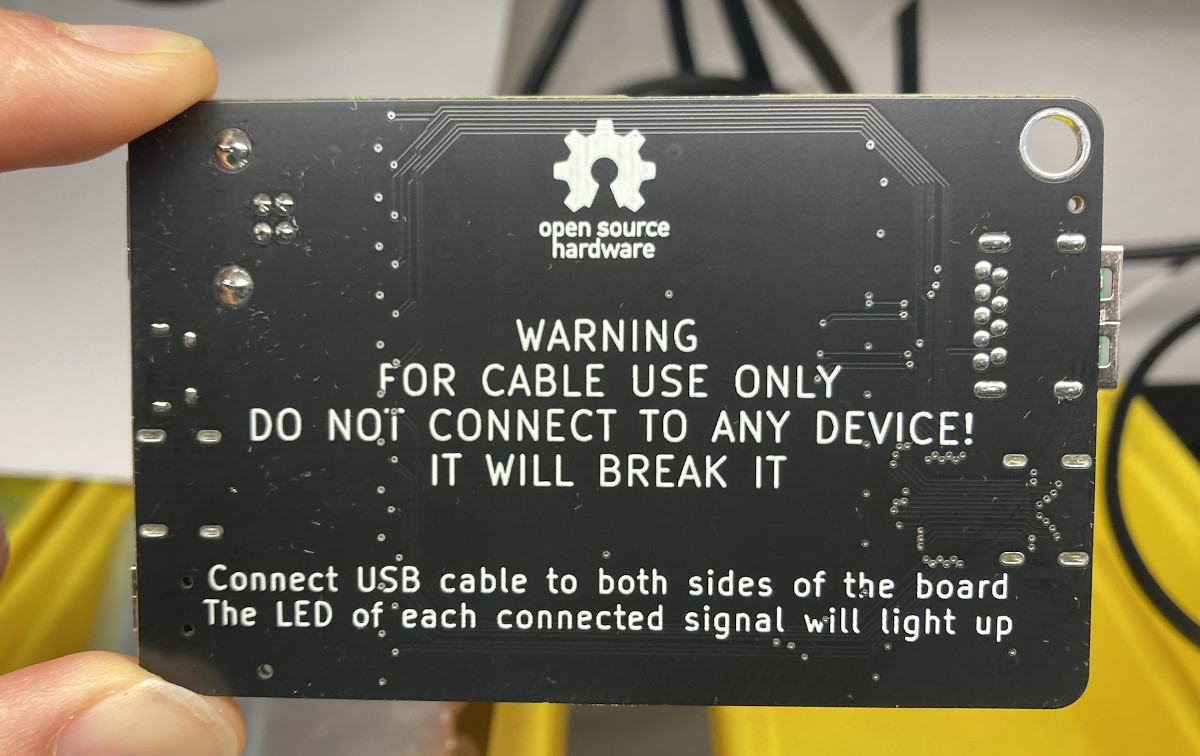
A sage warning for most of the devices we build.

Obviously the tester is designed primarily for the 24 pins you’ll find in a proper USB-C connector, but it’s completely backwards compatible with older cables and connectors. We appreciate that he even included the chunky Type B connector, which we’ve always been fond of thanks to its robustness compared to the more common Mini and Micro variants.

Keep in mind though that this tester will only show you if there’s a connection between two pins, it won’t verify how much power it can actually handle. For that, you’ll need some extra equipment.

ESP32 LED Eyes Help Keep Toddler In Bed

We’ve seen a lot of custom clocks here at Hackaday, many of which have pushed the traditional definition of the timepiece to its absolute limit. But for all their wild designs, most of them do have something in common: they assume you can actually read a clock and understand the concept of time. But what if you’re developing a clock for a toddler who’s only just coming to terms with such heady ideas?

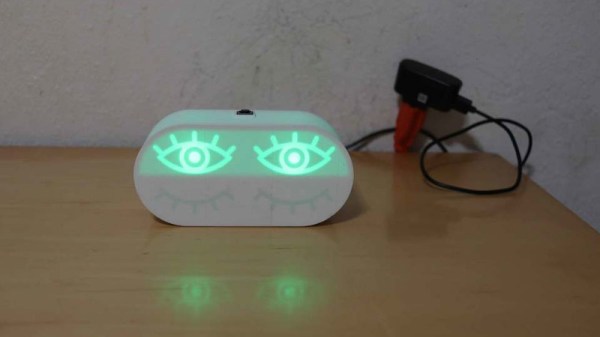
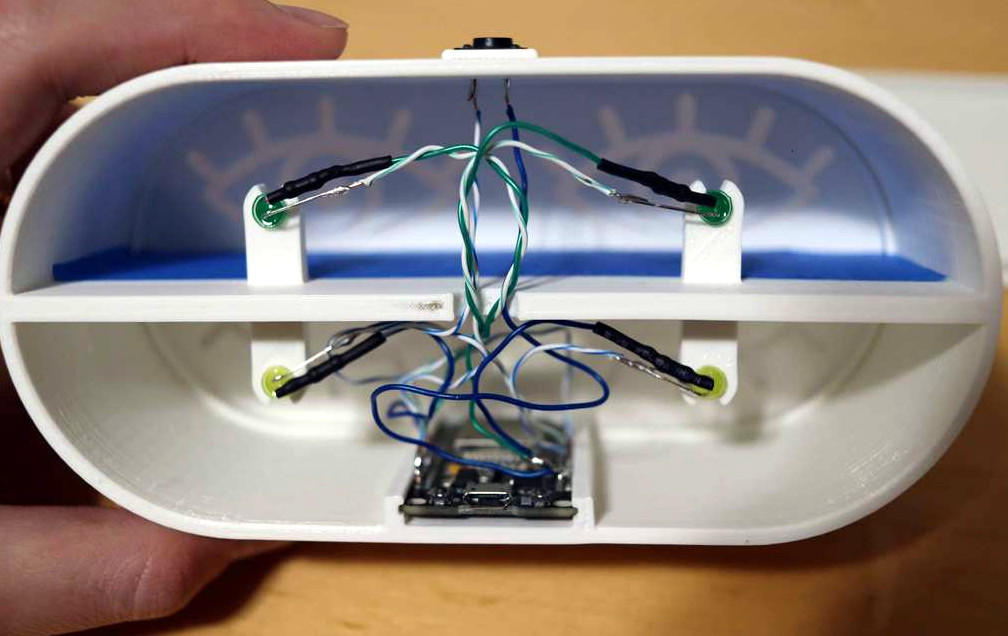
The answer, at least for [Riley Parish] is a set of 3D printed eyes that are illuminated with either yellow or green LEDs depending on whether or not it’s time to get out of bed. More than just the color of the light, the eye design (which is embedded into the rear of the front panel) switches between wide-open and tightly shut depending on the time of day.

Internally the device is very simple, with the 5 mm LEDs and their associated resistors connected directly to the digital out pins on an ESP32 development board. While the dual-core microcontroller is admittedly pretty overkill for flipping some LEDs every 12 hours or so, the firmware does at least pull the current time from NTP — plus the powerful MCU offers plenty of room to grow. A web front-end to configure the device or check its current status would only be a few more lines of code.

As it so happens, this isn’t the first toddler timepiece to grace these pages. Perhaps unsurprisingly, those previous examples also used changing color to help indicate the passage of time.

Hackaday Podcast 192: Supercon Was Awesome, How To Grind ICs And Make Your Own Telescope

This week, Editor-in-Chief Elliot Williams and Managing Editor Tom Nardi are still flying high on their post-Supercon buzz (and are a bit jet lagged) this week. We’ll start with some of the highlights from our long-awaited Pasadena meetup, and talk a bit about the winner of this year’s Hackaday Prize. Talk will then shift over to shaved down NES chips, radioactive Dungeons and Dragons gameplay, an impressive 3D printed telescope being developed by the community, and the end of the Slingbox. Stick around for a double dose of Dan Maloney, as we go over his twin treatises on dosimetry and the search for extraterrestrial life.

Download it, burn it on a floppy, and you’ll have it forever!

Check out the links below if you want to follow along, and as always, tell us what you think about this episode in the comments!

Continue reading “Hackaday Podcast 192: Supercon Was Awesome, How To Grind ICs And Make Your Own Telescope”

Hackaday Prize 2022: Meet The Winners Of This Year’s Competition

This year, the 2022 Hackaday Prize challenged hackers and makers in the open source community to develop projects which evoked the concepts of Sustainability, Resiliency, and Circularity — ideas which perhaps have never been more important. As humanity works to become better stewards to the only planet they can call home, everything we build (or rebuild) should reflect our desire to preserve our world for future generations.

Today, we’re excited to announce the projects that our panel of expert judges believe best exemplified this year’s theme and took home their share of the $50,000 USD in prize money.

Continue reading “Hackaday Prize 2022: Meet The Winners Of This Year’s Competition”

Plasma Channel Shows Off A Remarkably Stylish Fusor

We’ve seen our fair share of Farnsworth–Hirsch fusors over the years — these high-voltage devices can get ions cooking to the point of achieving nuclear fusion even on a hobbyist’s budget, and even though they won’t solve the world’s energy problems, they certainly make for an impressive light show. While “simple” to build in the relative sense, the examples we’ve seen in the past have still been bulky contraptions supported by a cart full of complex gear befitting a nuclear reactor.

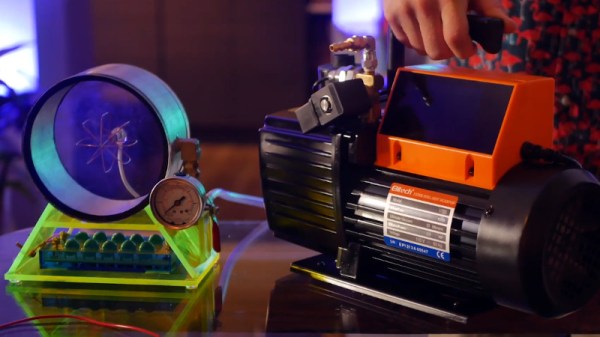
Which is why the fusor [Jay Bowles] recently completed is so impressive. As you can see in the latest Plasma Channel video which we’ve placed below the break, this desktop “star in a jar” not only features an incredibly low part count, but looks more like a movie prop than anything you’d expect to find in a physics lab. If you ever considered building a fusor of your own but were put off by the size and complexity of existing designs, you’ll definitely want to check this out.
Continue reading Plasma Channel Shows Off A Remarkably Stylish Fusor”