Whip Up Some Homemade Artisanal Flux

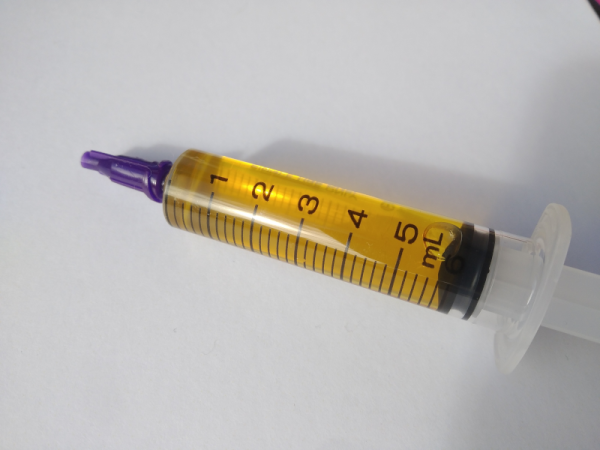
You don’t think much about the power company until you flip the lights on and they don’t come on. The same can be said of soldering flux. You don’t think much about it, usually, until you try soldering without it. Flux has a cleaning action on metal surfaces that allows for a proper solder joint. The problem is, do you have any idea what’s in the flux you are using? We don’t either. [Catsndogs] has a recipe to make your own flux and then you’ll know.

At the heart of rosin flux is basically tree sap. If you live near pine trees, you can source it naturally. If not, you can find it at music instrument stores. Stringed instruments use rosin, so it is readily available. If you do source it yourself, [Catsndogs] reports that it doesn’t matter if it is old or clean.  You do want to pick out as much tree bark and dead ants as you can, though. You essentially dissolve it in alcohol (at least 80% isopropyl or ethanol). Then filter it through filter paper or a coffee filter.

You can adjust the viscosity by allowing the alcohol to evaporate to make the mixture thicker or by adding more alcohol to make it thinner. Thicker flux is good for tacking down SMD parts. As you might expect, this isn’t “no clean” flux. Also, the flux is very flammable, so be careful.

This isn’t the first time we’ve heard of this recipe. Or even the second time. But it is a good reminder that you can make your own free of whatever wacky chemicals are in the commercial preparations.
Art of 3D printer in the middle of printing a Hackaday Jolly Wrencher logo

3D Printering: Managing Multiple Printing Profiles

I know people who have 3D printers that are little more than appliances. They buy it, they print with it, and they don’t change much of anything. That doesn’t describe me and, I’m guessing, it doesn’t describe you either. This does lead to a problem, though, when it comes to slicers. You have to keep changing profiles and modifying them. It can be hard to keep things straight. For example, if you have profiles for different nozzles, you get to make a choice: keep one profile and edit the parts that change, or keep multiple profiles and any common changes have to be propagated to the other profiles.

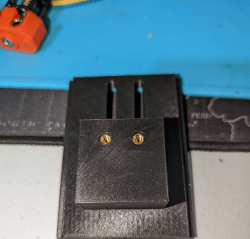
Part of the reason I want to manage multiple profiles has to do with this mystery object…

I’ve long wanted to create a system that lets me have baseline profiles and then just use specific profiles that change a few items in the baseline. Turns out, I didn’t need to do it. Prusa Slicer and its fork, SuperSlicer, have the capability already. Both of these, of course, are based on Slic3r, but the scripting languages are different and what I’m doing does require G-code scripting. The problem is, this capability is not documented very well and the GUI doesn’t really support it directly, which requires a little sidestepping. I’ll show you how I have things set up and where the limitations are. If you want to try your hand at it, I highly suggest you backup your configuration directory or switch to a new one.

Continue reading “3D Printering: Managing Multiple Printing Profiles”

In Our Own Image: Do We Need Humanoid Robots?

Science fiction is full of things you don’t want to think too hard about. Why do starships with transporters have brigs with forcefields? Why not just beam a prisoner into an enclosed space?  Why do Cylons fly ships with human controls? Why not have a plug in their… well, you get the idea. For that matter, why do Cylons (and Kaylons, and Gort) even look human at all? Why aren’t some Cylons just ships?

Of course, the real reason is so we can identify with them and actors can play them with some cosplay gear and makeup. But real-life robots that are practical rarely look like humans at all.

No one is going to confuse a robot factory arm or a Roomba with a person, yet they are perfectly suited for their purpose. Yet we are fascinated with human-looking robots and continue to build them, like Nadia from IHMC Robotics in the video below. Continue reading “In Our Own Image: Do We Need Humanoid Robots?”

Classic DOS Games On An Arduino?

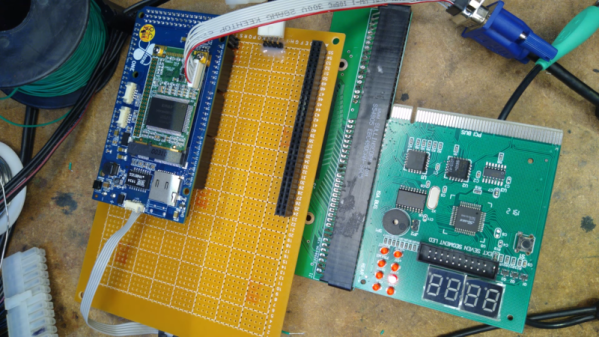
It has been a while since we’ve seen a 86Duino, but [TheRasteri] reminded us about it, with his video showing how to use one to run classic MS-DOS games. To be fair, the computer isn’t really an Arduino, it’s essentially a tiny 486 PC on an Arduino-style PCB.

If it were just running DOS games on a tiny PC, that wouldn’t be very newsworthy. However, the board by itself has no video card and, as [TheRasteri] points out, sound card compatibility is also a problem. A carrier board, however, has a tiny VGA card on it, and thanks to some work from another user, it is possible to add an ISA bus to the board if you want to plug in a legacy sound card.

The ISA hack was done neatly, but it is a bit of wiring. Instead of using a normal ISA backplane, it is possible to use a PC/104 backplane, if you have cards that will fit that bus — electrically, they are the same. The board was able to run DOOM and Quake at nearly 30 frames per second. Not bad. He did have problems getting a mouse to work, though.

Got a bit nostalgic watching him use QBasic to directly write to registers on an ISA card. If you want an old DOS machine and don’t want to tie up a lot of space, this could be the ticket. Especially if you need it to run some old piece of hardware that won’t work with modern computers. We have to wonder if anyone would make a USB to ISA adapter out of something like this. The drivers would seem to be the hard part.

We saw the 86Duino nearly 10 years ago when there were a few other x86 single-board computers around. Apparently, lots of people want to run vintage games.

Continue reading “Classic DOS Games On An Arduino?”

PETamentor2 Is Latest To Turn Bottles Into Filament

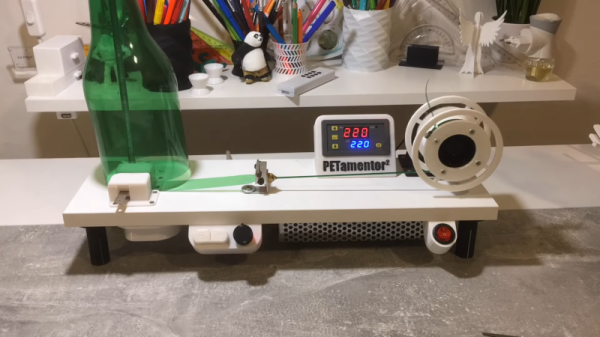
[Ondřej Šraitr] has several videos, including the one you can watch below, about his PETamentor2 — a machine for turning PET bottles into printable filament. You can grab the files on Thingiverse, and there aren’t many parts you have to buy.

The device looks good, and from the videos, it appears to work well. A blade slices the bottle into a strip that feeds what is essentially a hot end that pushes out the filament. The blade is adjustable to set the amount of plastic fed at any given time which is important because you need enough to create a solid piece of filament but not any more than that.

Surprisingly, the bill of materials doesn’t include any sort of microcontroller. There is a PWM speed control module to drive the 7 RPM motor and a temperature controller. Of course, you need a power supply, a heater block and a heater. The nozzle is, oddly enough, a standard 0.4 mm nozzle. You drill it out to 1.5 mm and die swell takes care of getting to the final 1.75 mm size.

It takes about 45 minutes to eat up what looks like a 1-liter bottle. The filament produced looks good in the video. We aren’t sure, but we think that was a roll of solder used as a ballast weight on top of the bottle keeping it moving in a downward direction. Bottles imply wetness, of course, so after producing the filament, it needs to be dried.

This is the second version of the machine and we were a bit surprised that we never saw a video of the filament in use. But it looks like it would work and it isn’t like we haven’t seen this technique used before. In fact, we’ve seen it several times. We can’t remember any that looked as stylish as the PETamentor2, though, and we are interested to hear about anyone’s results with the resulting filament.

Continue reading “PETamentor2 Is Latest To Turn Bottles Into Filament”

Fourteen-Legged Cell Carries Nature’s Tiny Computer

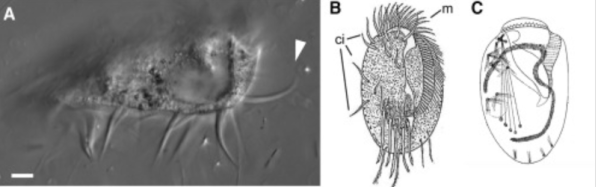
Computers are, after all, frighteningly complex state machines. Quite of bit of the software we write can be modeled as a state machine, too. A great technological achievement by humans? Turns out, state machines exist in some of nature’s tiniest natural computers, according to biologists studying Euplotes eurystomus, a kind of water-dwelling eukaryote. This single-cell organism uses fourteen protolegs known as cirri that move in a particular gait, in response to certain stimuli.

As you might expect, a single-celled organism doesn’t have the infrastructure to support a brain, so scientists wondered what could control the way the beast walks using the cirri. The answer was fibers made of bundles of microtubles that acted as a mechanical state machine.

While we are used to state machines using bi-stable electronic elements, older machines often used cams and microswitches along with a timing motor. For example, a phone answering machine might have a three-minute motor. One cam would depress a micro switch to run the outgoing message for 15 seconds. Then another cam would depress a microswitch to start recording, and a final switch and cam would keep the motor running until the very end. To start the process, a ringing phone would goose the motor so that that last cam engaged. Simple and no computer needed. The “brain fibers” of the Euplotes seem to work in a similar way. They enforce which states can be reached from what other states and react to outside stimuli, as well.

Is any of this practical? Maybe not, although we often see technology mimic biological systems. But we can’t help but wonder if future microscopic-scale machines might not need this same sort of mechanical state machine for many purposes, including locomotion.

You can apparently make single-cell organisms your servants, more or less. We’ve covered state machines many times if you need a refresher.

Laser Engraving, Up Close

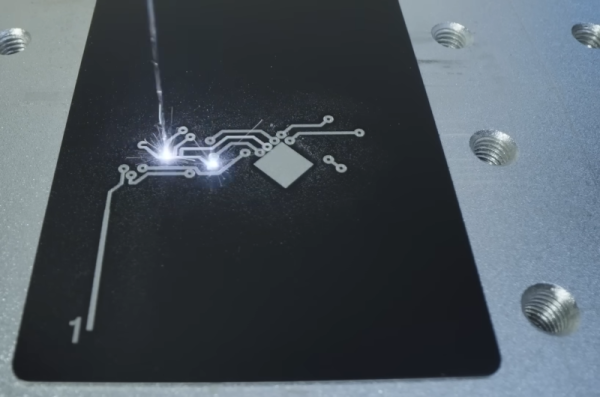
You know you aren’t supposed to watch your laser while it is cutting or engraving. But [Alex] hosted Wired in his studio and showed them how lasers engrave metal with a fiber laser. You can see the video below.

If you haven’t used a fiber laser, you might be surprised that while a 60 W model can burn metal, it does absolutely nothing to [Alex’s] hand. We wouldn’t try that, by the way, with the common diode lasers you see in most hacker’s labs these days. The video isn’t terribly technical, but it is interesting to see different metals succumb to the powerful laser. There are a few tips about marking different metals in different ways and how to deal with thermal expansion and other effects.

Fiber lasers aren’t as common as diode engravers in private shops, but we assume it is just a matter of time before they get cheaper. Not to mention their widespread use commercially means surplus units might become available, too.

If you are interested in lasers, [Alex’s] YouTube channel has quite a few interesting videos to check out. If you need more power, how’s 200 kW? Then again, even 20 W will get you something useful.

Continue reading “Laser Engraving, Up Close”