We’ve Heard Of Bricking A Hard Drive, But…

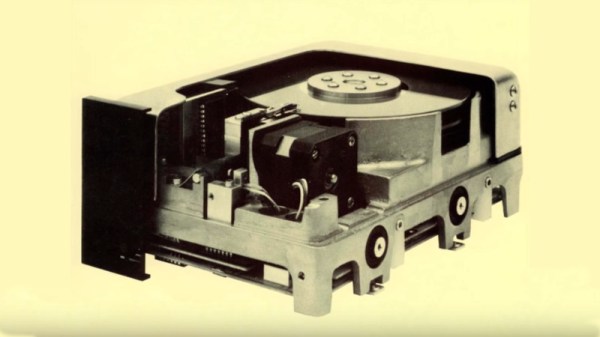
Mass storage has come a long way since the introduction of the personal computer. [Tech Time Traveller] has an interesting video about the dawn of PC hard drives focusing on a company called MiniScribe. After a promising start, they lost an IBM contract and fell on hard times.

Apparently, the company was faking inventory to the tune of $15 million because executives feared for their jobs if profits weren’t forthcoming. Once they discovered the incorrect inventory, they not only set out to alter the company’s records to match it, but they also broke into an outside auditing firm’s records to change things there, too.

Senior management hatched a plan to charge off the fake inventory in small amounts to escape the notice of investors and government regulators. But to do that, they need to be able to explain where the balance of the nonexistent inventory was. So they leased a warehouse to hold the fraud inventory and filled it with bricks. Real bricks like you use to build a house. Around 26,000 bricks were packaged in boxes, assigned serial numbers, and placed on pallets. Auditors would see the product ready to ship and there were even plans to pretend to ship them to CompuAdd and CalAbco, two customers, who had agreed to accept and return the bricks on paper allowing them to absorb the $15 million write off a little at a time.

Unfortunately, the fictitious excellent financial performance led to an expectation of even better performance in the future which necessitated even further fraud. The company had turned around, but only on paper. A downturn in the computer business and maxed-out credit signaled the beginning of the end. Suppliers and employees weren’t getting paid. A senior manager violated insider trader rules and dumped a lot of stock.

The turnaround CEO finally resigned and a new CEO found the fraud and released the findings that they were in the hole for $100 million. Bankruptcy pushed the company’s assets to Maxtor and criminal charges against 16 people ensued ending in fines and jail time. It isn’t clear if any of the boxed bricks were shipped to anyone by accident or by a disgruntled employee with a rubber paycheck. [Tech Time Traveller] speculates that if someone has one, it would be quite the collector’s item.

We hear about companies doing questionable things, of course, but this really is impressive in scope. At least they weren’t scamming end users as some tech companies have done.

Continue reading “We’ve Heard Of Bricking A Hard Drive, But…”
A Nitrogen Soldering Iron Review

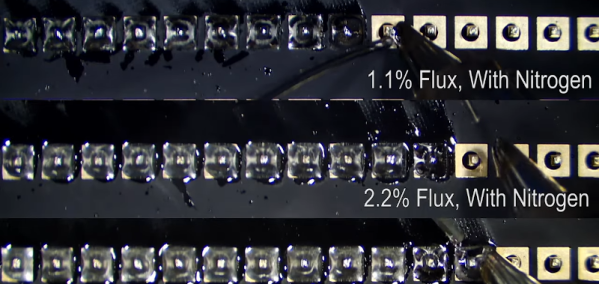
If you’ve ever welded, you know that some welders blow a shield gas over the work for different reasons. For example, you often use a gas to displace oxygen from the area and avoid oxidation. You can also solder using a nitrogen shield. This allows higher temperatures and a reduction of flux required in the solder. Wave soldering often uses nitrogen, and JBC offers a soldering iron that can employ nitrogen shield gas. [SDG Electronics] puts that iron through its paces in the video below.

As you might expect, this isn’t a $50 soldering iron. The price for the iron is just under $1,000 and that doesn’t include the power supply or the nitrogen source. The nitrogen generator that converts compressed air into nitrogen is particularly expensive so [SDG] just used a cylinder of gas.

Continue reading “A Nitrogen Soldering Iron Review”

3D Printing Pills All At Once

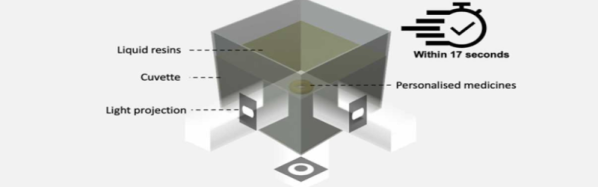
To the uninitiated, it might seem like a gimmick to 3D print pharmaceuticals. After all, you take some kind of medicine, pour it in a mold, and you have a pill, right? But researchers and even some commercial companies are 3D printing drugs with unusual chemical or physical properties. For example, pills with braille identification on them or antibiotics with complex drug-release rates. The Universidade de Santiago de Compostela and the University College London can now 3D print pills without relying on a layer-by-layer approach. Instead, the machine produces the entire pill directly.

According to a recent report on the study, there are at least two things holding back printed pills. First, anything medical has to go through rigorous testing for approval in nearly any country. In addition, producing pills at typical 3D printing speeds is uneconomical. This new approach uses multiple beams of light to polymerize an entire tank of resin at once in as little as seven seconds.

With 3D printed drugs, it is possible to tailor release profiles for individual cases and make hybrid drugs such as a French drug that joins anticancer drugs with another drug to manage side effects. Is this a real thing for the future? Will doctors collect enough data to make it meaningful to tailor drugs to patients? Will regulators allow it? For hybrid medicine, is there really an advantage over just taking two pills? Only time will tell.

Sure, technology can help dispense pills. We know, too, that 3D printing can be useful for prostheses and medical devices. We aren’t so sure about pharmaceuticals, but in the meantime you can already order custom-printed vitamins.

Less Is More — Or How To Replace A $25,000 Bomb Sight For 20 Cents

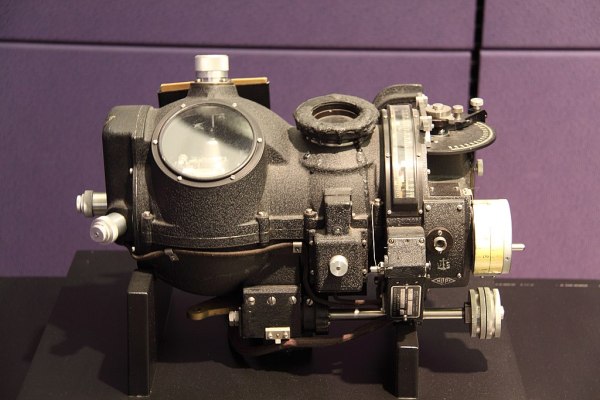
Depending on who you ask, the Norden bombsight was either the highest of high tech during World War II, or an overhyped failure that provided jobs and money for government contractors. Either way, it was super top secret in its day. It was also expensive. They cost about $25,000 each and the whole program came in at well over a billion dollars. The security was over the top. When not flying, the bombsight was removed from the plane and locked in a vault. There was a pyro device that would self-destruct the unit if it were in danger of being captured. So why did one of the most famous missions of World War II fly with the Norden replaced by 20 cents worth of machined metal? Good question.

You often hear the expression “less is more” and, in this case, it is an accurate idea. I frequently say, though, that “just enough is more.” In this case, though, less was actually just enough. There were three reasons that one famous mission in the Pacific theater didn’t fly the Norden. It all had to do with morale, technology, and secrecy.

Continue reading “Less Is More — Or How To Replace A $25,000 Bomb Sight For 20 Cents”

Versatile Reflow Oven Controller Uses ESP32-S2

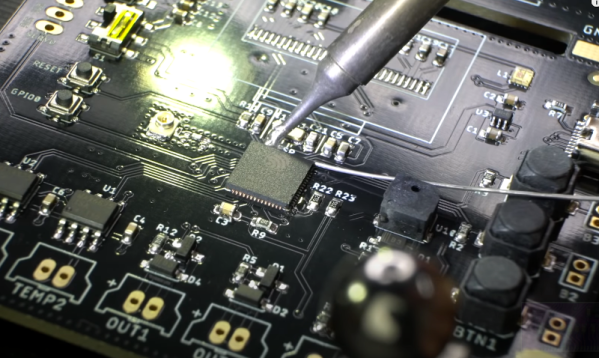
[Maker.Moekoe] wanted a single controller board that was usable with different reflow ovens or hotplates. The result is a versatile board based on the ESP32-S2. You can see a video of the board’s assembly in the video below.

The board sports several inputs and outputs including:

  • 2x MAX6675 thermocouple sensor input
  • 2x Fan output with flyback diodes
  • 2x Solid state relay output
  • 3x Buttons
  • 1x LED
  • 1x Buzzer
  • 1x Servo motor output
  • 0.96 inch OLED display

You could probably find a use for the board for other similar applications, not just ovens.

The video is oddly relaxing, watching parts reflow. It is like watching a 3D printer, no matter how many times we see it, we still find it soothing to watch. You can also see how he integrated the board with a toaster oven.

Overall, the board looks great and the workmanship is also very good. If you’ve never seen anyone set heat-set threaded inserts into a 3D printed piece, be sure to watch around the four minute mark.

We’ve seen plenty of oven projects. You can even use an Easy Bake oven.

Continue reading “Versatile Reflow Oven Controller Uses ESP32-S2”

Reducing Warping In Metal 3D Prints

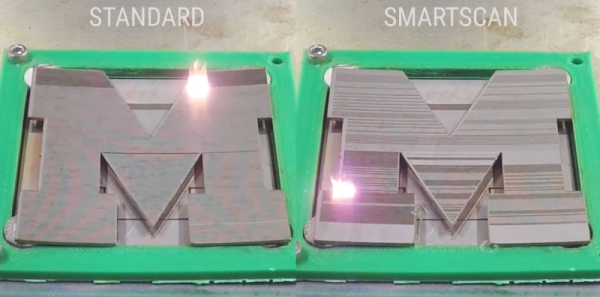
We are used to dealing with warping when printing with thermoplastics like ABS, but metal printers suffer from this problem, too. The University of Michigan has a new technology, SmartScan, that promises to reduce this problem. You can see a video about the technique, below.

The idea is to develop a thermal model of the printed part before laser sintering and then move the laser in such a way that heat doesn’t accumulate. The video shows how engraving metal in the traditional way causes the metal to warp as the laser heats up areas. Using the SmartScan thermal model, they were able to reduce deformation by almost half.

Continue reading “Reducing Warping In Metal 3D Prints”

Does Your Programmer Know How Fast You Were Going?

News reports were everywhere that an autonomous taxi operated by a company called Cruise was driving through San Francisco with no headlights. The local constabulary tried to stop the vehicle and were a bit thrown that there was no driver. Then the car moved beyond an intersection and pulled over, further bemusing the officers.

The company says the headlights were due to human error and that the car had stopped at a light and then moved to a safe stop by design. This leads to the question of how people including police officers will interact with robot vehicles.

Continue reading “Does Your Programmer Know How Fast You Were Going?”