CNC Saves Water Cooling Setup

A classic problem. You have a new CPU and a 15-year old water cooling system. Of course, the bracket doesn’t fit. Time to buy a new cooler? Not if you are [der8auer]. You design a new bracket and mill it out of aluminum.

Honestly, it might seem overkill, but it makes sense. After all, no matter how new the CPU is, using water to cool it still works the same way, in principle.

Continue reading “CNC Saves Water Cooling Setup”

Interpreters In Scala

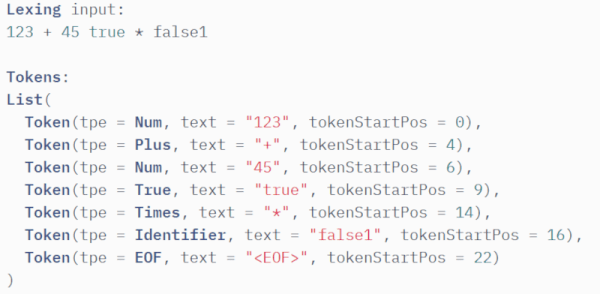
You might think of interpreters as only good for writing programs. Many people learned programming on some kind of interpreter — like BASIC — because you get immediate feedback and don’t have to deal with the complexities of a compiler. But interpreters can have other uses like parsing configuration files, for example. [Sakib] has a very complete tutorial about writing an interpreter in Scala, but even if you use another language, you might find the tutorial useful.

We were impressed because the tutorial uses formal parsing using a lexer and a parser. This is how you’d be taught to do it in a computer science class, but not how everyone does it.

Continue reading “Interpreters In Scala”

A Cheap Dipole Antenna From An Extension Cord

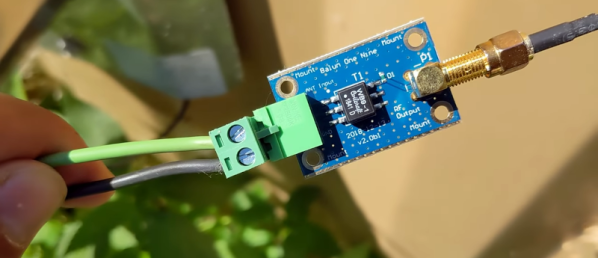
Dipoles are a classic builder’s antenna, after all they are usually little more than two pieces of wire and a feedline. But as [Rob] shows us in the video below, there are a few things to consider.

The first thing is where to get the wire. A damaged extension cord donated the wire. That’s actually an interesting idea because you get multiple wires the same length inside the extension cord.  Continue reading “A Cheap Dipole Antenna From An Extension Cord”

You Are Doomed To Learn WebAssembly

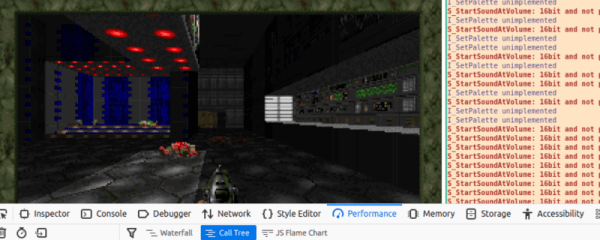
At first, Web browsers displayed HTML pages. But then people wanted those pages to do something. So we got — among other things — JavaScript. Then people wanted to do super complicated and compute-intensive things. So now we have WebAssembly. If you want to learn it, [diekmann] has a 4-part series that covers everything from getting started to porting Doom into your browser.

Paradoxically, instead of using a browser, he uses the wasm binary toolkit to run code more like a standard assembler. And wasm — what most people call WebAssembly — isn’t like most assemblers you know. Instead of labels, there are blocks that work much more like high-level language constructs such as while loops in C.

Continue reading “You Are Doomed To Learn WebAssembly”

Amazon Drones Don’t Go Far

If you are like us, you’ve wondered what all the hoopla about drones making home deliveries is about. Our battery-operated vehicles carry very little payload and still don’t have a very long range. Add sophisticated smarts and a couple of delivery packages and you are going to need a lot more battery. Or maybe not. Amazon’s recent patent filing shows a different way to do it.

In the proposed scheme, a delivery truck drives to a neighborhood and then deploys a bunch of wheeled or walking drones to deliver in the immediate area. Not only does that reduce the range requirement, but there are other advantages, as well.

Continue reading “Amazon Drones Don’t Go Far”

Discount Microfluidics From A $9 Spree At The Dollar Store

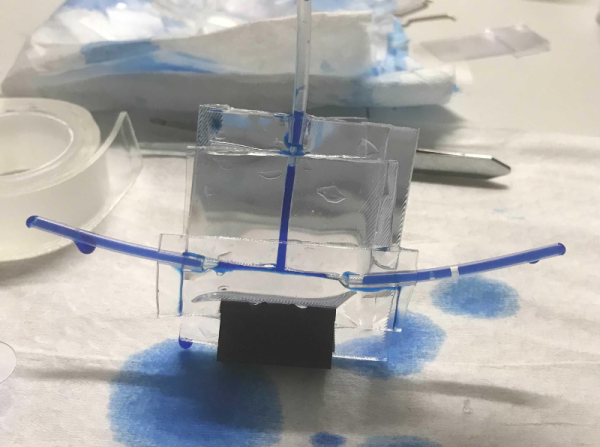
Microfluidics — working with tiny volumes of fluids in tiny channels — isn’t something you’d think would be inexpensive. Unless you read [Alexander Bissells’] post on how he created microfluidic devices using stuff from the dollar store. The channels in these devices can be much smaller than a millimeter and the fluid volumes are sometimes measured in femtoliters. At those scales, fluids don’t work like we intuitively think they will.

The parts list included gel tape, baby droppers, and some assorted containers and tools. Total price at the dollar store $9. One of the key finds in the dollar store was some small spray bottles. They weren’t important themselves, but they contain small lengths of silicone tubing and that was useful. Plastic fresnel lenses along with the tubing and gel tape worked to make “chips.” The gel tape also gets cut to make the channels. An eyedropper with some modifications makes a reasonable syringe.

We aren’t sure what you can practically do with any of these, but the T-junction looked pretty interesting. If you want some ideas on how these devices work in biology, including COVID-19 testing, check out this article. And just last week [Krishna Sanka] hosted a Hack Chat on microfluidics in biohacking, you can find the transcript on the project page. If you need a pump, this one uses 3D printer firmware to control it.

Astronomical Clock Uses Your Spare Clock Motors

We’ll admit we are suckers for clock projects, and the more unusual, the better. We liked the look of [Peter Balch’s] astronomical clock, especially since it was handcrafted and was a relatively simple mechanism. [Peter] admits that it looks like an astronomical clock, but it isn’t the same as a complex instrument from medieval times. Instead, it uses several standard clock motors modified.
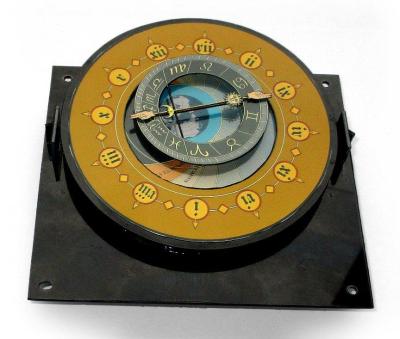
We didn’t quite follow some of the explanations for the rotation of the different elements, but the animated GIF cleared it all up. The inner and outer discs are geared at a 6:5 ratio. It takes 2 hours for the inner disc to make one rotation, meaning that every 12 hours the two discs will be back to where they began relative to one another.

Modifying the motors is fine work, requiring a good bit of disassembly and some glue. The electronics that make it tick are quite interesting. To drive the motors, a very specific pulse train is needed, but you also want to conserve battery as much as possible. A simple oscillator with a hex inverter drew more power than desired and an Arduino, even more so. A PIC12F629, though, could sleep a lot and do the job for a very low current consumption. The final clock should run a year on two AA cells.