Wolfram Engine Now Free… Sort Of

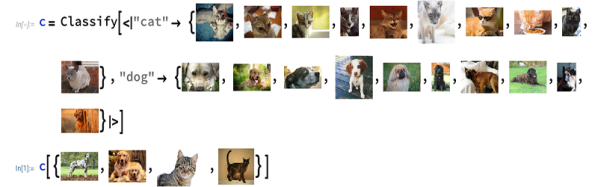
You’ve probably used Wolfram Alpha and maybe even used the company’s desktop software for high-powered math such as Mathematica. One of the interesting things about all of Wolfram’s mathematics software is that it shares a common core engine — the Wolfram Engine. As of this month, the company is allowing free use of the engine in software projects. The catch? It is only for preproduction use. If you are going into production you need a license, although a free open source project can apply for a free license. Naturally, Wolfram gets to decide what is production, although the actual license is pretty clear that non-commercial projects for personal use and approved open source projects can continue to use the free license. In addition, work you do for a school or large company may already be covered by a site license.

Given how comprehensive the engine is, this is reasonably generous. The engine even has access to the Wolfram Knowledgebase (with a free Basic subscription). If you don’t want to be connected, though, you don’t have to be. You just won’t be able to get live data. If you want to play with the engine, you can use the Wolfram Cloud Sandbox in which you can try some samples.


Continue reading “Wolfram Engine Now Free… Sort Of”

Paperclip Breadboard

TV’s MacGyver would love the breadboard arrangement we saw recently: it uses paperclips and crimping to make circuits that can be more or less permanent with no soldering. The basic idea is simple. A cardboard base has a piece of paper affixed. Metal paperclips are bent straight and glued to the paper using PVA glue (you know, like ordinary Elmer’s; hot glue would probably work, too). You could probably salvage wires out of old house wiring that would work for this, too.

The scheme uses two sizes of paper clips. Large ones are made straight and form the rails, while small paperclips make connections. The rails are bent to have a little “ear” that pushes into the cardboard base to hold them still. A little glue stabilizes them. The ears poke out the back, so the author suggests covering them with duct tape, hot glue, or another piece of cardboard. Using the top of a shoebox would also solve the problem.

Continue reading “Paperclip Breadboard”

It’s Time To Embrace The Toilet Of The Future

You use things every day that are very different from the same items from even a decade ago. Your car, your cellphone, and your computer all have probably changed a lot in the last ten years. But there’s something you almost certainly use every day that hasn’t changed much in a very long time: your toilet. That is unless you live in Japan where some toilets are a high tech delight. Lifehacker recently did a video about the toilet of the future, which might be coming to the US soon if Toto — one of the Japanese toilet makers — has its way.

It made us think. For as ubiquitous as the porcelain throne is, we don’t see many hacks related to it. There are several really obvious ones. For example, in the Lifehacker video, the seat automatically raises when you approach. We don’t know how it could figure out if you were going to stand or sit, but maybe that’s a good application for machine learning. What we really want is one that can clean itself. That would be worth something. Every time we see a Sanisette washing itself in Paris we want to take it home.

Continue reading “It’s Time To Embrace The Toilet Of The Future”

Transparent And Flexible Circuits

German researchers have a line on 3D printed circuitry, but with a twist. Using silver nanowires and a polymer, they’ve created flexible and transparent circuits. Nanowires in this context are only 20 nanometers long and only a few nanometers thick. The research hopes to print things like LEDs and solar cells.

Of course, nothing is perfect. The material has a sheet resistance as low as 13Ω/sq and the optical transmission was as high as 90%. That sounds good until you remember the sheet resistance of copper foil on a PCB is about 0.0005Ω.

Continue reading “Transparent And Flexible Circuits”

Braille Keyboard Finds Its Voice

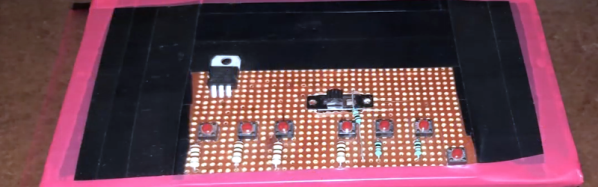
If you have a serious visual impairment, using a computer isn’t easy. [Dhiraj] has a project that allows people fluent in Braille to use that language for input. In addition to having a set position for fingers, the device also reads the key pressed as you type. With some third party software it is possible to even create Word documents, according to [Dhiraj].

You can see the finished product in the video below. This is one of those projects where the idea is the hardest part. Reading six buttons and converting them into characters is fairly simple. Each Braille character uses a cell of six bumps and the buttons mimic those bumps (although laid out for your fingers).

Continue reading “Braille Keyboard Finds Its Voice”

Reverse Engineering Dropbox

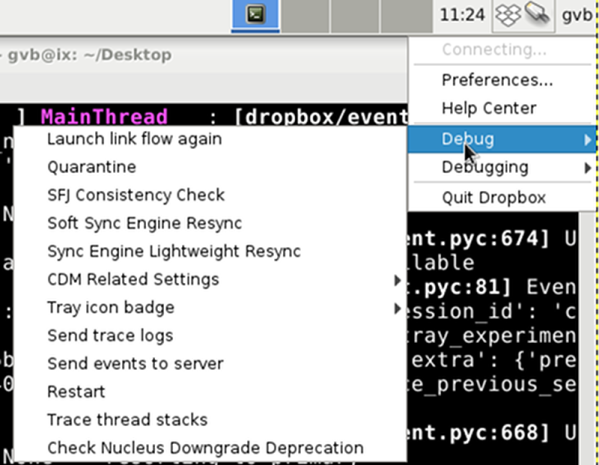
These days everyone talks about data “in the cloud.” However, before that phrase was fashionable, there were a few pioneers and one of the most famous of these is Dropbox — a service that let you store files on a remote server that dates back to 2007. [Vincent Berg] first noticed some odd network traffic on a hotel network, and figured out that it was a feature of Dropbox that allows computers on the same network to update each other. This led him to start investigating the undocumented Dropbox protocol and reverse engineering the Linux client.

We won’t ask why [Vincent] was poking around the hotel network to start with. However, a cursory glance at the Dropbox client gave away that it was using Python. The byte-compiled classes were — at the time — in a ZIP file added to the executable (which was nothing but a modified copy of Python). The files were encrypted, but [Vincent] used a clever technique. He built a shared object using normal Python and put a backdoor in it that gave him access to the Dropbox Python interpreter.

Continue reading “Reverse Engineering Dropbox”

The Kalman Filter Exposed

If we are hiring someone such as a carpenter or an auto mechanic, we always look for two things: what kind of tools they have and what they do when things go wrong. For many types of embedded systems, one important tool that serious developers use is the Kalman filter. It is also something you use when things go “wrong.” [Carcano] recently posted a tutorial on Kalman filter equations that tries to demystify the topic. His example — a case of things going wrong — is when you have a robot that knows how far it is supposed to move and also has GPS coordinates of its positions. Since the positions probably don’t agree, you can consider that a problem with the system.

The obvious answer is to average the two positions. That’s fine if the error is small. But a Kalman filter is much more robust in more situations. [Carcano] does a good job of taking you through the math, but we will warn you it is plenty of math. If you don’t know what a Gaussian distribution is or the word covariance makes you think of sailboats, you are going to have to do some reading to get through the post.

Continue reading “The Kalman Filter Exposed”