Goodyear Aero Thinks Flying Cars Are A Thing

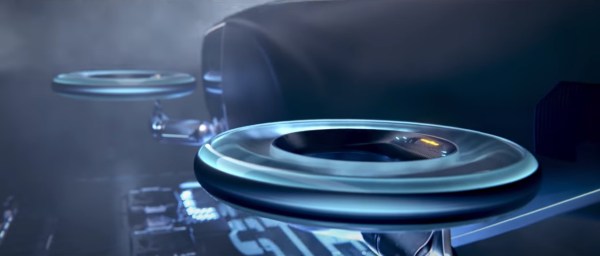
The 2019 Geneva International Motor Show has a number of “concept” vehicles. These are vehicles that usually include some cool feature that isn’t really practical — at least today. For example, in the past, concept cars have had adjustable color interior lighting, plug-in hybrid engines, and power windows — all things that would eventually become commonly available. However, today’s advances in computer-generated graphics have meant you can show things you can’t begin to build. Case in point: Goodyear has a video touting the Aero — a solid car tire that doubles as a propeller for your garden variety flying car.

To us, the thing looks more like a science fiction movie trailer than anything remotely practical. Four relatively small wheels with no central hub can flip and provide enough lift to propel a sizeable vehicle skyward. Even more interesting, is to transition modes from ground to flight, the vehicle balances on two wheels while using only two as propellers to generate lift.

Continue reading “Goodyear Aero Thinks Flying Cars Are A Thing”

Office Depot And OfficeMax Find Malware That Isn’t There

Sometimes we are rebuilding a RAID array or replacing a BIOS chip and we wonder how ordinary people keep their computes running. Then we realize that most of them come to someone like us for help. But what if you don’t have a family member or friend who is computer savvy? No problem! Plenty of stores — including big box office stores such as Office Depot and OfficeMax — will be glad to help you. Why most of them will be willing to test your computer for free. Sounds nice until you find out that at least in some cases these tests were showing problems that didn’t need fixing so users would pay for services they didn’t need. The Federal Trade Commission (FTC) has fined Office Depot (who owns OfficeMax) $25 million and plans to use the funds to issue refunds. In addition, a vendor, Support.com, will pay $10 million to support the refunds.

The free check used software to detect problems on a PC. However, during the scan the user is asked if their computer has any of the following symptoms. For example, if their PC has become slow or frequently reboots. If you said yes to any of these questions, the software would produce a report claiming to have found evidence of malware and offering fixes that could cost significant amounts of money even if there was no other evidence.

Continue reading “Office Depot And OfficeMax Find Malware That Isn’t There”

The Surprising Tech Of A Cheap Toaster

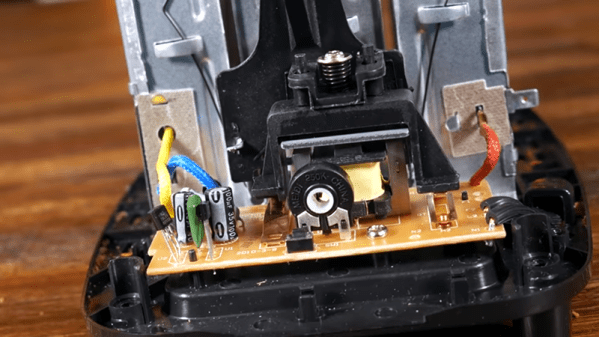
How complicated can a toaster be? You can get a cheap one for way under $10 that is little more than a hot wire. However, there are a few little complications. First, consumer products need to be safe — lawsuits are expensive. Second, there has to be some mechanism to hold the toast down until it is done. If you can buy one for $10 you can bet it isn’t some super toast processor running Linux in there.

[Technology Connections] tore one down for you so you don’t have to. The circuitry is simple, and who knew there was a dedicated IC for toaster control? However, the real engineering is in the lowly little handle you pull down to start the toasting.

Continue reading “The Surprising Tech Of A Cheap Toaster”

Threaded 3D Printed Part Comparison

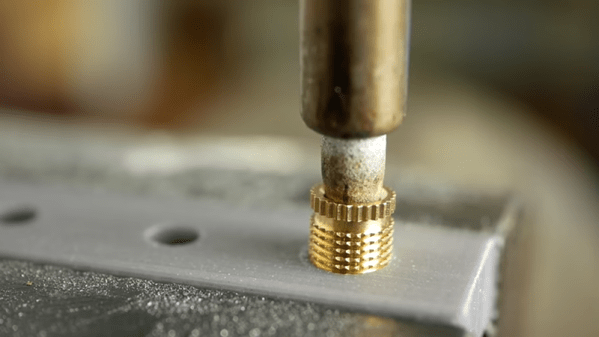
If you want to make serious assemblies out of 3D printed parts, you’ll eventually need to deal with threading. The easiest way is to make a nut trap that you can either insert a standard nut into after printing or even during printing. However, there are limitations to this method. If you want a real threaded part you can print the thread, cut the thread with a tap or bolt, or use a threaded insert. [Stefan] ran some tests to see how each of those methods held up to real use. (YouTube, embedded below.) He used fifty test parts to generate data for comparison.

We like the threaded insert method where a brass insert is pushed into the plastic while hot. Special features in the insert cause the brass part to grab the plastic, making it difficult to pull the insert out or twist it within the hole. Another thing we liked was that the tests used holes printed in the horizontal and vertical plane. You can clearly see that the orientation does alter how the holes work and fail to work.

Continue reading “Threaded 3D Printed Part Comparison”

Air-Breathing Rocket Engine Promises Future Space Planes

If you are a certain age, you probably remember the promise of supersonic transports. The Concorde took less than 4 hours to go across the Atlantic, but it stopped flying in 2003 and ended commercial supersonic passenger flights  But back in the 1970s, we thought the Concorde would give way not to older technology, but to newer. After all, man had just walked on the moon and suborbital transports could make the same trip in 30 minutes and — according to Elon Musk — go between any two points on the Earth in an hour or less. A key component to making suborbital flights as common as normal jet travel is a reasonable engine that can carry a plane to the edge of space. That’s where the UK’s Sabre engine comes into play. Part jet and part rocket, the engine uses novel new technology and two different operating modes to power the next generation of spaceplane. The BBC reports that parts of the new engine will undergo a new phase of testing next month.

The company behind the technology, Reaction Engines, Ltd, uses the engine in an air-breathing jet mode until it hits 5.5 times the speed of sound. Then the same engine becomes a rocket and can propel the vehicle at up to 25 times the speed of sound.

Continue reading “Air-Breathing Rocket Engine Promises Future Space Planes”

Maybe You Really Can Sense Magnetic Fields

We’ve known for years that many animals can somehow sense magnetic fields. Birds apparently use the Earth’s magnetic field to navigate. Dogs can find a box containing a magnet better than they can find a similar box with a food treat in it. But humans, apparently, can’t visualize magnetic fields without help. Several scientists at California, New Jersey, and Japan have done experiments that seem to show that people’s brains do have changes when a magnetic field rotates. If the paper, titled “Transduction of the Geomagnetic Field as Evidenced from Alpha-band Activity in the Human Brain” is a bit much for you, might enjoy the video from Veritasium, below, which is much easier to parse than the paper.

To see it work, a subject sits in a dark isolated room with an electrode cap that picks up the subject’s EEG. The study shows that different people have different sensitivity to the field. Also, picking up a magnetic field in an isolated chamber is different from picking it up on the sidewalk and using it to navigate with. Continue reading “Maybe You Really Can Sense Magnetic Fields”

Make Your Own Quantum Dots

Quantum dots certainly sound as if they should be something cool, but carry the hazardous baggage of being sometimes made from cadmium which can be dangerous. What are they? In essence, they are nanometer-scale particles, so small that when high energy light hits them, the photons will be absorbed and re-emitted at a lower energy state. You can easily make non-toxic quantum dots in your kitchen. Apart from the cool factor, they can be used as fluorescent dyes, inks, and possibly paints. [StrangelyAmusing] explains how in the video below.

You don’t need much in the way of equipment. A microwave oven, a Pyrex (borosilicate) container, and gloves. You’ll also need plastic pipettes and a blacklight — possibly the most exotic two items on the list. The ingredients are equally mundane: vinegar, baking soda, water, and sugar.

Continue reading “Make Your Own Quantum Dots”