DIY Reflow Oven Is Heavily Documented

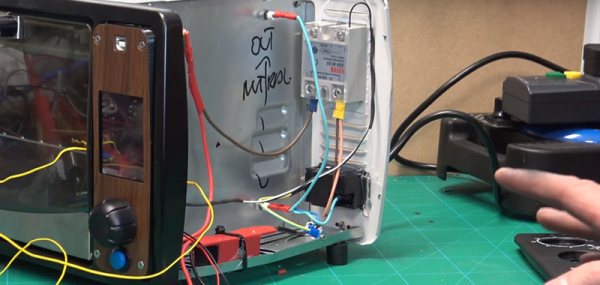
[DJ Legion] decided he wanted a reflow oven so he bought a toaster oven and an assortment of parts including a solid state relay, a Teensy, a display, and a thermocouple. What makes this a different project is the amount of video documentation. The four videos below encompass about 50 minutes of information and he’s promising more to come.

We haven’t found his software — probably because he’s still working on it, but we’re watching his GitHub page expectantly. We really liked the 3D printed faceplate that integrated the controller into the oven. It almost looks like a commercial unit. The use of the woodgrain paper over the 3D printed parts was a nice touch.

[DJ] is not done, though. He wants to increase the heat up time and possibly add convection. He’s also planning on a new video that will show actually making a board and how he has refined the calibration curves.

We are impressed but would have been tempted to just grab a Reflowduino. The work’s already done, and you get wireless control and lots of other goodies. Of course, we also get the urge to do it yourself, so we can’t really throw stones. If you don’t want to mess with an oven, you can always raid the hair salon.

Continue reading “DIY Reflow Oven Is Heavily Documented”

Bash Pipeline Puzzle: Green, Blue, Or Blue Green?

[Marek Gibney] poses an interesting puzzle. What does the following bash command line print?

( echo red ; echo green 1>&2 ) | echo blue

You’d like to think it prints three lines: red, green, and blue. But would you be surprised to find out that it can sometimes output “blue green” and sometimes just output blue. The first surprise is that it isn’t deterministic. But the second thing that is surprising is the sometimes the entire left-hand part of the line doesn’t do anything. [Chris Siebenmann] did the analysis and explains what’s going on in a recent blog post.

Before you click the link or read further, you might want to see if you can deduce what’s going on. Give up? Here’s a hint: Part of the solution hinges on the fact that echo is built into the shell.

Continue reading “Bash Pipeline Puzzle: Green, Blue, Or Blue Green?”

Graphene Desalinates Sea Water

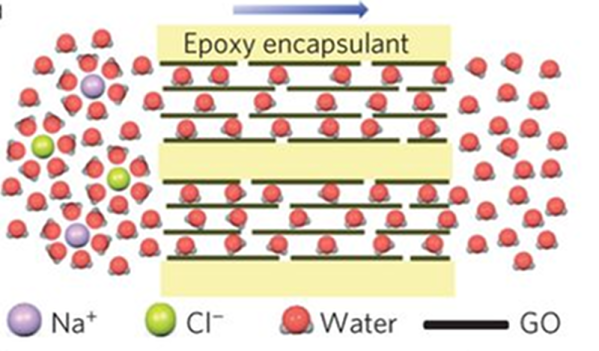
Even though the majority of the Earth is covered in water, a surprising number of people around the world don’t have easy access to clean drinking water. The oceans of course are full of salt, and it is difficult to filter that salt out. Researchers at the University of Manchester have found a way to improve a graphene-based filter mechanism that could help convert sea water to potable water.

Pure graphene can do the job, but it is difficult to manufacture in commercial quantities. In addition, the membrane requires the creation of tiny holes, further complicating the production. The new method uses graphene oxide, which is very simple to make and deploy.

Continue reading “Graphene Desalinates Sea Water”

Car Alarm Hacks 3 Million Vehicles

Pen testing isn’t about evaluating inks. It is short for penetration testing — someone ensuring a system’s security by trying to break in or otherwise attack it. A company called Pen Test Partners made the news last week by announcing that high-end car alarm systems made by several vendors have a critical security flaw that could make the vehicles less secure. They claim about three million vehicles are affected.

The video below shows how alarms from Viper/Clifford and Pandora have a simple way to hijack the application. Once they have access, they can find the car in real time, control the door locks, and start or stop the car engine. They speculate a hacker could set off the alarm from a nearby chase car. You’d probably pull over if your alarm started going off. They can then lock you in your car, approach, and then force you out of the car.

Continue reading “Car Alarm Hacks 3 Million Vehicles”

This SDR Uses A Tube

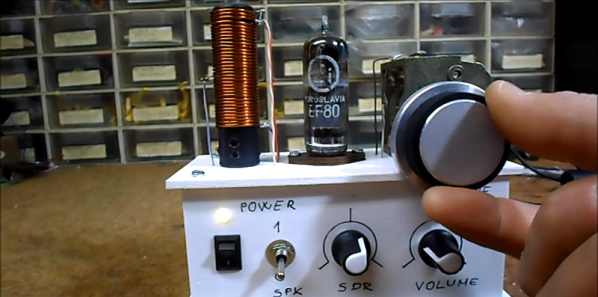
When you think of a software defined radio (SDR) setup, maybe you imagine an IC or two, maybe feeding a computer. You probably don’t think of a vacuum tube. [Mirko Pavleski] built a one-tube shortwave SDR using some instructions from [Burkhard Kainka] which are in German, but Google Translate is good enough if you want to duplicate his feat. You can see a video of [Mirko’s] creation, below.

The build was an experiment to see if a tube receiver could be stable enough to receive digital shortwave radio broadcasts. To avoid AC line hum, the radio is battery operated and while the original uses an EL95 tube, [Mirko] used an EF80.

Continue reading “This SDR Uses A Tube”

Raspberry Pi Camera With Smarts — Cloud Or Local?

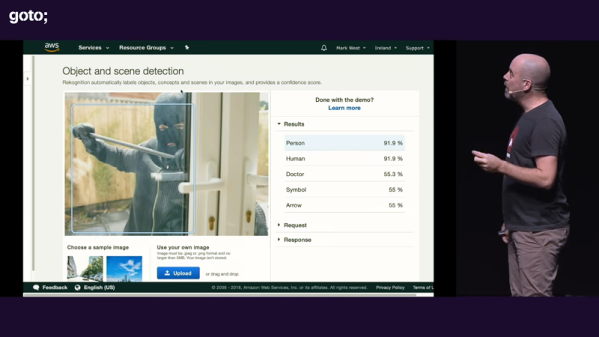
[Mark West] gave an interesting presentation at last year’s GOTO Copenhagen conference. He shows how he took a simple Raspberry Pi Zero webcam and expanded it with AI. He actually added the intelligent features in two different ways: on in the Amazon cloud and another using the Intel Modvidius NCS USB stick directly connected to the USB. You can see the video below.

Local motion detection uses some open source software. You simply configure it using a text file and it even handles the video streaming. However, at that point, you just have a web camera — not amazing, nor very cost effective. However, you get a lot of false alarms with the motion detection software. A random cat walking past, clouds, trees, or even rain would push [Mark] an email and after 250 alert e-mails a day, [Mark] decided to make something better.

Continue reading “Raspberry Pi Camera With Smarts — Cloud Or Local?”

Joulescope DC Energy Analyzer Reviewed

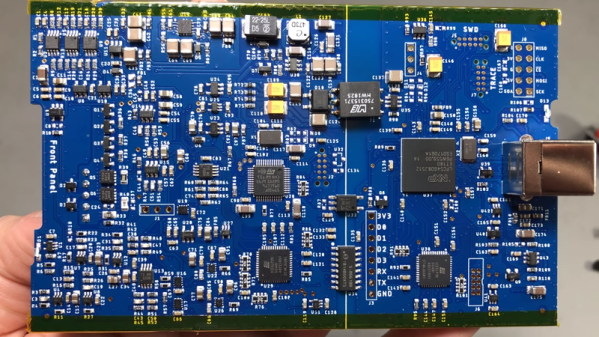
[VoltLog] got a hold of a prerelease unit of Joulescope — a DC energy analyzer that promises to make it easy to optimize power and energy usage of your electronic designs. You can find his review in the video below. The device is a very fast ammeter and voltmeter. Given that, it is easy to compute energy and, over time, power.

The device is set to retail for about $400 according to a letter in the video, although the website mentions closer to $800. Both of those seem to be a bit much for a piece of specialty gear that is really just a fast analog to digital converter and some software. To be fair, the device can read ranges between 18 microamps to 10 amps with resolutions as low as 1.5 nanoamps on the lower side of the range. Is it worth it? That will depend on your application and your price sensitivity.

Continue reading “Joulescope DC Energy Analyzer Reviewed”