A Star-Trek-Inspired Robot With Raspberry Pi And AI

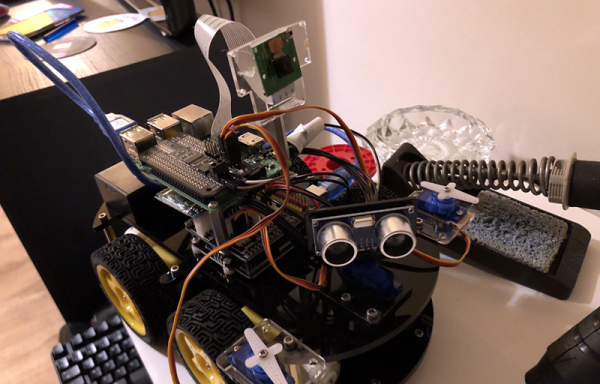
When [314Reactor] got a robot car kit, he knew he wanted to add some extra things to it. At about the same time he was watching a Star Trek episode that featured exocomps — robots that worked in dangerous areas. He decided to use those fictional devices to inspire his modifications to the car kit. Granted, the fictional robots were intelligent and had a replicator. So you know he won’t make an actual working replica. But then again, the ones on the TV show didn’t have all that either.

A Raspberry Pi runs Tensorflow using the standard camera.  This lets it identify objects of interest (assuming it gets them right) and sends the image back to the operator along with some identifying information. The kit already had an Arduino onboard and the new robot talks to it via a serial port. You can see a video about the project, below.

Continue reading “A Star-Trek-Inspired Robot With Raspberry Pi And AI”
3D Printed Head Can Unlock Your Phone

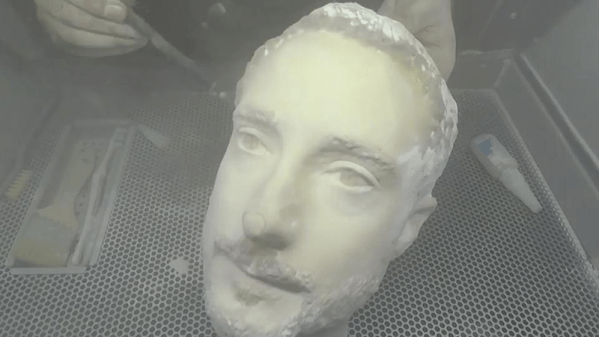
[Thomas Brewster] writes for Forbes, but we think he’d be at home with us. He had a 3D printed head made in his own image and then decided to see what phones with facial recognition he could unlock. Turns out the answer is: most of them — at least, those running Android.

The models tested included an iPhone X, an LG, two Samsung phones, and a OnePlus. Ironically, several of the phones warn you when you enroll a face that the method may be less secure than other locking schemes. Conversely, one phone had a faster feature that is known to make the phone less secure.

Continue reading “3D Printed Head Can Unlock Your Phone”

This Robot Swims, Skates, And Crawls

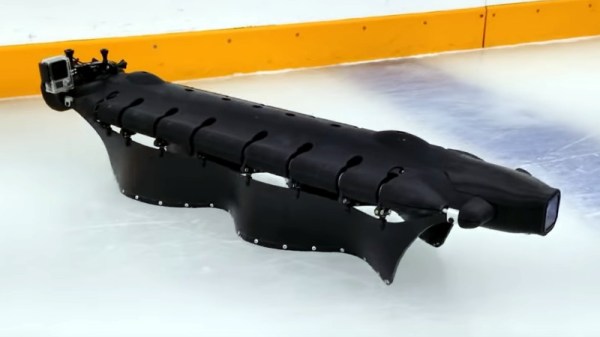
You often hear that art imitates life, but sometimes technology does too. Pliant Energy Systems’ Velox robot resembles an underwater creature more than it does a robot because it uses undulating fins to propel itself, as you can see in the video below.

The video shows the beast skating, but also swimming, and walking. It really does look more like a lifeform than a device. According to the company, the robot has excellent static thrust/watt and is resistant to becoming entangled in plants and other debris.

Continue reading “This Robot Swims, Skates, And Crawls”

GPS III Launching Today But You Can’t Use It Until 2022

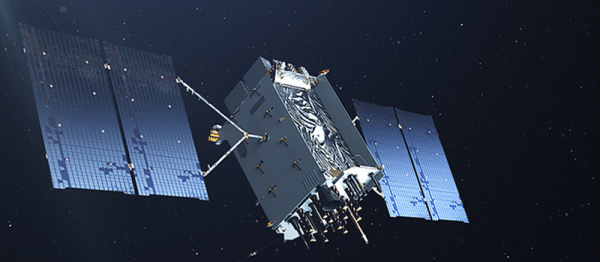
Imagine if you bought a new car but they keys were not going to be shipped to you until a few years later. That’s analogous to the situation the U.S. Air Force finds itself in. The first GPS III satellite is finally ready to launch today, December 18, 2018 — a little over 2 years beyond the original schedule. However, most of the unique GPS III features won’t be available until at least 2022, according to a 2017 Government Accounting Office (GAO) report to Congress.

GPS III is a project to launch 32 new satellites that will — for military users — be more difficult to jam. For civilian users, the new GPS satellites will be compatible with other systems, including the EU’s Galileo system. But the big draw? About three times the accuracy of the current system. For civilian use, that means 3 to 10 feet under good conditions as opposed to the current systems’ 10- to 33-foot resolution.

Continue reading “GPS III Launching Today But You Can’t Use It Until 2022”

Button, Button, Who’s Got The (One) Button?

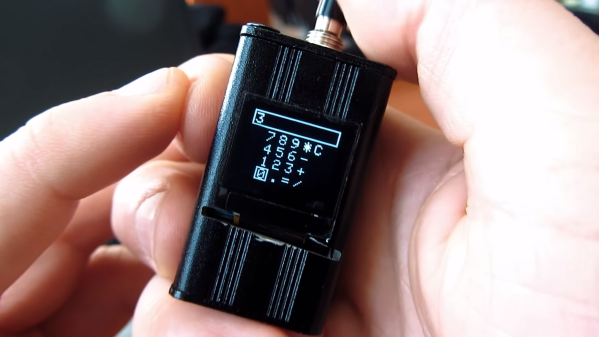
We often think that less is more, but what can you do with a device that has only a single button? [Danko Bertović] wondered the same thing and he built an Arduino with a single button and a display. After doing some obvious things  (like a counter or stopwatch) he decided to make a calculator for his latest Volos Projects video.

You can find the source code online and he used a library from GitHub to handle the reaction to single presses, double presses, and long presses. Is it ideal? Probably not. But if you only have a limited amount of space or pins, it can make the difference between a feasible project and one you can’t finish.

His original projects also included a Flappy Bird clone. The OLED display is only 64×48 so that’s not a lot of room. The packaging of the tiny Arduino, the battery, and the display in a good looking case, was pretty impressive. So the device might be usable for something.

Of course, the library will work with any program and there’s no reason you can’t have more than one button and simply multiply their functions with the same strategy. There’s a sample on GitHub that shows how you can create two OneButton objects connected to different hardware devices.

By the way, the little box may have only one button, but it also has a power switch. Turns out, you can use it as an input in certain circumstances. If the OLED display strikes you as too luxurious, try the DUO BINARY.

Continue reading “Button, Button, Who’s Got The (One) Button?”

OpenLH: Automating Biology For Everyone

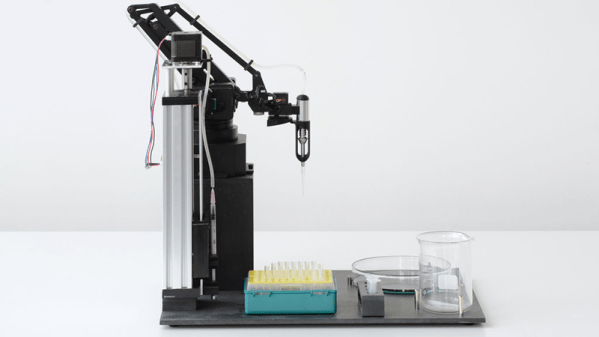
When we took a biology lab, you had to use a mouth pipette to transfer liquids around. That always seemed odd to use your mouth to pick up something that could be dangerous. It’s also not very efficient. A modern lab will use a liquid handling robot, but these aren’t exactly cheap. Sometimes these are called pipettors and even a used one on eBay will set you back an average of $1,000 — and many of them much more than that. Now there’s an open source alternative, OpenLH, that can be built for under $1,000 that leverages an open source robot arm. You can find a video about the system below.

The robot arm, a uArm Swift Pro, is the bulk of the cost.  The Pro can also operate as a 3D printer or a laser engraver with a little work. In fact, we wondered if you could use the arm to make a 3D printer and then print the parts you need to convert it to a liquid handler. Seems like it should work.

Continue reading “OpenLH: Automating Biology For Everyone”

Imploding Tiny 3D Prints

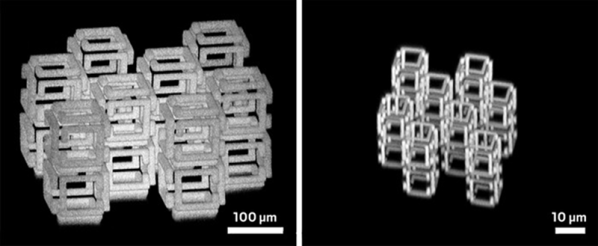
If you think about 3D printing, the ultimate goal would be to lay down specific atoms or molecule and build anything. Despite a few lab demonstrations at that scale, generally, it is easier to print in the macro scale than the micro. While it won’t get down to the molecule level, implosion fabrication is a new technique researchers hope will allow you to print large things and then shrink them. The paper describing the process appeared in Science. If you don’t want to pay your way through the paywall, you can read a summary on NewScientist or C&EN. Or you can scour the usual sources.

The team at MIT uses the same material that is found in disposable diapers. A laser traces patterns and the light reacts to a chemical implanted in the diaper material (sodium polyacrylate). That material can swell to many times its normal size which is why it is used in diapers. In this case, though, the material is swollen first and then reduced back to normal size.

Continue reading “Imploding Tiny 3D Prints”