3D Print A Home Automation Switch

If you are the kind of person who won’t use cheap Sonoff modules to control AC powered devices, we don’t blame you and you should probably stop reading now. However, if you don’t mind a little exposed AC wiring and you have a 3D printer, you might be interested in the second generation of [530 Project’s] in-wall light switch.

The 3D printed switch fits a standard box and uses the guts of a Sonoff controller. These work with all the popular ecosystems such as Alexa and Google Home. And they are cheap. Like, really cheap. If you already have a 3D printer, even counting the cost of the filament these are going to be a small fraction of the cost of a commercial switch. You can see a video about the device, below.

Continue reading “3D Print A Home Automation Switch”

Automating Your Door For $20

We love the doors on Star Trek’s Enterprise. We should have known they were human-operated though because they were too smart. They would wait for people, or fail to open when someone was thrown against them during a fight. [SieuweE] has a much more practical automatic door that he calls ArduDoor.

You might guess from the name it uses an Arduino. It also uses a windshield wiper motor which is perfect since it is high-torque and low speed. You might even be able to pick one up for little or nothing if you frequent the junkyards.

Continue reading “Automating Your Door For $20”

3D Printed Hovercraft Takes Flight

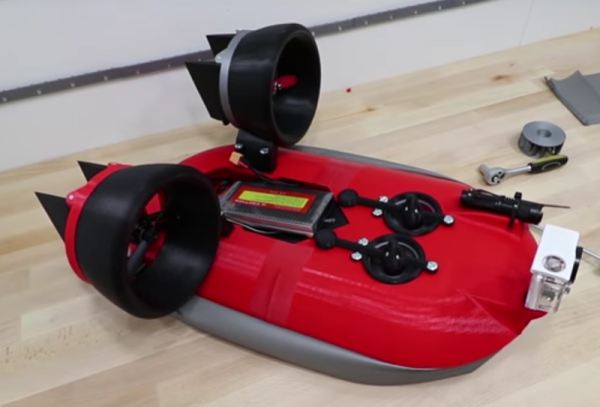
Last time we checked in on [Ivan Miranda] he was putting a drill press on the Internet. Lately, he has been trying to 3D print a hovercraft with some success. He made four attempts before arriving at one that works fairly well, as you can see in the video below. We will warn you, though, the screwdriver cam is a bit disconcerting and we suggest waiting at least an hour after you eat to watch.

The starboard impeller broke midway through the test, although with a single impeller it was working pretty well. [Ivan] thinks he can print the impeller frames more strongly to prevent future failures. The design is in Fusion360 and there is enough detail that you can probably duplicate his work if you have the urge. There’s a mount for a headlight and an action camera on the bow.

Continue reading “3D Printed Hovercraft Takes Flight”

Meltdown Code Proves Concept

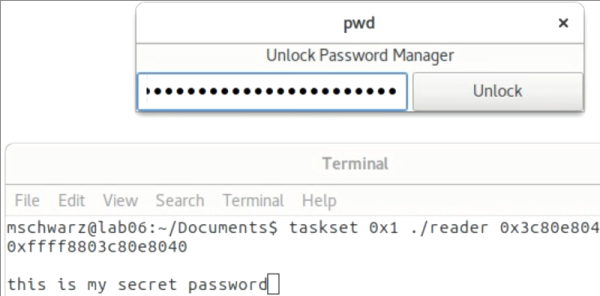
If you’ve read about Meltdown, you might have thought, “how likely is that to actually happen?” You can more easily judge for yourself by looking at the code available on GitHub. The Linux software is just proof of concept, but it both shows what could happen and — in a way — illustrates some of the difficulties in making this work. There are also two videos in the repository that show spying on password input and dumping physical memory.

The interesting thing is that there are a lot of things that will stop the demos from working. For example a slow CPU, a CPU without out-of-order execution, or an imprecise high-resolution timer. This is apparently especially problematic in virtual machines.

Continue reading “Meltdown Code Proves Concept”

Mbed Labs Chock Full Of Arm Goodies

One of the things we like about ARM processors is that there are a variety of options for library support. You can write your own code at the bare metal, of course, but you can also use many different abstraction libraries to make things easier. At the other end of the spectrum, there is Mbed, similar to the sort of libraries that Arduino supplies. Easy to use, although not always the best possible performance. Mbed now has an Mbed Labs site with a lot of extra goodies that go with the Mbed ecosystem, and it has quite a few interesting things.

You’ve always been able to write Mbed code in your browser — some people love that and some hate it and use locally-hosted tools like Platform.io. However, with the Mbed Lab, you can build and most importantly simulate your code in the browser (something we covered last year). There’s also a Javascript interpreter that runs on your chip, a small implementation of TensorFlow for deep learning, and a few other projects on the page.

Continue reading “Mbed Labs Chock Full Of Arm Goodies”

Intel Rolls Out 49 Qubits

With a backdrop of security and stock trading news swirling, Intel’s [Brian Krzanich] opened the 2018 Consumer Electronics Show with a keynote where he looked to future innovations. One of the bombshells: Tangle Lake; Intel’s 49-qubit superconducting quantum test chip. You can catch all of [Krzanch’s] keynote in replay and there is a detailed press release covering the details.

This puts Intel on the playing field with IBM who claims a 50-qubit device and Google, who planned to complete a 49-qubit device. Their previous device only handled 17 qubits. The term qubit refers to “quantum bits” and the number of qubits is significant because experts think at around 49 or 50 qubits, quantum computers won’t be practical to simulate with conventional computers. At least until someone comes up with better algorithms. Keep in mind that — in theory — a quantum computer with 49 qubits can process about 500 trillion states at one time. To put that in some apple and orange perspective, your brain has fewer than 100 billion neurons.

Of course, the number of qubits isn’t the entire story. Error rates can make a larger number of qubits perform like fewer. Quantum computing is more statistical than conventional programming, so it is hard to draw parallels.

We’ve covered what quantum computing might mean for the future. If you want to experiment on a quantum computer yourself, IBM will let you play on a simulator and on real hardware. If nothing else, you might find the beginner’s guide informative.

Image credit: [Walden Kirsch]/Intel Corporation

Robotic Drive Train Is Nearly All 3D Printed

There are lots of ways to move a robot ranging from wheels, treads, legs, and even propellers through air or water. Once you decide on locomotion, you also have to decide on the configuration. One possible way to use wheels is with a swerve drive — a drive with independent motors and steering on each wheel. Prolific designer [LoboCNC] has a new version of his swerve drive on Thingiverse. The interesting thing is that it’s nearly all 3D printed.

You do need a few metal parts, a belt, two motors, and — no kidding — airsoft BBs, used as bearings. There are 3 parts you have to fabricate, which could take some work on a lathe, so it isn’t completely 3D printed.

[LoboCNC] points out that the assembly is lightweight and is not made for heavy robots. Apparently, though, his idea of lightweight is no more than 20 pounds per wheel, so that’s still pretty large in our book. The two motors allow for one motor to provide drive rotation while the other one — which includes an encoder — to steer. Of course, the software has to account for the effect of steering each wheel separately, but that’s another problem.

This robotic drivetrain is just thing for a car-like robot. If you are a little lonesome you could always print out ASPIR, instead. Or if you want an exotic 3D printed way to move things, you might get some inspiration from Zizzy. If you want a swerve drive that doesn’t require any machining or 3D printing, you might enjoy the video from another FIRST team, below.

Continue reading “Robotic Drive Train Is Nearly All 3D Printed”