Swan: Better Linux On Windows

If you are a Linux user that has to use Windows — or even a Windows user that needs some Linux support — Cygwin has long been a great tool for getting things done. It provides a nearly complete Linux toolset. It also provides almost the entire Linux API, so that anything it doesn’t supply can probably be built from source. You can even write code on Windows, compile and test it and (usually) port it over to Linux painlessly.

However, Cygwin’s package management is a little clunky and setting up the GUI environment has always been tricky, especially for new users. A project called Swan aims to make a full-featured X11 Linux environment easy to install on Windows.

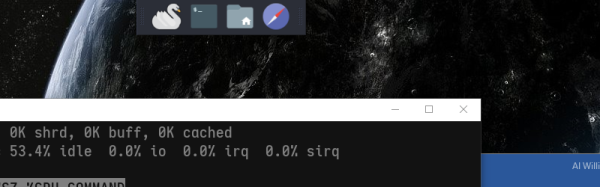
The project uses Cygwin along with Xfce for its desktop. Cygwin provides pretty good Windows integration, but Swan also includes extra features. For example, you can make your default browser the Windows browser with a single click. It also includes spm — a package manager for Cygwin that is somewhat easier to use, although it still launches the default package manager to do the work (this isn’t a new idea, by the way).
Continue reading “Swan: Better Linux On Windows”

Retrotechtacular: Stereo Records

The 20th century saw some amazing technological developments. We went from airplanes to the moon. We went from slide rules to digital computers. Crank telephones to cell phones. But two of the most amazing feats of that era were ones that non-technical people probably hardly think about. The transformation of radio and TV from mono and black and white, to stereo and color. What was interesting about both of these is that engineers managed to find a way to push the new better result into the same form as the old version and — this is the amazing part — do it in such a way that the old technology still worked. Maybe it is the rate that new technology moves today, but we aren’t doing that today. Digital TV required all-new everything: transmitters, receivers, frequencies, and recording gear. Good luck trying to play the latest video game on your 25-year-old PC.

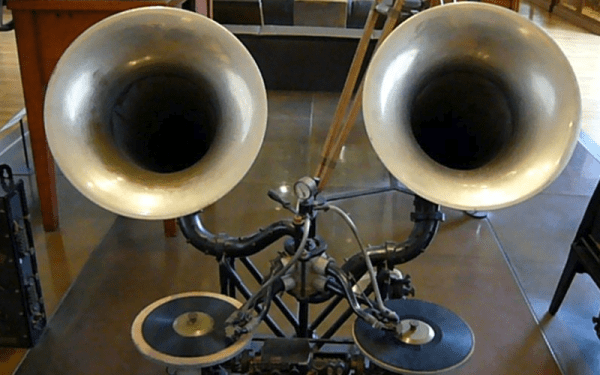
It is hard to remember when stores were full of all sorts of audio and video media. We’ve noticed that all forms of media are starting to vanish. Everything audio and video are all streamed or downloaded these days. Records, 8-tracks, cassettes, and even CDs and DVDs are vanishing. However, vinyl records have made a come back in the last few years for their novelty or nostalgic value.

Continue reading “Retrotechtacular: Stereo Records”

Ten Minute TensorFlow Speech Recognition

Like a lot of people, we’ve been pretty interested in TensorFlow, the Google neural network software. If you want to experiment with using it for speech recognition, you’ll want to check out [Silicon Valley Data Science’s] GitHub repository which promises you a fast setup for a speech recognition demo. It even covers which items you need to install if you are using a CUDA GPU to accelerate processing or if you aren’t.

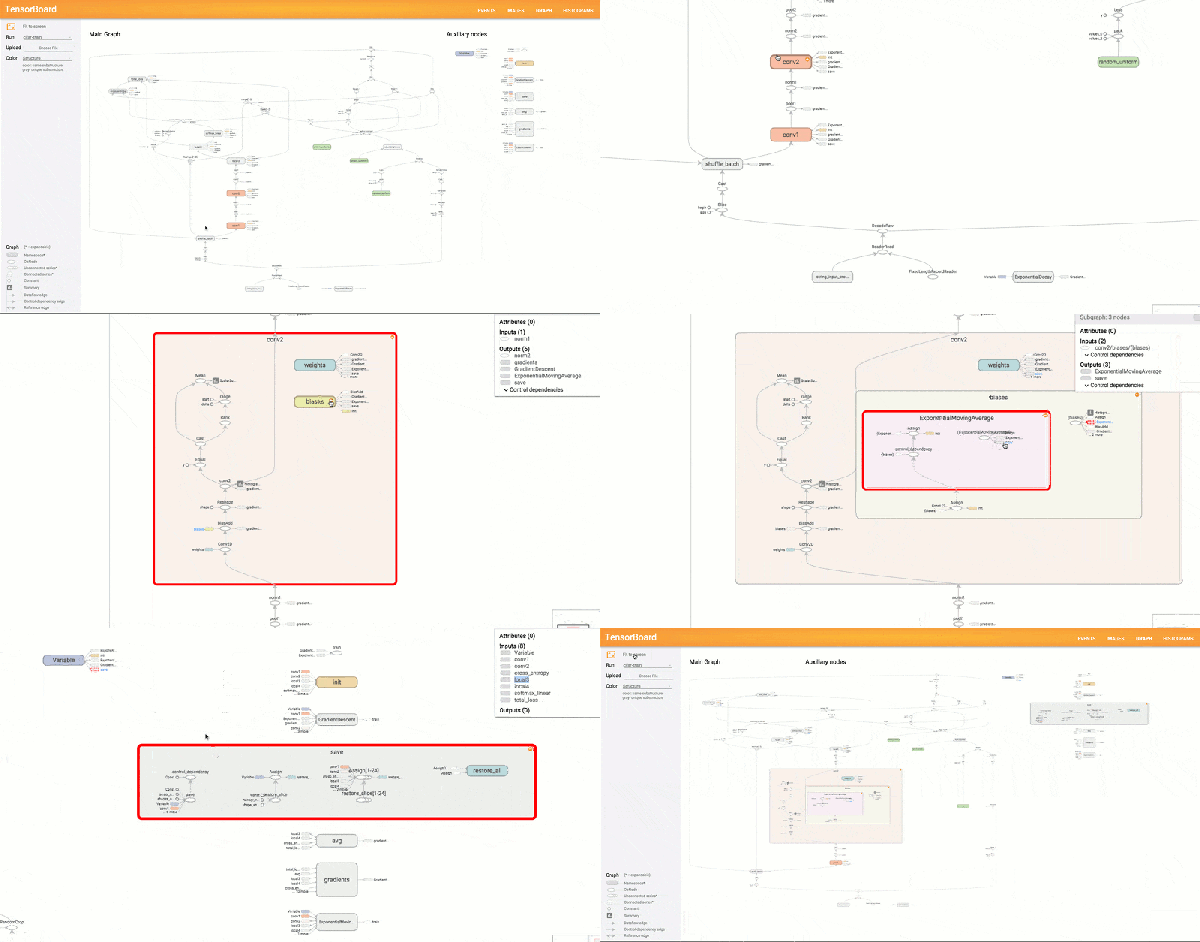
Another interesting thing is the use of TensorBoard to visualize the resulting neural network. This tool offers up a page in your browser that lets you visualize what’s really going on inside the neural network. There’s also speech data in the repository, so it is practically a one-stop shop for getting started. If you haven’t seen TensorBoard in action, you might enjoy the video from Google, below.

Continue reading “Ten Minute TensorFlow Speech Recognition”

Half-Baked Idea: Put Your PLA In The Oven

[Thomas] wanted to try baking some carbon fiber 3D printing filament because the vendor had promised higher strength and rigidity after the parts were annealed in the oven. Being of a scientific mindset, he did some controls and found that annealing parts printed with the carbon fiber-bearing filament didn’t benefit much from the treatment. However, parts printed with standard PLA became quite a bit stronger and more rigid.

The downside? The parts (regardless of material) tend to shrink a bit in the X and Y axis. They also tend to expand in the Z direction. However, the dimension changes were not that much. The test parts shrunk by about 5% and grew by 2%. He didn’t mention if this was repeatable, which is a shame because if it is repeatable, it isn’t a big deal to adjust part dimensions before printing. Of course, if it isn’t repeatable, it will be difficult to get a particular finished size after the annealing process.

Continue reading “Half-Baked Idea: Put Your PLA In The Oven”

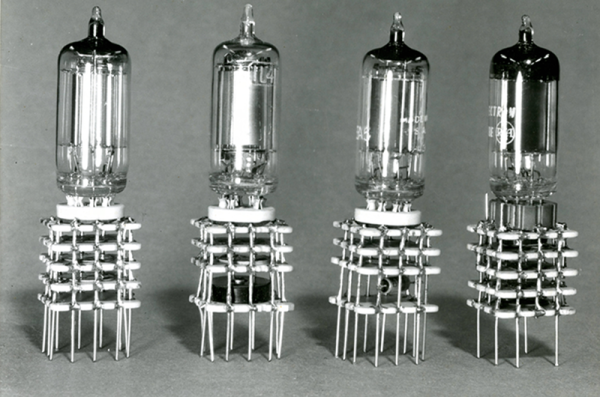
Retrotechtacular: Tinkertoy And Cordwood In The Pre-IC Era

It is widely accepted that Gutenberg’s printing press revolutionized thought in Europe and transformed the Western world. Prior to the printing press, books were rare and expensive and not generally accessible. Printing made all types of written material inexpensive and plentiful. You may not think about it, but printing–or, at least, printing-like processes–revolutionized electronics just as much.

In particular, the way electronics are built and the components we use have changed a lot since the early 1900s when the vacuum tube made amplification possible. Of course, the components themselves are different. Outside of some specialty and enthusiast items, we don’t use many tubes anymore. But even more dramatic has been how we build and package devices. Just like books, the key to lowering cost and raising availability is mass production. But mass producing electronic devices wasn’t always as easy as it is today.

Continue reading “Retrotechtacular: Tinkertoy And Cordwood In The Pre-IC Era”

Pi Zero W Impersonates IPhone, Becomes Terminal

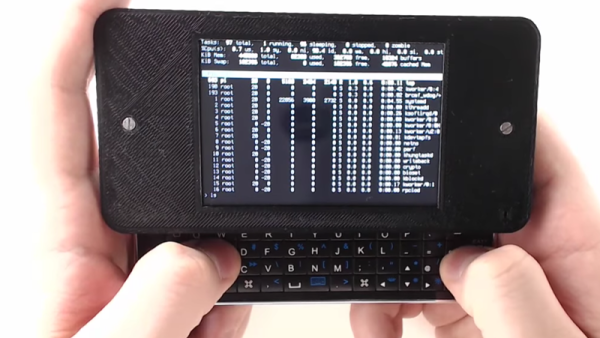
There’s something to be said for economies of scale and few things sell more than cell phones. Maybe that’s why [NODE] took inspiration from an iPhone slide out keyboard case to create this Pi Zero W-based portable terminal. This is actually his third iteration, and in the video below he explains why he has built the new version.

By housing the custom bits in a 3D-printed frame that is size compatible with the iPhone, [NODE] manages to leverage the slick slide out keyboard cases available for the phone. The iPhone in question is an older iPhone 5, so the cases are inexpensive, compared to the latest generation. On the other hand, the iPhone 5 is recent enough that it shouldn’t be hard to find a compatible case.

The circuitry itself is pretty straightforward: a battery, a charge controller, and an LCD display. The only complaint we could see was the lack of a control key on the keyboard.

Continue reading “Pi Zero W Impersonates IPhone, Becomes Terminal”

Shut The Backdoor! More IoT Cybersecurity Problems

We all know that what we mean by hacker around here and what the world at large thinks of as a hacker are often two different things. But as our systems get more and more connected to each other and the public Internet, you can’t afford to ignore the other hackers — the black-hats and the criminals. Even if you think your data isn’t valuable, sometimes your computing resources are, as evidenced by the recent attack launched from unprotected cameras connected to the Internet.

As [Elliot Williams] reported earlier, Trustwave (a cybersecurity company) recently announced they had found a backdoor in some Chinese voice over IP gateways. Apparently, they left themselves an undocumented root password on the device and — to make things worse — they use a proprietary challenge/response system for passwords that is insufficiently secure. Our point isn’t really about this particular device, but if you are interested in the details of the algorithm, there is a tool on GitHub, created by [JacobMisirian] using the Trustwave data. Our interest is in the practice of leaving intentional backdoors in products. A backdoor like this — once discovered — could be used by anyone else, not just the company that put it there.

Continue reading “Shut The Backdoor! More IoT Cybersecurity Problems”