Shape Programmable Matter Is More Magnetic Magic

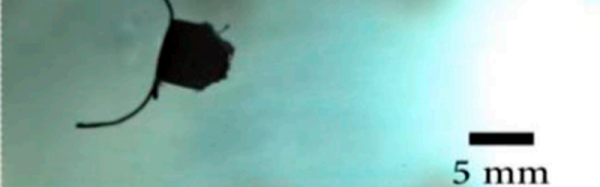
How could you build an artificial tadpole? Or simulate the motion of a cilium? Those would be hard to do with mechanical means — even micromechanical because of their fluid motion. Researchers have been studying shape-programmable matter: materials that can change shape based on something like heat or magnetic field. However, most research in this area has relied on human intuition and trial and error to get the programmed shape correct. They also are frequently not very fast to change shape.

[Metin Sitti] and researchers at several institutions have found a way to make rapidly changing silicone rubber parts (PDF link) that can change shape due to a magnetic field. The method is reproducible and doesn’t seem out of reach for a hackerspace or well-equipped garage lab.

Continue reading “Shape Programmable Matter Is More Magnetic Magic”
Tesseract Infinity Desk

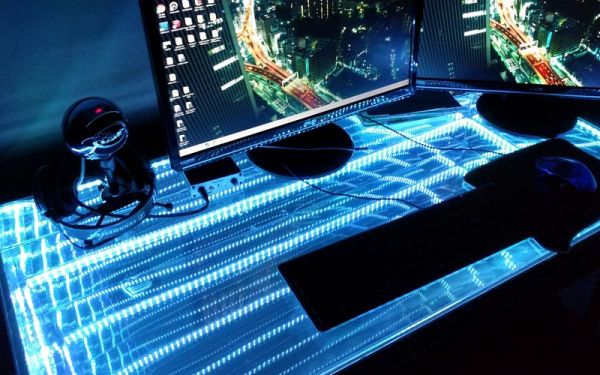
We’ve all seen infinity mirrors. Even Mr. Spock had one in the Star Trek movies. Usually, these aren’t very large and hang on the wall. [QuackMasterDan] decided (after watching another movie, Interstellar) to try making a desk using the same idea. We aren’t sure it will make you more productive, but if you want to up your office cool factor, consider building his tesseract infinity desk. In fact, we imagine it would be pretty distracting. Sure to be a conversation starter, though.

Unlike a regular two-plate infinity mirror, [Dan’s] desk has six plates. He used metal for the structural parts of the desk and the top is a sandwich of an acrylic mirror and a large piece of half-inch tempered glass (available–unsurprisingly–on Amazon). There’s also privacy film to make the glass into a one-way mirror. He also includes instructions on how to make a wood version, too. You can see the desk in a video, below.

Continue reading “Tesseract Infinity Desk”

Neural Network Does Your Homework

[Will Forfang] found a app that lets you take a picture of a math equation with a phone and ask for a solution. However, the app wouldn’t read handwritten equations, so [Will] decided to see how hard that would be, using a neural network.

The results are pretty impressive (you can also see the video below). [Will] used his own handwriting on a chalkboard and had the network train on that. He also went even further and added some heuristics to identify fraction bars and infer the grouping from the relative size of the bars.

Continue reading “Neural Network Does Your Homework”

LTSpice For Radio Amateurs (and Others)

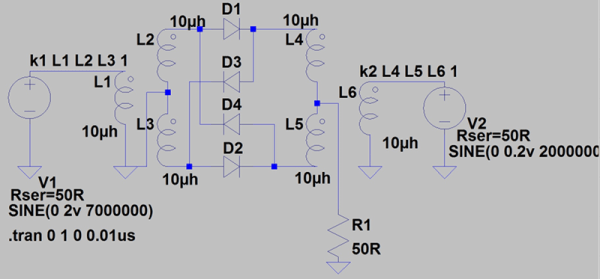
We don’t think [VK4FFAB] did himself a favor by calling his seven-part LTSpice tutorial LTSpice for Radio Amateurs. Sure, the posts do focus on radio frequency analysis, but these days lots of people are involved in radio work that aren’t necessarily hams.

Either way, if you are interested in simulating RF amplifiers and filters, you ought to check these posts out. Of course, the first few cover simple things like voltage dividers just to get your feet wet. The final part even covers a double-balanced mixer with some transformers, so there’s quite a range of material.

Continue reading “LTSpice For Radio Amateurs (and Others)”

Speakers Make A LASER Scanning Microscope

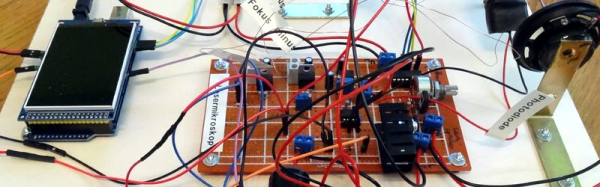
We’ve seen a lot of interest in LSM (LASER Scanning Microscopes) lately. [Stoppi71] uses an Arduino, a CD drive, and–of all things–two speakers in his build. The speakers are used to move the sample by very small amounts.

The speakers create motion in the X and Y axis depending on the voltage fed to them via a digital analog converter. [Stoppi71] claims this technique can produce motion in the micron range. His results seem to prove that out. You can see a video about the device, below.

Continue reading “Speakers Make A LASER Scanning Microscope”

Giving Linux The Remote Boot

A lot of embedded systems are running Linux on platforms like Raspberry Pi. Since Linux is fully functional from a command line and fully network-capable, it is possible to run servers that you’ve never had physical access to.

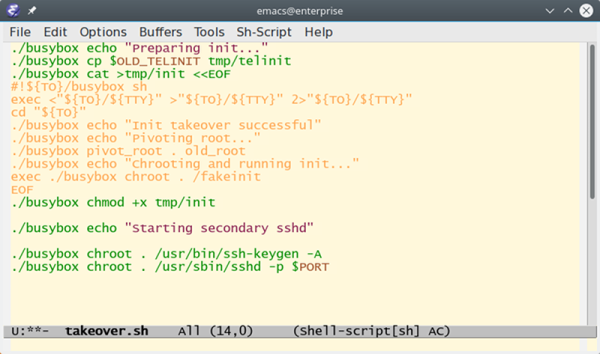
There are a few problems, though. Sometimes you really need to reboot the box physically. You also need to be at the console to do things like totally install a new operating system. Or do you? Over on GitHub, user [marcan] has a C program and a shell script that allows you to take over a running system without using any software on the root filesystem. It starts an ssh server and you can remotely unmount the main drive, do any maintenance you want and –presumably–reboot into a new operating system.

Continue reading “Giving Linux The Remote Boot”

CheetahBeam: More Proof That Cats Are Your Overlord

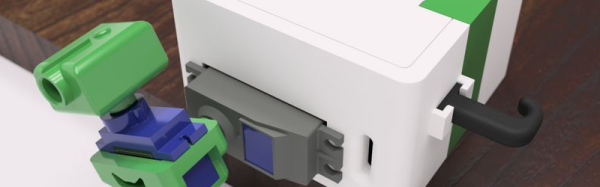
We don’t know what cats see when they see a red laser beam, but we know it isn’t what we see. The reaction, at least for many cats — is instant and extreme. Of course, your cat expects you to quit your job and play with it on demand. While [fluxaxiom] wanted to comply, he also knew that no job would lead to no cat food. To resolve the dilemma, he built an automated cat laser. In addition to the laser module, the device uses a few servos and a microcontroller in a 3D printed case. You can see a video, below. Dogs apparently like it too, but of course they aren’t the reason it was built.

If you don’t have a 3D printer, you can still cobble something together. The microcontroller is an Adafruit Pro Trinket, which is essentially an Arduino Pro Mini with some extra pins and a USB port.

Continue reading “CheetahBeam: More Proof That Cats Are Your Overlord”