By The Glow Of The CRT

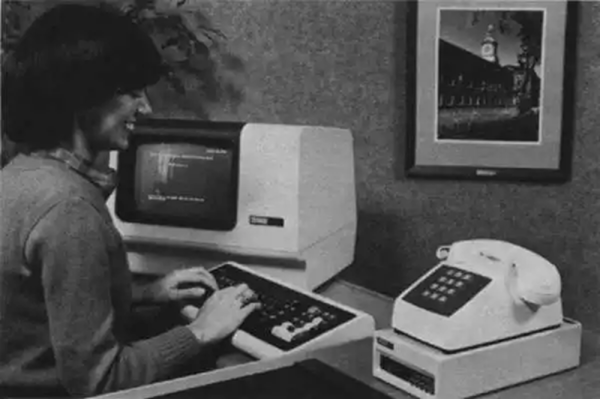
If you are a certain age, you probably remember writing software (or playing Adventure) bathed in an amber or green light from an old CRT terminal. If you are even older, you might have found it way better than punching cards, but that’s another story. [Tobi] wanted to relive those days (well, sounds like he is too young to have lived them to start with) so he hooked up a VT220 terminal to his Linux box.

This isn’t that surprising. Linux’s forefather, Unix, expected these kind of terminals (or a hard copy TeleType) and all the trappings for working with a glass terminal are still in there. You do have to deal with a few configuration items that [Tobi] works through.

In fact, it appears that he wrote his blog post using vi on that very VT220 using a text-based Web browser to research the links. He has a lot of resources for connecting a terminal of any sort (or even a terminal emulator) to a Linux computer.

There’s been a lot of interest in old terminals lately. You see a lot of old VT100s lying around. I personally have an ADDS Regent 100 that occasionally connects to several of my computers. You can see it in the video below.

Continue reading “By The Glow Of The CRT”

Litter Basket Automation

Sometimes the technology part of a project isn’t the hard part. It is having an idea for something both useful and doable. Sure, a robot butler that would do your cleaning and laundry would be useful, but might be out of reach for most of us. On the other hand, there’s only so many use cases for another blinking LED.

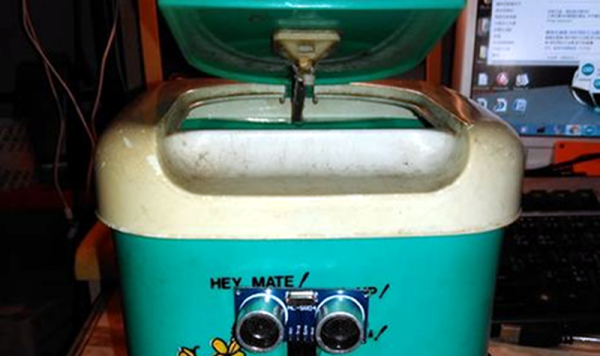
[Martinhui] knows how to use an ultrasonic sensor with an Arduino. Driving a motor isn’t that hard, either. The question is: what do you do with that? [Martin’s] answer: Automate a trash can. You can see a video of the result, below.

Continue reading “Litter Basket Automation”

Diamonds Are For Data Storage

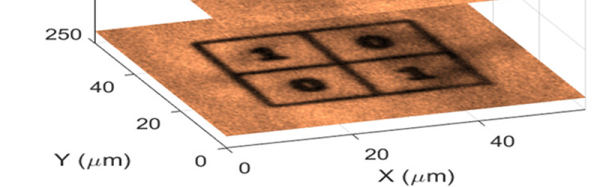
Most data storage devices we currently use are, at their core, two-dimensional. Sure, a hard drive might have multiple platters, but the data storage takes place on a flat surface. Even an optical drive is effectively a single surface that holds data. At the  City College of New York, they are experimenting with storing data in three dimensions using lab-grown diamonds and LASERs.

Usually, diamonds that have few flaws are more valuable. But in this application, the researchers exploit the flaws to store information. Optical memory that uses a volume instead of a surface isn’t exactly new. However, it is difficult to use these techniques in a way that is rewritable.

Diamonds are a crystalline structure of carbon atoms. Sometimes, though, a carbon atom is missing from the structure. That’s a vacancy. Another defect is when a nitrogen atom replaces a carbon atom. Sometimes a vacancy occurs next to a rogue nitrogen atom and that causes an NV (nitrogen vacancy) center.

Continue reading “Diamonds Are For Data Storage”

You Kids Get Those Drones Out Of My Airspace!

The PacTec Security Conference in Tokyo had something interesting show up. A countermeasure against drones that allows you to take control of any craft using the popular DSMx protocol. According to Ars Technica, DSMx transmitters and receivers exchange a key to prevent interference between adjacent systems. The key isn’t protected very well so by observing traffic and applying a little brute force, you can recover the key (which is set when the transmitter binds to the aircraft).

What’s more is a timing vulnerability allows the rogue transmitter to lock out the legitimate one. You can see a demonstration of the system, called Icarus, in the video below.

Continue reading “You Kids Get Those Drones Out Of My Airspace!”

Physics Or Phiction?

Do you remember Gilligan’s Island? For many people of a certain age, “The Professor” was our first impression of what a scientist was like. Even in those simpler times, though, you probably couldn’t find anyone like the professor; a jack of all trades, he sort of knew everything about everything (except, apparently, how to make a boat).

Real scientists tend to hyper-specialize. Getting grant money, publication pages, and just advancing the state of the art means that you get more and more focused on more obscure things. It is getting to the point that two scientists in the same field may not be able to really understand each other. You see the same thing in engineering to some degree. Not many digital designers can talk about the frequency dependence of Early effect in bipolar transistors, but not many device gurus can talk intelligently about reservation techniques for superscalar CPUs.

There’s now a website that lets you guess if a physics paper title is real or if it made up jibberish. The site, snarXiv, gets the real titles from arXiv, the site that contains many preprint papers. For example, we were asked to guess if “Brane Worlds with Bolts” was a real paper or if it was “Anthropic Approaches to the Flavor Problem.” (For the record, it was the one about branes.) Give it a whirl!

Sailing Ships, Slide Rules, And The Quality Of Engineering

We recently ran a post about engineers being worse, better, or the same than they “used to be” and it got me thinking. Of course “used to be” is in the eyes of the beholders. To me, that’s the 1950s and 1960s. To some of you, my generation is the “used to be” generation. To some of you, I’m past even that.

I’ve often said, there are two things that are simple: something really simple, and something really complex. For example, when a caveman grabbed a log floating down the river and hitched a ride a few miles downstream that was pretty simple. Today, you can go on a well-equipped boat, stab your finger at a map, click go, and the boat will do almost all the work. However, get onboard a sailing vessel from 1850 and you better know what you are doing. What’s more is, some sailors were better than others.

What’s Better or Best?

Were yesterday’s engineers better than today? That’s like asking who is the “best” driver. It depends a lot on what “best” means. Safer? Faster? Most efficient? I would suggest that yesterday’s engineers were better at doing yesterday’s jobs. I own several slide rules and I can use them, but I bet my mentor who finished college in the 1940s was faster. I don’t need to be faster. On the other hand, he might have some trouble doing a good Internet search.

But here’s the problem. Doing basic math is like the caveman on the log (and yes, that begs for a slide rule joke). Asking Wolfram Alpha to solve your set of simultaneous equations is like the modern computer-controlled ship with GPS. You can bet that the sailing master of a barque in 1850 knew a lot more about sailing and winds and ship construction than the average guy on a modern ship. He had to. That gave him extra reasoning tools when faced with a problem.

Slide Rules Do (Most) of the Math

By the same token, using a slide rule is very helpful but–paradoxically–you have to know a little math to be able to use it. In particular, you had to have a rough idea of the magnitude of the answer to get the right answer. If you couldn’t get that concept or do the simple estimate in your head, the slide rule was useless and you probably dropped out of engineering school. Today, you may or may not have that kind of math smarts, and it doesn’t matter.

I’ve known graybeards that keep up with the modern technology. I’ve also known plenty who are stuck in the past, talking about how horrible transistors, or ICs, or software is and how it has ruined everything. Of course, they haven’t.

Lesson Learned

As Gerrit pointed out, we tend to remember the brilliant engineers and projects and forget the bad ones (unless they are really bad). Even in “the golden age” there were good engineers and bad.

So how can you maximize your chances of being one of the good ones when this turns into some kid’s golden age? Two things, I think. Never stop learning the new technology. The hot-shot engineer with the slide rule wouldn’t function as well in today’s world unless he was willing to learn about the new things. But also, learn the fundamentals. You don’t have to know how an engine works to drive a car. But all the race car drivers do know. Having tools to do circuit analysis or solve thorny math equations is a great time saver. But you ought to know how to do it without those tools. The insights you’ll gain will give you more tools at your disposal when faced with a problem.

Engineering is a series of abstractions. Always try to drive down the abstraction layers. Know how to program? How does a CPU work at the logic gate level? Know how that works? Then how do the transistors form those gates? When you understand that, dig into why the transistors work at all. Sure, you probably aren’t going to build a transistor from raw materials. But you’ll gain new insights and those insights will help you solve future problems. Besides, if there’s ever a zombie apocalypse, it might be good to know how to use a slide rule or build a transistor.

Want To Make A PCB? The Pantum Knows…

We’ve done a lot of PCBs with the toner transfer method over the years. The idea is simple: print a pattern using toner (which is just ground up black plastic) and then use an iron or other heat and pressure device to transfer the toner to a copper-clad board. It works and it works well. But getting just the right combination of heat, pressure, release paper, and toner is sometimes tricky.

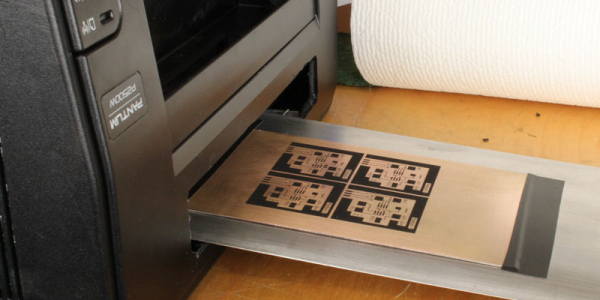
Some people hack their printers to turn off the fuser wire (to make the toner not stick to the paper) or to run a PCB directly through it. If you have a big expensive laser printer, though, you might not want to chop it up just to run PCBs. Have you looked at laser printer prices lately? We aren’t sure if it is cheap units flooding the market, or the overwhelming popularity of color printers, but you can pick up a Pantum P2500 for about $25 or $30–and probably get WiFi printing at that price. [Mlermen] picked one of these up and shows you how to convert it to a PCB printer.

Continue reading “Want To Make A PCB? The Pantum Knows…”