Retrotechtacular: Tom Carter Revolutionized Your Phone

It is hard to remember, but there was a time when you couldn’t hook much to a telephone line except a telephone. Although landlines are slowly falling out of favor, you can still get corded and wireless phones, answering machines, and even dial up modems. Alarm systems sometimes connect to the phone system along with medical monitoring devices and a host of other accessories.

All of that’s possible because of a Texan named Tom Carter. Tom Carter was the David that stood up to one of the biggest Goliath’s of his day: the phone company. The phone company had a legal monopoly on providing phone service. The reasoning was that it didn’t make sense to have multiple competing companies trying to run wires to every house and business in the country. Makes sense, right?

Continue reading “Retrotechtacular: Tom Carter Revolutionized Your Phone”
Secret Riddle Retro Radio

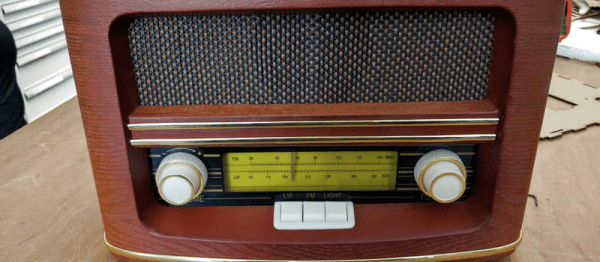
When [the-rene] was building an escape room, he decided to have a clue delivered by radio. Well, not exactly radio, but rather an old-fashioned radio that lets you tune to a faux radio station that asks a riddle. When you solve the riddle, a secret compartment opens up. [the-rene] says you could have the compartment contain a key or a clue or even a cookie.

The outer case is actually an old radio gutted for this purpose. In addition, a laser cut box and a servo motor form the secret compartment.

Continue reading “Secret Riddle Retro Radio”

Ion Trap Makes Programmable Quantum Computer

The Joint Quantum Institute published a recent paper detailing a quantum computer constructed with five qubits formed from trapped ions. The novel architecture allows the computer to accept programs for multiple algorithms.

Quantum computers make use of qubits and trapped ions–ions confined with an electromagnetic field–are one way to create them. In particular, a linear radio frequency trap and laser cooling traps five ytterbium ions with a separation of about 5 microns. To entangle the qubits, the device uses 50 to 100 laser pulses on individual or pairs of ions. The pulse shape determines the actual function performed, which is how the device is programmable. The operations depend on the sequence of laser pulses that activate it. Continue reading “Ion Trap Makes Programmable Quantum Computer”

Easy Toy Hack Makes Floating Death Star

It always seems odd to us that magnetic levitation seems to only find use in big projects (like trains) and in toys. Surely there’s a practical application that fits on our desktop. This isn’t it, but it is a cool way to turn a cheesy-looking levitating globe into a pretty cool Star Wars desk toy.

As projects go, this isn’t especially technically challenging, but it is a great example of taking something off the shelf and hacking it into something else. The globe covering came off, revealing two hemispheres. A circular hole cut out and inverted provides the main weapon. Some internal lighting and small holes provide light. Some fiber optic sanded and tinted green make the weapon fire. The rest is all in the painting.

There’s even a tiny imperial ship orbiting the killer man-made (or is that Sith-made) moon. If you want a bigger challenge, you might try bamboo. Or you can go minimalist and let your eyes and brain do most of the work.

Continue reading “Easy Toy Hack Makes Floating Death Star”

Drone Doesn’t Know Much About Art, But Knows What It Likes

There is an artistic technique known as stippling where an artist creates a picture using small dots of ink or paint. The result is almost like using a dot matrix printer at low resolution. [Paul Kry] at McGill University doesn’t directly teach art, but he did teach drones to produce pictures using the stippling technique.

As you can see in the video below, the drones carry an ink-soaked sponge. Internal sensors and a motion capture system get them to the right spot and then they move to put the ink down on the work surface. It isn’t perfect, but it does make recognizable drawings and presumably a little inconsistency makes it even more artsy.

Continue reading “Drone Doesn’t Know Much About Art, But Knows What It Likes”

Hot Wire Strippers Are Probably The Best Tool You Aren’t Using

I wanted to point out a tool that I often use, but rarely see on other people’s workbenches: thermal strippers. They aren’t cheap, but once you’ve used them, it is hard to go back to stripping wires with an ordinary tool.

I know, I know. When I first heard of such a thing, I thought what you are probably thinking now: maybe for some exotic coated wire, but for regular wire, I just use a pair of diagonal cutters or a mechanical stripper or a razor blade. You can do that, of course, and for large solid wires, you can even get good results. But for handling any kind of wire, regardless of size, you just can’t beat a thermal stripper.

Continue reading “Hot Wire Strippers Are Probably The Best Tool You Aren’t Using”

Weird CPU

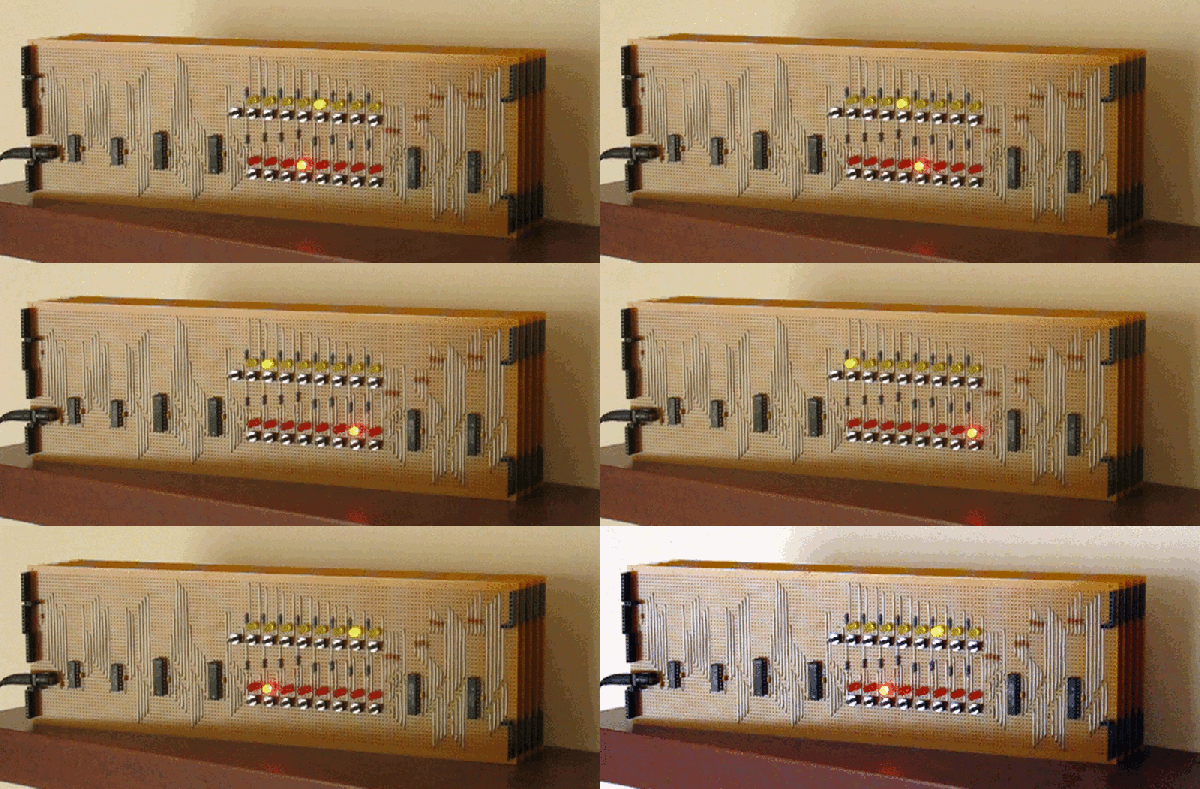
How many instructions does [agp.cooper’s] computer have? Just one. How many strip boards does it use? Apparently, 41 five 41-track boards. While being one shy from the answer to life, it is still a lot of boards for a single instruction. The high board count is due to the use of 1970’s vintage ICs including TTL parts, 2114 RAM chips, and 74S571 PROMs.

There are several different architectures for single instruction computers and [agp’s] uses what is technically at TTA (transfer-triggered architecture). That is, the one instruction is a move and the destination or source of the move determines the operation. For example, the Wierd CPU (that’s the name of it) has a P and Q register. If you load those registers and then the ADD register will contain the sum of the two numbers.

Continue reading “Weird CPU”