USB Volume Control

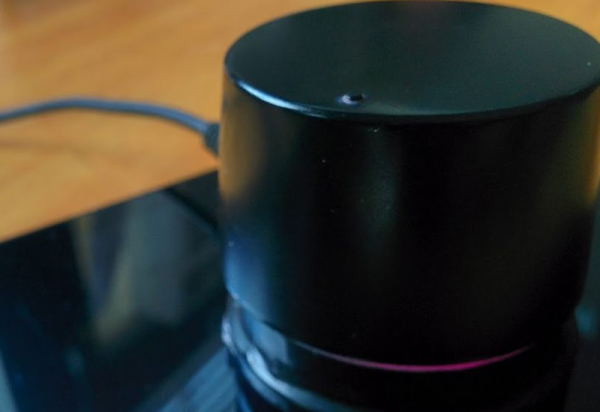
If you buy expensive computer speakers, they often have a volume knob you can mount somewhere on your desk so you aren’t dependent on the onboard volume control. [Kris S] decided to build his own version of the remote volume control. Not surprisingly, it uses an Arduino-compatible Digispark board and a rotary controller. The Digispark (that [Kris S] bought for $2) is compatible with the Adafruit Trinket. This is key because the Trinket libraries are what make it easy to send media keys over the USB (using the HID interface) to control the volume.

Really, though, the best part of the build is the good looking knob made out of a pill bottle (see the video below). The micro Digispark is small enough to fit in the lid of the pill bottle, and some wax and pellets add some heft to the volume control. Continue reading “USB Volume Control”
Inferno OS On Raspberry Pi

Unix isn’t the only operating system that came out of Bell Labs. In an effort to decouple hardware from user interfaces over a network, Bell also developed an OS named Plan 9 (named after the famously bad Ed Wood movie).  While Plan 9 is still in use, it never got the momentum that Unix did. In 1996, Bell Labs (now AT&T) decided to shift its focus to Inferno, an operating system  that was meant to challenge Java as a cross-platform virtual machine environment. Now LynxLine Labs has ported Inferno to the Raspberry Pi.

Not only did they do the work, they documented it in 26 labs if you want to follow along. Or, you can just head over to the project page and get the results along with updates (judging from the commit log, the project is under active development).

Continue reading “Inferno OS On Raspberry Pi”

GNU Radio Drives Oscilloscope

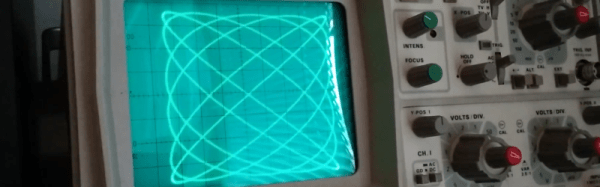
These days we are spoiled with a lot of cheap test equipment. However, you can do a lot of measurements with nothing more than an oscilloscope. Add something like a signal generator and you can do even more. One classic technique for frequency measurement, for example, is using a scope to display a Lissajous pattern. [Franz Schaefer] has a video showing how to generate these useful curves with GNU Radio.

As we pointed out earlier, GNU Radio doesn’t have to be about radio–it is really just a Python-based signal processing laboratory. [Franz] uses GNU Radio Companion to create blocks which in turn create the patterns on an old analog scope.

Continue reading “GNU Radio Drives Oscilloscope”

Physical Fitness For The Truly Lazy

We’re going to get in shape around here, starting today. Well… in the United States, it is almost Thanksgiving, so we might as well wait until… but then it is going to be the end of the year and between Christmas, Hanukkah,  and New Year’s, we should put it off until then.

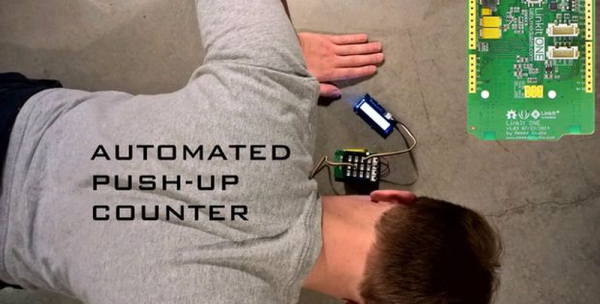
OK, we get it. There’s always some excuse. We know we should go on and do some push ups today. Of course, we are a lazy bunch, so not everyone’s going to do a full push up. Then we’ll all argue how many we actually did. If this sounds like you, maybe you need an Arduino-based project that counts proper push ups.

Continue reading “Physical Fitness For The Truly Lazy”

Robotic Tabletop

Remember pin art? That’s the little box full of pins that you can push something into and the pins take on the shape. You usually use your hand, but any small object works (including, if you are brave enough, your face). [Sean Follmer] (formerly at the MIT Media Lab) developed the reverse of this: a surface made of pins driven by motors. Under computer control, the surface can take on shapes all by itself.

The square pins can be seen in the video below moving and manipulating blocks and using them to build structures out of the blocks. By using the right sequence of pin motions, the blocks can be flipped and even stacked. Magnetic blocks offer even more options.

Continue reading “Robotic Tabletop”

Stronger 3D Printed Parts

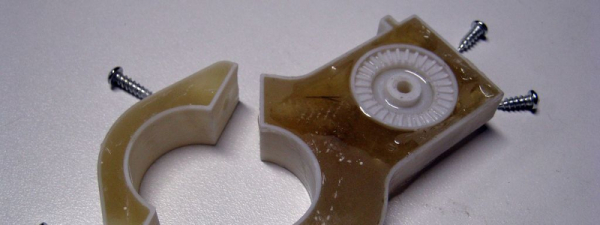
When [hobbyman] wanted some 3D printed parts to attach a bag to his bike, he was worried that the parts would not be strong enough to hold when the bag was full. He decided to find a way to reinforce the part with fiberglass and epoxy. His first model had holes and grooves to be filled in with epoxy.

However, after working with the part for a bit, he decided to take a different approach. Instead of making the part nearly solid plastic with space for the epoxy, he instead created the part as a shell and then filled it with fibers and epoxy. After it all cured, a little sanding started removing some of the plastic shell and what was left was mostly a cast fiberglass part (although some of the plastic was left on).

Continue reading “Stronger 3D Printed Parts”

Speaker Science Project

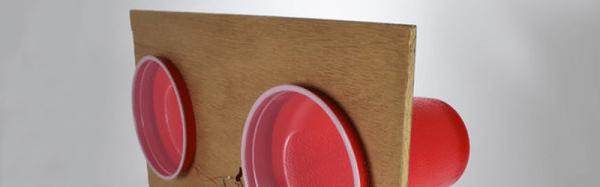
They probably won’t please the audiophiles, but [KJMagnetics] shows you that can create a pair of speakers with some magnets, some plastic cups, and a bit of magnet wire. Creating speakers out of junk isn’t a new idea, of course. However, there’s something pleasant about the build. Maybe it is the symmetry of the cups or the workbench look of the woodworking.

We couldn’t help but think that this would make a good science fair project or a classroom activity. Especially since there is a good write up on how speakers work and it would be easy to make simple changes to test different hypothesis about speakers. For example, what happens with more or less wire in the coils? What magnets work best? What does best even mean? Is it louder? Less distortion?

Continue reading “Speaker Science Project”