Etch-A-SDR

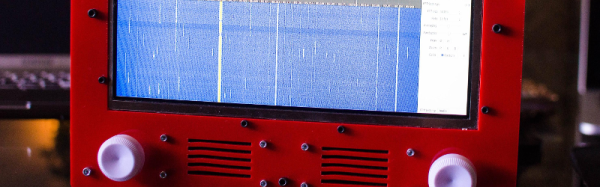
What do you get if you cross a software defined radio (SDR) and an iconic children’s drawing toy that we are sure is a trademarked name? If you are [devnulling], you wind up with the Etch-A-SDR. The box uses an Odroid C1, a Teensy, and the ubiquitous RTL-SDR.

The knobs work well as control knobs (as you can see in the video below). When you are bored listening to the radio, you can reset the box and go into Etch-a… um, drawing mode. The knobs work like you’d expect and you can even erase the screen with a vigorous shake.

Continue reading “Etch-A-SDR”

Vintage BBC Computer Gets FPGA Buddies

The BBC Microcomputer System (or BBC Micro) was an innovative machine back in the early 1980’s. One feature that impressed reviewers was a “tube” interface that allowed the machine to become an I/O processor for an additional CPU. When the onboard 6502 became too slow, it could become a slave to a Z-80 or even an ARM processor. The bus was actually useful for any high-speed device, but its purpose was to add new processors, a feature Byte magazine called “innovative.”

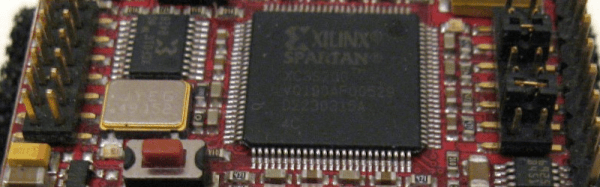
[Hoglet67] has released a very interesting set of FPGA designs that allows a small board sporting a Xilinx Spartan 3 to add a 6502, a Z80, a 6809, or a PDP/11 to a BBC Micro via the tube interface. There’s something satisfying about a classic computer acting as an I/O slave to a fairly modern FPGA that implements an even older PDP/11.

Continue reading “Vintage BBC Computer Gets FPGA Buddies”

No Sex Please, We’re Robots

There was a time when technology would advance and launch debates over ethical concerns raised by the technology. Lately, however, it seems ethical debate is (I hope) in advance of the actual technology. Maybe that’s a good thing.

Case in point: A paper at Ethicomp 2015 from De Montfort University warns that having sex with robots may have negative effects on par with prostitution. You might think that this is an isolated academic concept, but apparently there is a conference titled The International Congress on Love and Sex with Robots. There’s even a 2008 book titled Love and Sex with Robots that is neither science fiction nor pornography.

Second case: Softbank has created a robot called [Pepper] that supposedly can understand human emotions. You know the license agreements you get with everything you buy that you don’t really read? Here’s a translation of part of the one that comes with [Pepper]: ” …owner must not perform any sexual act or other indecent behavior.

Continue reading “No Sex Please, We’re Robots”

Computer Learns To Hack Chess

A lot of computers can play chess. [Matthew Lui’s] Giraffe is a chess playing computer, but unlike other common chess programs, Giraffe taught itself to play. It apparently learned pretty well, too, since it is rated as an International Master on the FIDE scale (putting it in the top 2.2% of players. The top chess playing computers clock in at super grandmaster level but they are not self-taught).

Continue reading “Computer Learns To Hack Chess”

KIM-1 Clock

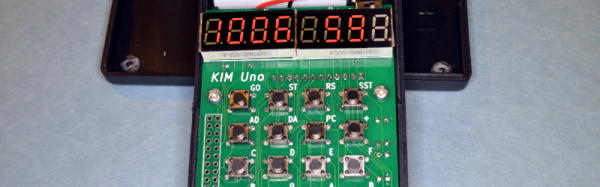
Over on hackaday.io, [Arduino Enigma] posted the code for his clock that runs on a KIM Uno (the KIM-1 clone we mentioned late last year). Although the KIM Uno has a few demos preloaded (including Microchess and a scientific calculator), all of them take some interaction. The clock makes the KIM Uno a more dynamic desk display since it does something useful without any user interaction (once you set the clock, of course).

The project shows the code stored in ROM, but you can’t directly enter the program into ROM (which is really EEPROM on the host Arduino). The trick is to enter the address (that is press AD and then 0, 4, 0, 0) and then mash down the reset button for about a second. Then you can press DA and enter the hex codes provided (pressing + after each byte). Since the code is in nonvolatile storage, you can start it at any time by setting the time in RAM and executing the code at address 400.

Continue reading “KIM-1 Clock”

Hack Anything Into A Phone

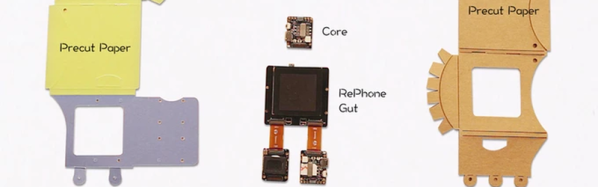
If you’ve spent much time tinkering with electronics, you’ve probably heard of [Seeedstudio] from their development boards, tools, and their PCB fabrication service. Their latest Kickstarter venture is the RePhone, an open source and modular cell phone that will allow hackers to put together a phone by blending GSM modules, batteries, screens, and other stock units, including an Arduino-based processing core, GPS, NFC, and other building blocks.

The funding campaign has already exceeded its goal and delivery is scheduled for next year with a basic kit weighing in at a projected $59, according to [Seeed]. Presumably, the core phone module will have regulatory acceptance, but the other ancillary modules won’t require as rigorous testing and certification.

What would you do with an inexpensive, embeddable cell phone? The modules are tiny, so you could implant them in lots of places. Some of [Seeed’s] more interesting ideas include building a phone into a walking stick, a dog collar, or a kite (although we were thinking quadcopters).

Of course, we’ve seen GSM and cell phone shields for Arduino before. Difficult to imagine sticking those in a dog collar, though, unless you have a fairly large dog. If you are a fan of 1960’s TV, it is easy to imagine a better shoe phone or a working Star Trek communicator.

Continue reading “Hack Anything Into A Phone”

Autodesk Open Sources Ember 3D Printer

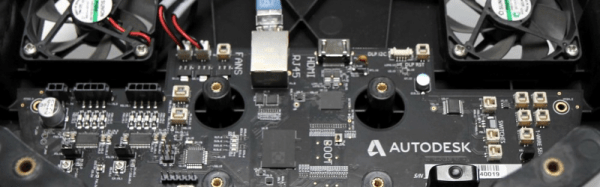
If you’ve ever been interested in what goes on inside a (roughly) $6000 DLP stereolithography printer, you might want to check out the recent announcement from Autodesk that open sources their electronics and firmware for their Ember 3D printer. The package includes the design files and code for their controller (which is more or less a BeagleBone black with a USB hub, and more memory. It also has two AVR controllers for motor and light control.

Continue reading “Autodesk Open Sources Ember 3D Printer”