How To Build A Pocket-Sized MBed Signal Generator

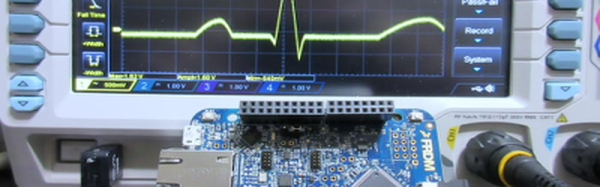
Last month, I talked about how to get started with mBed and ARM processors using a very inexpensive development board. I wanted to revisit mBed, though, and show something with a little more substance. In particular, I often have a need for a simple and portable waveform generator. It doesn’t have to be too fancy or meet the same specs as some of the lab gear I have, but it should be easy to carry, power off USB, and work by itself when required.

My requirements mean I needed a slightly more capable board. In particular, I picked up a K64F board. This is very similar to the KL25Z board but has a bit more of everything–speed, memory, etc. What I really wanted, though, was the SD card slot. I did, however, do my early testing on a KL25Z, so if you have one, you can still work through the code, although standalone operation won’t be possible. The price jumps from $13 to $35, but you get a lot more capability for the price.

Continue reading “How To Build A Pocket-Sized MBed Signal Generator”
Mechanical Keyboard Goes BLE

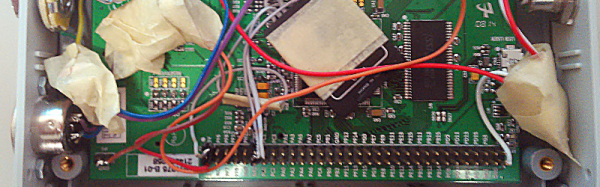
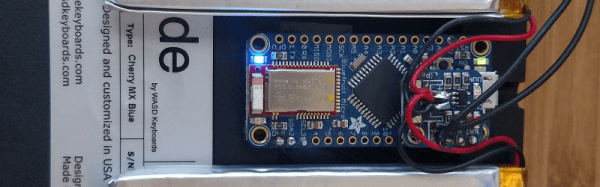
Like many programmers, [Daniel Nugent] loves his old mechanical keyboard (a WASD Code Keyboard). What he didn’t love was the cord. Sure, you can get a modern wireless keyboard, but it won’t be the same as the keyboard you’ve spent so much time with. Armed with a Bluetooth Low Energy (BLE) module, a rechargeable battery and some coding, he kept his keyboard but got rid of the wires.

Although he has some specific handling for the WASD, the code would very likely handle any PS/2 keyboard. The PS/2 interface is a simple synchronous serial port with a single clock and single data line. Handling it with a microcontroller isn’t very difficult.

Continue reading “Mechanical Keyboard Goes BLE”

Arduino Masters Ham Radio Digital Mode

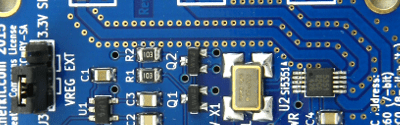
[jmilldrum] really gets a lot of use out of his Si5351A breakout board. He’s a ham [NT7S], and the Si5351A can generate multiple square waves ranging from 8 kHz to 160 MHz, so it only stands to reason that it is going to be a useful tool for any RF hacker. His most recent exploit is to use the I2C-controllable chip to implement a Fast Simple QSO (FSQ) beacon with an Arduino.

FSQ is a relatively new digital mode that uses a form of low rate FSK to send text and images in a way that is robust under difficult RF propagation. There are 32 different tones used for symbols so common characters only require a single tone. No character takes more than two tones.

Continue reading “Arduino Masters Ham Radio Digital Mode”

Brewing Tea Too Stressful? 3D Print A Tea Steeper

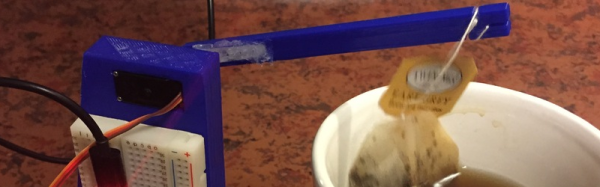
When you want to relax with a nice hot cup of tea, the last thing you need is the stress of dunking the teabag in and out of the hot water, right? [Andylear] got tired of it and he has a 3D printer, so he set about solving the problem.

The solution uses a standard mini servo and the VarSpeedServo Arduino library. This library uses interrupts to control speed and position of up to 8 servos. All servos can operate at once and you can control both the position of the servo and the speed of the motion required to get it there. Commands can be asynchronous or you can wait for them to complete and you can even send sequences of commands to each servo.

Continue reading “Brewing Tea Too Stressful? 3D Print A Tea Steeper”

Happy Programmer’s Day

Today (September 13, 2015) is Programmer’s Day — a recognition day that started in Russia, but has been adopted by many countries. While it is great that there is a day recognizing the contribution of programmers to society, the really interesting part is why it is on September 13 (except on leap years).

The leap year part should be a clue. Today is Julian day 256. We’ll guess that anyone reading Hackaday doesn’t need to be told the rest of the story. While it might not be as good of an in-joke as May the 4th (be with you), it is satisfying to know that it isn’t just a random date from the calendar. Now if we could only get the day off as paid vacation…

Continue reading “Happy Programmer’s Day”

Sense Hat Lights Up Pi

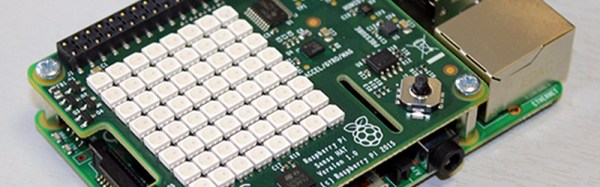
One of our chief complaints about the Raspberry Pi is it doesn’t have a lot of I/O. There are plenty of add ons, of course to expand the I/O capabilities. The actual Raspberry Pi foundation recently created the Sense Hat which adds a lot of features to a Pi, although they might not be the ones we would have picked. The boards were made for the AstroPi project (the project that allowed UK schools to run experiments in space). They don’t appear to be officially for sale to the public yet, but according to their site, they will be selling them soon. Update: Despite some pages on the Raspberry Pi site saying they aren’t out yet, they apparently are.

Continue reading “Sense Hat Lights Up Pi”